
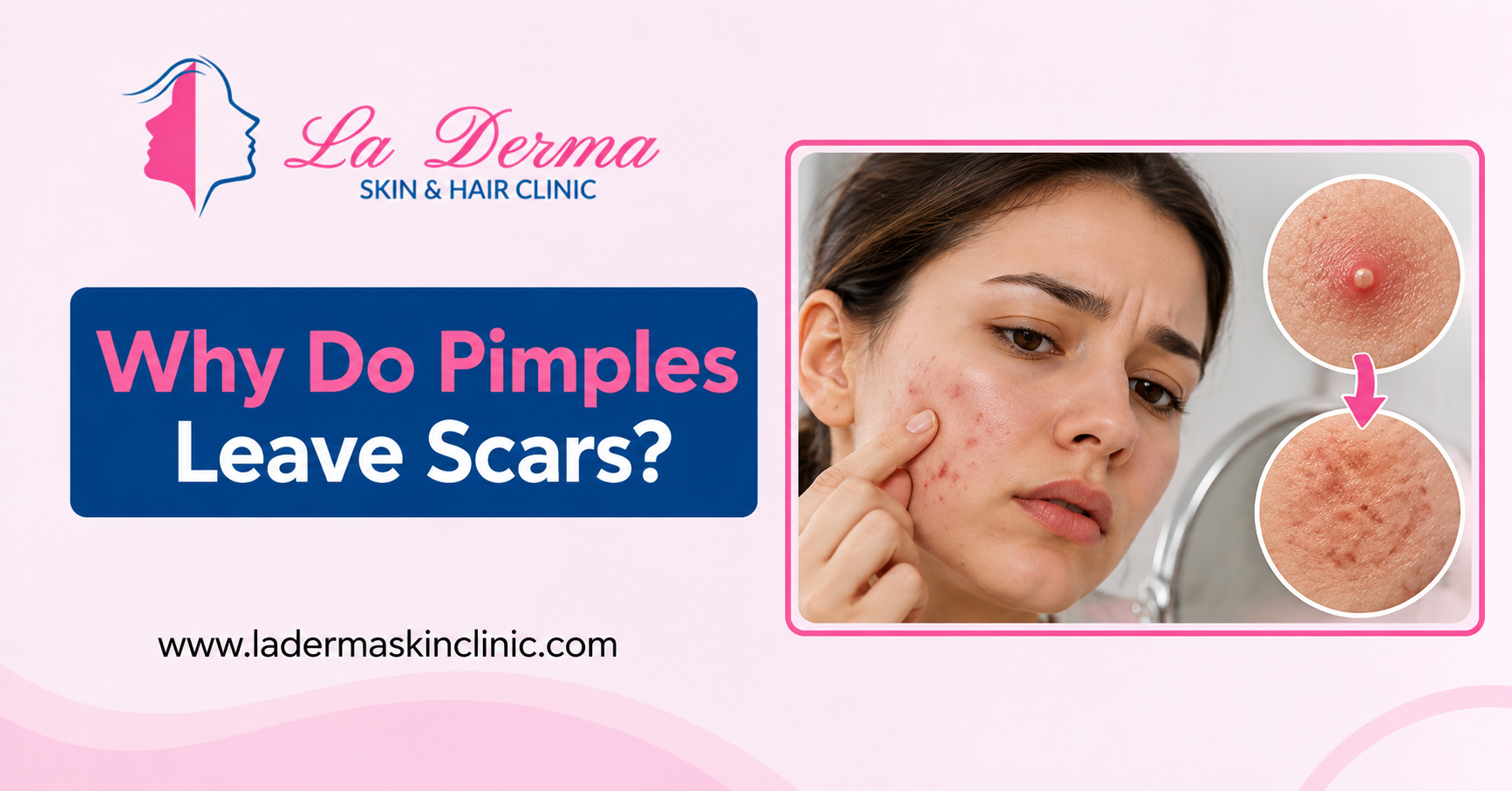
Why Do Pimples Leave Scars?
You had a pimple. Yet something stayed behind. Maybe it is a dent on your cheek, a dark patch on your jaw, or a raised bump near your chin. If you have wondered why a tiny breakout can leave a lasting mark, you are not alone. It is one of the common questions people ask a dermatologist in Kolkata, and the answer has less to do with the pimple itself and more to do with what your skin does while trying to heal.
Let’s walk through it in language.
What Actually Happens Inside Your Skin When a Pimple Forms
A pimple begins inside a pore. Oil (sebum), dead skin cells, and bacteria get trapped together. Your immune system responds with inflammation. That is why pimples look red, feel swollen, and sometimes hurt.
The key point is this: the more inflamed a pimple becomes, the more serious the damage to the surrounding skin. A small whitehead that stays near the surface usually heals cleanly. A large painful cyst that sits under the skin can damage the collagen and tissue around it.
So Why Do Pimples Leave Scars?
The short answer: pimples leave scars when the skin’s repair process is disrupted by inflammation or by picking.
Your skin heals by producing collagen, the protein that keeps it firm and smooth. When a breakout is severe, your body may produce little collagen, leaving a dip, or too much, leaving a raised scar. Either way, the skin does not return to its original texture.
Here are the main reasons this happens.
1. Deep Inflamed Breakouts
Nodules and cysts reach the layers of skin (the dermis). When the pore wall ruptures, the inflammation spreads to tissue and destroys healthy collagen. The longer a breakout stays active, the higher the chance it leaves a mark.
2. Picking, Squeezing, and Popping
This is the common and most avoidable cause. When you squeeze a pimple, you push bacteria. Debris deeper into the skin and tear the pore wall. Your skin then has to repair more damage. Many people with scarring admit that a pimple they “just had to pop” is the one that left the mark.
3. No Treatment
Waiting for acne to “go away on its own” works for mild cases. Persistent or painful acne keeps triggering inflammation again and again. Early treatment is the only scar prevention there is.
4. Genetics and Skin Type
Some people simply scar easily. If your parents had acne scars, you may be more prone to them. Darker skin tones are also more likely to develop pigmentation marks after inflammation. Some people are prone to keloid or hypertrophic (raised) scars.
5. Hormonal and Cystic Acne
Hormone-driven acne often appears along the jawline and chin as tender bumps. These tend to linger for weeks, which gives inflammation time to harm the skin.
Types of Acne Scars You Might Notice
Not every mark left by a pimple is a scar. It helps to know which one you have because treatment differs.
Atrophic scars (dents or depressions)
- Ice pick scars: Deep pit-like marks
- Boxcar scars: Wider depressions with defined edges
- Rolling scars: Soft wave-like dips that give skin an uneven look
Hypertrophic and keloid scars (raised)
These form when the body overproduces collagen. They are more common on the chest, back, and jawline.
inflammatory marks
Dark brown or red flat spots that are not true scars. Post-inflammatory hyperpigmentation (PIH) and post-inflammatory erythema (PIE) often fade with care, though it can take months without treatment.
Can Acne Scars Be Prevented?
Often, yes. A few habits make a difference:
- Don’t pick or pop. Use a pimple patch. See a professional for extraction.
- Treat acne early. Don’t wait until breakouts become painful or widespread.
- Wear sunscreen daily. UV exposure darkens marks. Slows healing. In a climate like India’s, this matters even more.
- Keep skin gently cleansed. Harsh scrubbing increases inflammation.
- Avoid home remedies. Lemon juice, toothpaste, and baking soda can. Irritate skin, making marks worse.
If you are dealing with recurring or painful breakouts, visiting an acne pimple clinic in Kolkata sooner rather than later can keep a manageable problem from turning into a permanent one.
Home Care That Supports Scar Healing
Professional treatment works best when backed by daily habits:
- Use a gentle non-comedogenic cleanser twice a day.
- Apply a broad-spectrum sunscreen (SPF 30 or higher) every morning indoors near windows.
- Moisturise to keep the skin barrier healthy.
- Use the active ingredients your dermatologist recommends.
- Stay patient. Collagen remodelling takes months, not days.
How Are Acne Scars Treated?
The good news is that modern dermatology offers ways to improve scars, and acne scars treatment in Kolkata today covers almost every scar type and skin tone. The right option depends on your scar type, skin tone, and how long you’ve had them. A dermatologist usually creates a combination plan rather than relying on a single treatment.
- Chemical peels: Help with pigmentation, mild texture issues, and active acne.
- Microneedling (with or without PRP): Triggers collagen production to soften dents.
- Fractional laser resurfacing: Targets scars and improves skin texture.
- Subcision: A procedure that releases tethered scars, especially rolling ones.
- TCA CROSS: Used for ice pick scars.
- Dermal fillers: Temporarily lift depressed scars.
- Topical treatments: Retinoids, vitamin C, and brightening agents support healing and fade marks.
Results build gradually. Most scars need multiple sessions. Anyone promising results should be approached with caution.
Why Professional Guidance Matters
Scar treatment is not one-size-fits-all. A laser setting that suits one person can cause pigmentation in another in Indian skin tones. That is why an accurate diagnosis comes first.
At La Derma Skin & Hair Clinic, Dr. Khushbu Tantia focuses on understanding your skin history, scar type, and goals before recommending anything. This personalised approach helps ensure the plan is safe, realistic, and suited to your skin rather than copied from a template.
When Should You See a Dermatologist?
Consider booking a consultation if:
- Your acne is painful, deep, or keeps coming back
- You are already noticing marks or dents
- Over-the-counter products haven’t helped after 6 to 8 weeks
- Your scars affect your confidence
- You have raised or thick scars
- The earlier you act, the more options you have.
Final Thoughts
Pimples leave scars because inflammation and picking interrupt the skin’s natural healing, leaving collagen damaged or uneven. The powerful tools are prevention, early treatment, and professional guidance. And if scars are already there, they are not a life sentence: modern treatments can improve them considerably.
When choosing a dermatology clinic in Kolkata, look for one that offers a consultation, explains the options honestly, and sets clear expectations about results and downtime. If you are ready to take the step, book a consultation with Dr. Khushbu Tantia at La Derma Skin & Hair Clinic and get a plan built around your skin, not a generic routine.
People Also Ask
Why do some pimples leave scars while others don’t?
It depends on depth and inflammation. Superficial pimples usually heal without a trace, while swollen or picked pimples damage collagen and are far more likely to scar.
Are acne marks and acne scars the same thing?
No. Flat red or brown spots are inflammatory marks and often fade over time. True scars involve changes in skin texture such as dents or raised areas. Usually need professional treatment.
Can acne scars go away on their own?
Dark or red marks may fade gradually. True textured scars rarely disappear without treatment. Collagen loss does not fully regenerate on its own.
How long does acne scar treatment take?
Most people need a series of sessions spaced a week apart, with visible improvement over three to six months. The timeline varies with depth and the treatments used.
Is acne scar treatment for Indian skin?
Yes, when planned by a professional. Indian skin is more prone to pigmentation, so settings, products, and aftercare need customisation.
Does popping pimples really cause scars?
Yes. Squeezing damages the wall and drives inflammation deeper, which significantly raises the risk of scarring and dark marks.
Can I treat acne scars at home?
Home care can help with discolouration, but dents and raised scars generally need in-clinic procedures for meaningful improvement.
Who is the doctor for acne scars?
A qualified dermatologist is the choice since they can diagnose the scar type and match it with safe, effective treatments.