
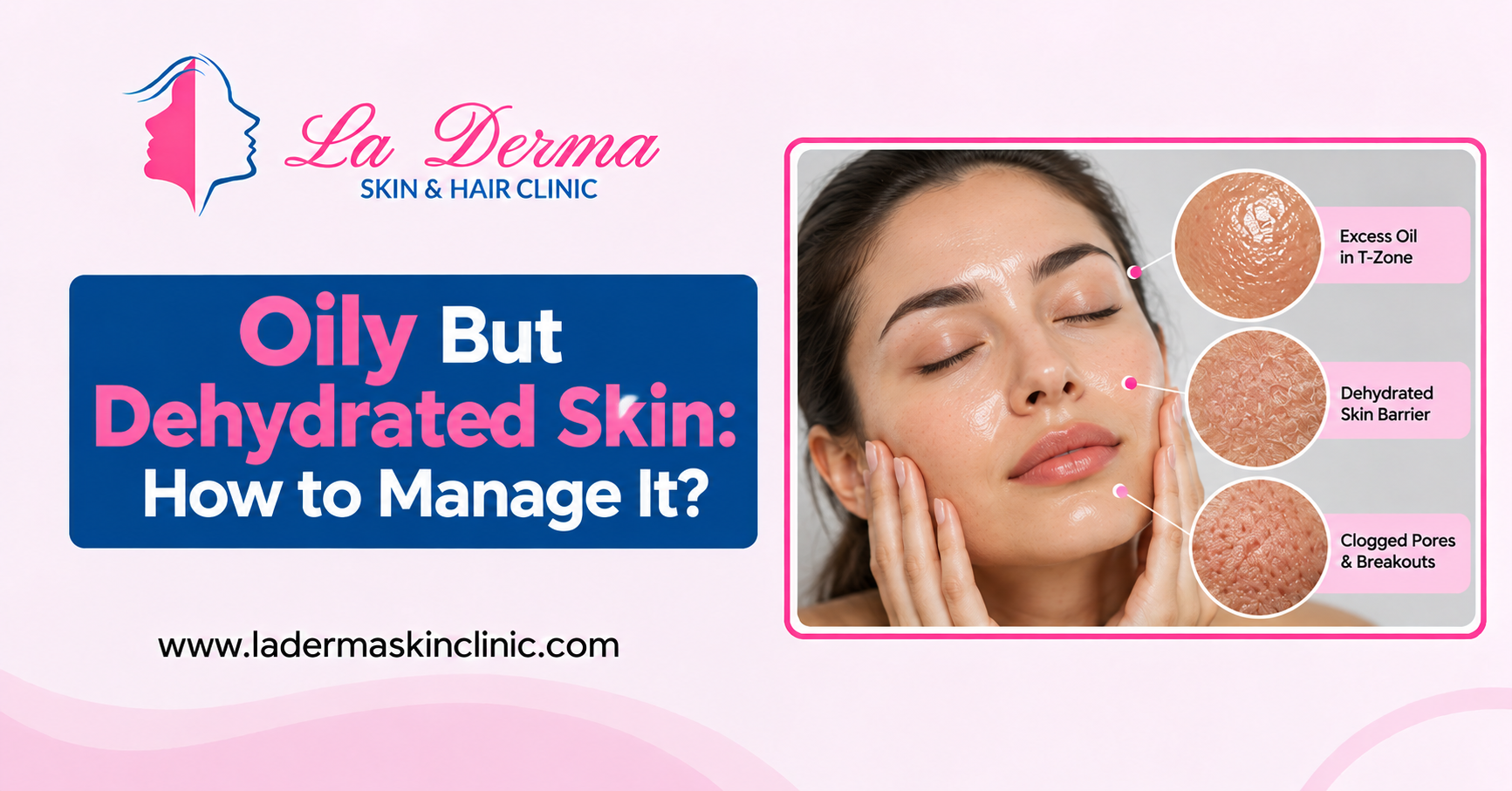
Oily But Dehydrated Skin: How to Manage It
Your forehead is shiny by noon, yet your cheeks feel tight right after washing your face. Your sunscreen sits on the surface like a film, but flaky patches still show up around your nose. If this sounds familiar, you are probably dealing with oily but dehydrated skin. It is one of the most common concerns people bring to a top dermatologist in Kolkata and one of the most misunderstood.
The good news is that it is very manageable once you understand what is going on. Here is a practical guide to getting your skin balanced again.
What Is Oily but Dehydrated Skin?
Oily but dehydrated skin produces plenty of sebum (oil) but doesn’t hold enough water in its upper layers. Oil and water are not the same thing. Oil is a lipid your skin makes on its own, while water is the moisture your skin retains. You can have a lot of the first and too little of the second.
This is different from dry skin, which is a skin type that lacks oil. Dehydration is a condition that can affect any skin type, including oily skin. That is why it is so often mistaken for something else.
Why Does Oily Skin Become Dehydrated?
A few everyday habits and environmental factors can tip the balance:
- Over-cleansing. Harsh foaming face washes, or washing your face four or five times a day, strip the skin barrier. Your skin then makes even more oil to compensate.
- Skipping moisturiser. Many people with oily skin avoid it for fear of breakouts. Without it, water escapes from the skin faster.
- Too many strong actives. Overusing salicylic acid, benzoyl peroxide, retinoids, or scrubs can damage the barrier.
- Climate and AC. Kolkata’s humidity makes skin feel sticky, but air-conditioned offices, cars, and metro rides pull moisture out all day. Dry winter spells add to it.
- Lifestyle. Poor sleep, too little water, excess sun, and a lot of caffeine can all play a part.
How to Tell If Your Skin Is Oily but Dehydrated
Look out for these signs:
- A shiny T-zone, but a tight or uncomfortable feel after cleansing
- Dull, uneven or rough texture despite the oiliness
- Fine lines that show up when you smile or gently pinch the skin
- Makeup that looks patchy or settles into lines
- Breakouts alongside flaking
- Stinging or sensitivity when you apply products
A quick test: wash your face with a gentle cleanser, pat dry, and apply nothing. If after 30 minutes your skin feels tight but looks shiny, dehydration is likely.
A Simple Morning Routine
Skincare for this combination doesn’t need ten steps. It needs the right four.
- Gentle cleanser. Choose a low-foaming, pH-balanced gel or cream cleanser. Rinse with lukewarm water, never hot.
- Hydrating serum. Apply it to slightly damp skin. Hyaluronic acid, glycerin, or panthenol draws water into the skin without adding oil.
- Lightweight moisturiser. Pick a gel or gel-cream that is non-comedogenic. Hydration is not the same as heaviness.
- Broad-spectrum sunscreen (SPF 30 or higher). Sun damage worsens dehydration, so this matters even on cloudy days. Gel or fluid textures feel the lightest on oily skin.
A Simple Night Routine
- Remove sunscreen and makeup. If you wear sunscreen daily, start with micellar water or a cleansing balm, then follow with your gentle cleanser.
- Treatment (a few nights a week). If you use niacinamide, a mild retinoid or a gentle exfoliating acid, go slowly. Two or three nights a week is plenty while your barrier recovers. Never layer several strong actives together.
- Hydrating serum. The same one from the morning works fine.
- Moisturiser. Use a slightly richer gel cream with ceramides if your skin feels tight at night.
Ingredients That Help (and Ones to Go Easy On)
Helpful:
- Hyaluronic acid holds water in the skin
- Glycerin is a simple, effective humectant
- Niacinamide supports the barrier and helps regulate oil
- Ceramides repair the skin’s protective layer
- Panthenol (vitamin B5) soothes and hydrates
Use with caution:
- Alcohol-heavy toners
- Strong clay masks used too often
- Scrubs with rough granules
- High-percentage acids or retinoids without guidance
Mistakes That Keep the Cycle Going
- Treating shine as the enemy and cleansing even more
- Using oil-control products on already stressed skin
- Changing products every week, so your skin never settles
- Skipping sunscreen because the skin “feels oily enough”
- Applying hydrating products on completely dry skin instead of damp skin
- Picking at breakouts, which weakens the barrier further
Give any new routine at least four to six weeks before judging it. Skin takes time to rebalance.
When Professional Care Makes a Difference
Home care works well for mild cases, but dehydration, acne, and sensitivity can overlap in ways that are hard to untangle alone. It is worth getting expert advice if:
- Your skin stays tight, flaky, or irritated despite a gentle routine
- Breakouts are painful, deep, or leave marks
- You can’t tell which products are helping and which are hurting
- You suspect a condition such as seborrheic dermatitis or rosacea
A good skin care clinic in Kolkata will look at your skin before recommending anything, rather than handing you a generic product list. At La Derma Skin & Hair Clinic, Dr. Khushbu Tantia assesses your skin type, barrier health, lifestyle, and triggers first, then builds a plan you can realistically follow. You also learn why each step matters, and that understanding is what keeps your skin balanced long after the first visit.
Lifestyle Habits That Support Your Skin
Drink enough water throughout the day, and eat foods rich in omega-3s, such as fish, walnuts, and flaxseeds. Aim for seven to eight hours of sleep, since your skin repairs itself overnight. If you spend long hours in an air-conditioned room, keep a small humidifier or a bowl of water nearby. Wash pillowcases weekly and avoid touching your face during the day.
Final Thoughts
Oily but dehydrated skin isn’t a lost cause, and it doesn’t need a complicated routine. Cleanse gently, hydrate generously, moisturise lightly, protect with sunscreen, and be patient. When your skin feels confusing, a professional opinion can save you months of trial and error.
If you are searching for a skin specialist near me in Kolkata, book a consultation with Dr. Khushbu Tantia at La Derma Skin & Hair Clinic and take the guesswork out of your skincare.
People Also Ask
- What is the difference between dry skin and dehydrated skin?
Dry skin is a skin type that doesn’t produce enough oil. Dehydrated skin is a temporary condition where the skin lacks water, and it can happen to oily, combination, or dry skin. Dry skin tends to feel rough and flaky all the time, while dehydrated skin can look shiny and feel tight at once.
- Why is my face oily and tight at the same time?
Your skin is likely losing water through a weakened barrier and producing extra oil to compensate. Over-washing, harsh products, and air conditioning are common triggers. Gentle cleansing and a hydrating routine usually help.
- Does drinking more water fix dehydrated skin?
Not on its own. Staying hydrated supports overall health, but skin hydration depends mostly on your barrier and the products you use. Pair good water intake with humectants like hyaluronic acid and a lightweight moisturiser.
- Can dehydrated skin cause acne?
Yes, indirectly. A damaged barrier can increase oil production, irritation, and clogged pores, which makes breakouts more likely. Treating the dehydration often helps acne settle too.
- Is hyaluronic acid good for oily skin?
Yes. It attracts water without adding oil, so it suits oily skin well. Apply it to slightly damp skin and seal it in with a moisturiser; otherwise, it can feel drying.
- Can I use a clay mask if my skin is oily but dehydrated?
Occasionally, but be careful. Limit clay masks to once a week at most, keep them on for a short time, and follow with a hydrating serum and moisturiser. If your skin feels tight or irritated, pause them.
- Which moisturiser texture is best for oily but dehydrated skin?
Gel or gel-cream textures work best because they hydrate without feeling heavy. Look for labels like “non-comedogenic” and “oil-free” and ingredients such as ceramides, glycerin, or panthenol.
- Should I exfoliate if my skin is dehydrated?
Yes, but gently and rarely. One or two nights a week with a mild chemical exfoliant, such as lactic acid or a low-strength AHA, is enough. Avoid rough scrubs, and skip exfoliation entirely if your skin is stinging or peeling.
- Does sunscreen make oily skin more dehydrated?
No, skipping it does more harm. UV exposure damages the barrier and worsens dehydration. Choose a lightweight gel, fluid, or matte-finish sunscreen and cleanse it off properly at night.