
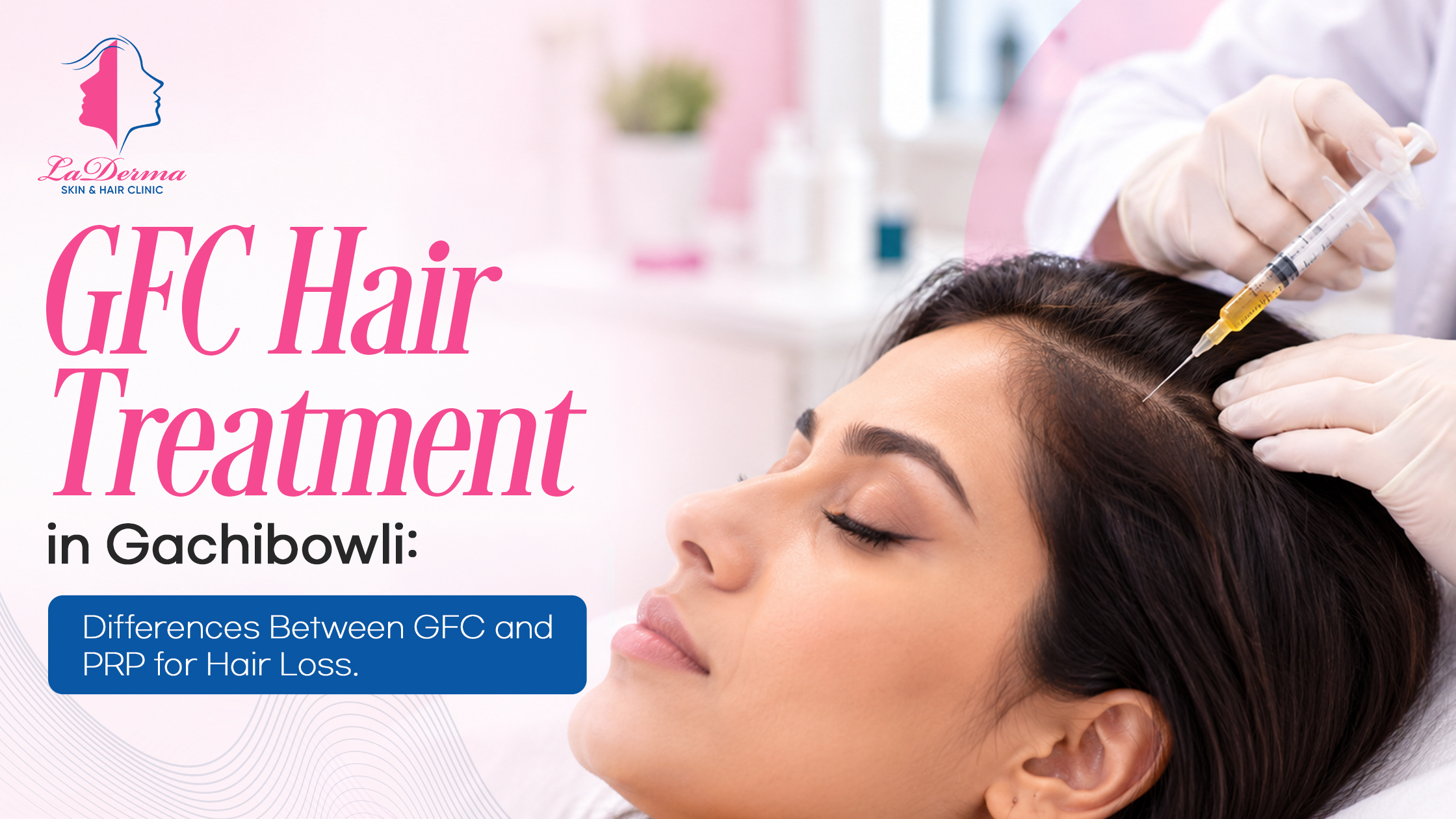
GFC Hair Treatment in Gachibowli: Differences Between GFC and PRP for Hair Loss
Hair thinning, excessive shedding, or a gradual reduction in hair density can make it difficult to decide which treatment may be suitable. While hair loss can develop for several reasons, identifying the underlying cause is an important first step before choosing a treatment. PRP (Platelet-Rich Plasma) and GFC (Growth Factor Concentrate) are two treatments that use components derived from a person’s own blood to support hair restoration.
Although both procedures aim to support hair growth, they differ in how the blood-derived components are prepared and delivered to the scalp. Understanding these differences can help you discuss suitable options with a dermatologist and develop realistic expectations about treatment outcomes.
If you are considering GFC hair treatment in Gachibowli, a professional scalp assessment can help determine whether GFC, PRP, or another hair loss treatment may be appropriate for your condition.
What Is GFC Hair Treatment?
Growth Factor Concentrate (GFC) is a regenerative hair treatment that uses growth factors obtained from a sample of the patient’s own blood. These growth factors are involved in cellular communication and processes associated with tissue repair and hair follicle activity.
During the procedure, a blood sample is collected and processed using a specialised preparation method to obtain a growth factor-rich concentrate. This preparation is then administered into selected areas of the scalp by a trained medical professional.
GFC is generally considered for people experiencing certain types of hair thinning or early-stage hair loss. However, its suitability depends on factors such as the cause of hair loss, scalp condition, and the remaining activity of the hair follicles.
The treatment does not guarantee hair regrowth, and results can vary from person to person.
What Is PRP Hair Treatment?
Platelet-Rich Plasma (PRP) is another treatment used to address selected types of hair loss. It involves collecting a small amount of blood and processing it, commonly through centrifugation, to separate a platelet-rich portion of the blood.
Platelets contain growth factors and other substances involved in the body’s natural healing processes. The prepared PRP is injected into areas of the scalp where hair thinning has occurred.
PRP may be recommended for certain patients with pattern hair loss or reduced hair density. It is often considered alongside other medical treatments rather than as a replacement for every form of hair loss management.
The concentration and composition of the final PRP preparation can vary depending on the equipment, processing protocol, and individual blood characteristics.
GFC vs PRP: What Are the Main Differences?
Although both procedures use blood-derived components, their preparation methods and treatment protocols are not identical.
1. Preparation Method
PRP involves separating platelet-rich plasma from the collected blood. The resulting preparation contains platelets and plasma, with the final composition depending on the processing technique.
GFC uses a specialised preparation process intended to obtain a concentrate rich in selected growth factors released from blood components. The precise method depends on the system used by the treating clinic.
The difference lies mainly in how the blood sample is processed and the composition of the material prepared for scalp application.
2. Growth Factor Composition
PRP contains platelets that release growth factors and other biological substances. Their concentration can vary between preparations.
GFC is designed to provide a growth factor-rich preparation, but its composition depends on the preparation system and protocol. It should not automatically be assumed that every GFC preparation contains higher concentrations of all growth factors than PRP.
Both treatments are intended to support biological processes associated with hair restoration, but the extent of their benefits varies among individuals.
3. Treatment Procedure
Both treatments usually involve drawing blood, preparing the required component, and administering it into the scalp using injections.
The preparation equipment, processing time, and injection protocol may differ. The overall appointment time also depends on the clinic’s procedure and the areas being treated.
A healthcare professional can explain the steps involved and what to expect before, during, and after the session.
4. Number of Sessions
The number of sessions depends on the degree of hair loss, the selected treatment, and the individual’s response.
Some treatment plans involve multiple sessions followed by periodic reassessment. There is no single session schedule that is appropriate for everyone, and maintenance may be discussed depending on the results.
A dermatologist should explain the proposed schedule before treatment begins rather than promising a fixed number of sessions for guaranteed regrowth.
5. Results and Effectiveness
Both GFC and PRP may help selected patients improve hair density or reduce hair shedding, but neither treatment works equally well for everyone.
The available evidence for PRP is broader, although study methods and outcomes vary. Evidence for GFC is still developing, and more high-quality comparative research is needed to establish whether it consistently provides better results than PRP.
The outcome depends on the cause of hair loss, its severity, follicle health, treatment protocol, and other individual factors. Neither procedure can reliably restore hair in areas where follicles have been permanently destroyed.
Who May Benefit From GFC or PRP Hair Treatment?
GFC and PRP may be considered for people with certain forms of non-scarring hair loss, particularly when hair follicles remain active.
A dermatologist may evaluate these treatments for individuals experiencing:
- Early-stage pattern hair loss
- Gradual reduction in hair density
- Hair thinning around the crown or parting
- Certain cases of persistent hair shedding
- Reduced hair thickness associated with selected hair loss conditions
However, not every type of hair loss requires injections. Hair loss caused by nutritional deficiencies, thyroid problems, hormonal changes, scalp conditions, or certain medications may need specific treatment directed at the underlying cause.
People with advanced hair loss or inactive follicles may have limited benefits from these procedures. A scalp examination and medical history help determine which options are reasonable.
What Happens During a GFC or PRP Session?
The treatment process usually begins with a consultation to assess the pattern of hair loss, medical history, and scalp health.
If the procedure is considered suitable, the process generally includes the following steps:
Step 1: Scalp assessment
The doctor examines the scalp and discusses the possible causes of hair loss. Additional tests may be advised when symptoms suggest an underlying medical condition.
Step 2: Blood collection
A small blood sample is collected using sterile equipment.
Step 3: Preparation
The sample is processed using the appropriate technique to prepare PRP or GFC.
Step 4: Scalp application
The prepared material is injected into selected areas of the scalp. A local numbing method may be used when appropriate.
Step 5: Aftercare guidance
The doctor provides instructions regarding scalp care, washing, physical activity, and follow-up appointments.
Temporary tenderness, redness, swelling, or mild discomfort can occur. Infection and other complications are possible, although appropriate sterile technique helps reduce the risks.
How Long Does It Take to See Hair Growth Results?
Hair growth takes time because follicles follow a natural growth cycle. Any improvement from GFC or PRP is therefore gradual rather than immediate.
Some patients may notice changes in hair shedding or thickness over several months, while others may experience limited improvement. The timing and extent of results depend on the underlying condition and the individual’s response to treatment.
Progress can be assessed through follow-up scalp examinations and photographs taken under consistent conditions.
It is important to remember that improvements may require ongoing management. A doctor may recommend combining injections with evidence-based treatments, such as topical minoxidil or other appropriate medical therapies, depending on the diagnosis.
How Can You Maintain Hair Health After Treatment?
Professional treatment is only one part of managing hair loss. Identifying contributing factors and following a consistent care plan can also be important.
Consider these measures:
- Follow the treatment schedule recommended by your dermatologist.
- Eat a balanced diet with adequate protein and essential nutrients.
- Avoid unnecessary supplements unless a deficiency or specific need has been identified.
- Use gentle hair care practices and avoid excessive heat or tight hairstyles.
- Seek medical advice if shedding increases suddenly or occurs with scalp itching, scaling, or inflammation.
- Continue prescribed hair loss medication as directed and discuss any concerns before stopping it.
These steps may support overall hair health, but they cannot guarantee regrowth or replace treatment for an underlying medical condition.
Why Choose Professional Evaluation for Hair Loss in Gachibowli?
Selecting a hair restoration procedure based only on its popularity may lead to unrealistic expectations. A proper assessment helps establish whether the hair loss is related to pattern baldness, a temporary shedding condition, nutritional factors, or another scalp disorder.
At La Derma Skin & Hair Clinic, patients can seek professional guidance for hair and scalp concerns, including an assessment of suitable treatment options. The choice between GFC, PRP, medication, or a combination approach should be based on the individual’s diagnosis and treatment goals.
If you are comparing GFC and PRP for hair loss, discuss the expected benefits, limitations, possible side effects, treatment costs, and maintenance requirements before making a decision.
Frequently Asked Questions
1. Is GFC better than PRP for hair loss?
Neither treatment is proven to be universally better than the other. GFC is designed to provide a growth factor-rich preparation, while PRP uses platelet-rich plasma. The most suitable option depends on the type of hair loss, the preparation method, and individual treatment needs.
2. How many GFC sessions are needed for hair growth?
The recommended number of sessions varies according to the severity of hair loss and the patient’s response. A dermatologist can suggest an individualised schedule and assess progress during follow-up visits.
3. Are GFC and PRP hair treatments painful?
Both procedures involve scalp injections, so mild discomfort may occur. Temporary redness, tenderness, or swelling is also possible. A suitable numbing method may help improve comfort during the procedure.
4. Can GFC or PRP regrow hair in bald areas?
These treatments may help selected patients with thinning hair when follicles remain active. They are unlikely to restore hair in areas where follicles have been permanently destroyed, and results cannot be guaranteed.
5. Are GFC and PRP hair treatments permanent solutions?
Neither treatment should be considered a permanent cure for hair loss. Results vary, and ongoing treatment or maintenance may be required. Managing the underlying cause of hair loss is important for long-term care.
Take the Next Step Towards Healthier Hair
GFC and PRP offer different approaches to using blood-derived components in hair restoration. While both may be helpful for selected individuals, the best choice depends on the cause of hair loss, follicle health, and the available clinical evidence.
If you are experiencing persistent hair thinning or increased shedding, a consultation at La Derma Skin & Hair Clinic can help you understand the possible cause and explore suitable treatment options.
Visit the La Derma Skin & Hair Clinic to learn more about available hair and scalp treatments.