
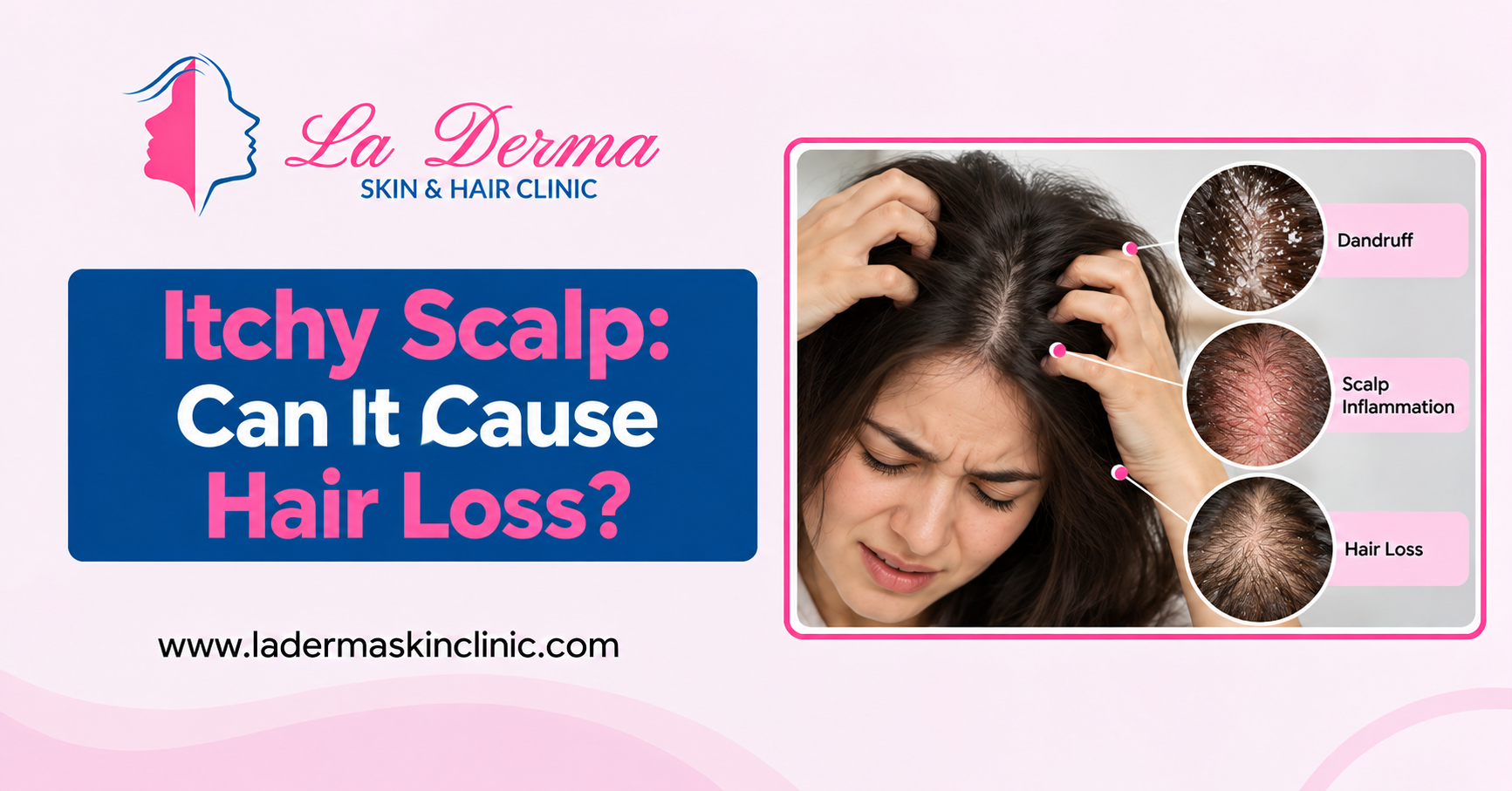
Itchy Scalp: Can It Cause Hair Loss?
Your scalp has been itching for days, and now you have started noticing more hair on your comb than usual. It is natural to wonder whether the two are connected, and the answer is often yes. An itchy scalp can lead to hair loss, mostly because of the problem that is causing the itch.
If you are looking for Hair Fall Treatment in Kolkata, the first step is to understand why your scalp itches. This guide explains the common causes, the warning signs to watch for, and a few simple things you can do at home.
Can an Itchy Scalp Cause Hair Loss?
Yes, though usually not on its own. The itch itself does not damage your hair roots, but the condition behind it can, and so can the constant scratching that follows. Inflammation, infection and rubbing all weaken the hair and make it shed faster than normal.
The encouraging part is that when the cause is found and treated early, this type of hair fall is often reversible.
Why Does the Scalp Itch?
Your scalp is skin, so it reacts to dryness, irritation, and infection just like the skin on your face or arms. These are the most common reasons:
- Dandruff and seborrheic dermatitis: A yeast-like organism called Malassezia lives on every scalp, but when it overgrows, it causes flakes, redness, and itching.
- Dry scalp: This is common in winter or when you wash with very hot water or harsh shampoos.
- Scalp psoriasis: It shows up as thick, silvery patches with clear edges that can itch a lot.
- Fungal infection (tinea capitis): You may see patchy scaling and broken hairs. It is more common in children, but adults can get it too.
- Contact dermatitis: Your scalp may react to hair dye, shampoo, oil, or other styling products.
- Folliculitis: These are small, tender bumps around the hair roots, usually caused by bacteria or sweat.
- Product buildup: Oil, sweat, and dust can clog the scalp, and Kolkata’s humid weather makes this very common.
- Stress and low nutrients: Low iron, vitamin D, or zinc, along with high stress, can make the scalp more sensitive.
How Does an Itchy Scalp Lead to Hair Fall?
There are four main ways this happens, and sometimes more than one is at work at the same time.
- Inflammation around the follicle. When the scalp stays inflamed for a long time, it can disturb the hair growth cycle, so hairs move early into the resting phase and shed about two months later. Doctors call this telogen effluvium.
- Scratching and friction. Repeated scratching damages the hair surface and breaks the skin, which makes hairs snap halfway and lets tiny wounds get infected.
- Infection. A scratched scalp lets bacteria and fungi enter, and they can weaken the follicles even further.
- Scarring conditions. Rarely, conditions like lichen planopilaris cause itching, burning, and permanent follicle damage, which is why an itch that keeps coming back should never be ignored.
Signs You Need to See a Doctor
A mild itch after a sweaty day is usually nothing to worry about, but it is worth getting your scalp checked if you notice any of these:
- Itching that lasts more than two to three weeks
- Thinning hair, a wider parting, or bald patches
- Redness, burning, pain, or oozing
- Thick scales, crusts, or painful bumps
- Flakes that return soon after using anti-dandruff shampoo
- Hair that falls out with a small bulb or tender skin attached
Dandruff and Hair Fall: Are They Linked?
This is one of the most common questions we hear. Dandruff alone does not cause baldness, but untreated dandruff keeps the scalp itchy and inflamed, and the cycle of scratching and irritation can make your hair shed more over time.
That is why many people who visit a Dandruff Clinic in Kolkata also say their hair looks thinner. The good news is that with the right product, used in the right way, flaking and hair fall often improve within a few weeks.
Why a Proper Diagnosis Matters
Not every itchy, flaky scalp is dandruff. Psoriasis, fungal infection, eczema, and allergies can look very similar, yet each one needs a different treatment, and using an anti-dandruff shampoo on a fungal infection or an allergy can actually delay recovery.
A Dermatologist in Kolkata will examine your scalp and ask about your hair-care habits, diet, stress levels, and health history. A dermoscope, which is a magnified scan of the scalp, helps look closely at your follicles, and sometimes a blood test, fungal culture, or small biopsy is needed to find the exact cause.
At La Derma Skin & Hair Clinic, Dr. Khushbu Tantia focuses on finding the root cause rather than just calming the itch. The aim is to understand why your scalp is irritated and how your hair cycle has reacted to it.
What Does Treatment Look Like?
The right treatment depends on the cause, so a personalised plan may include a mix of the following:
- Medicated shampoos and lotions to control yeast, inflammation, or scaling
- Prescription medicines for infections, psoriasis, or stubborn inflammation
- Nutrition correction if blood tests show a deficiency
- Hair-growth support such as minoxidil, supplements, or PRP, when suitable
- Routine changes to your washing, oiling, and styling habits
Many people want a quick fix, but healthy hair needs a calm scalp first. Once the itching and inflammation settle down, your follicles get the chance to recover and regrow.
Your scalp is also part of your overall skin health. A Skin Care Clinic in Kolkata that looks at the scalp, skin, and hair together can spot links that are easy to miss, such as eczema on the body along with scalp irritation.
Simple Home-Care Habits That Help
While you wait for your appointment, these simple habits can help keep things from getting worse:
- Avoid scratching with your nails. Press gently with your fingertips, or use a cool compress when the itch is at its worst.
- Wash on a regular schedule. Oily scalps often need a wash every one to two days in humid weather, followed by a thorough rinse.
- Choose mild products. Skip harsh chemical treatments, very hot water, and strong fragrances while your scalp is irritated.
- Do not share combs, towels, or caps. This lowers the risk of spreading fungal infections.
- Keep hair oil light. Heavy oiling can feed yeast and trap sweat on the scalp.
- Eat balanced meals. Include protein-rich foods, iron-rich foods, leafy greens, eggs, nuts, and pulses.
- Manage stress and sleep. Your scalp tends to show the effects of both sooner than you would expect.
Common Myths About Itchy Scalp and Hair Loss
Myth: An itchy scalp always means lice. Lice are one possible cause, but they are far from the only one.
Myth: Washing your hair every day causes hair fall. Washing removes sweat and flakes, and while harsh products can dry the scalp, clean hair does not fall out simply because it was washed.
Myth: Hair fall from an itchy scalp is always permanent. In most cases of inflammation or dandruff, hair regrows once the scalp has been treated.
Final Thoughts
An itchy scalp is your skin’s way of telling you something is off. If you ignore it, inflammation and scratching can slowly damage your hair, but if you act early, your follicles get a much better chance to recover. So instead of trying random shampoos and home remedies, find the cause first.
If you are dealing with constant itching, flaking, or increased hair fall, consider booking a consultation with Dr. Khushbu Tantia at La Derma Skin & Hair Clinic. A careful examination and a plan made for your scalp can make a real difference.
Frequently Asked Questions
Can stress cause an itchy scalp and hair to fall out together?
Yes. Stress can trigger flare-ups of dandruff, psoriasis, and eczema, and it can also push more hairs into the shedding phase.
How long does hair take to regrow after treating an itchy scalp?
Once the scalp settles, new growth is often visible within three to six months. Hair grows slowly, and the timeline differs from person to person.
Is an itchy scalp a sign of vitamin deficiency?
Sometimes. Low iron, zinc, vitamin D, or B vitamins can add to dryness, itching, and shedding, and a simple blood test can confirm whether this is the case.
When should I see a doctor for scalp itching?
If the itch lasts beyond a few weeks, comes with thinning hair, redness, or pain, or does not respond to a regular anti-dandruff shampoo, it is time to get it checked.