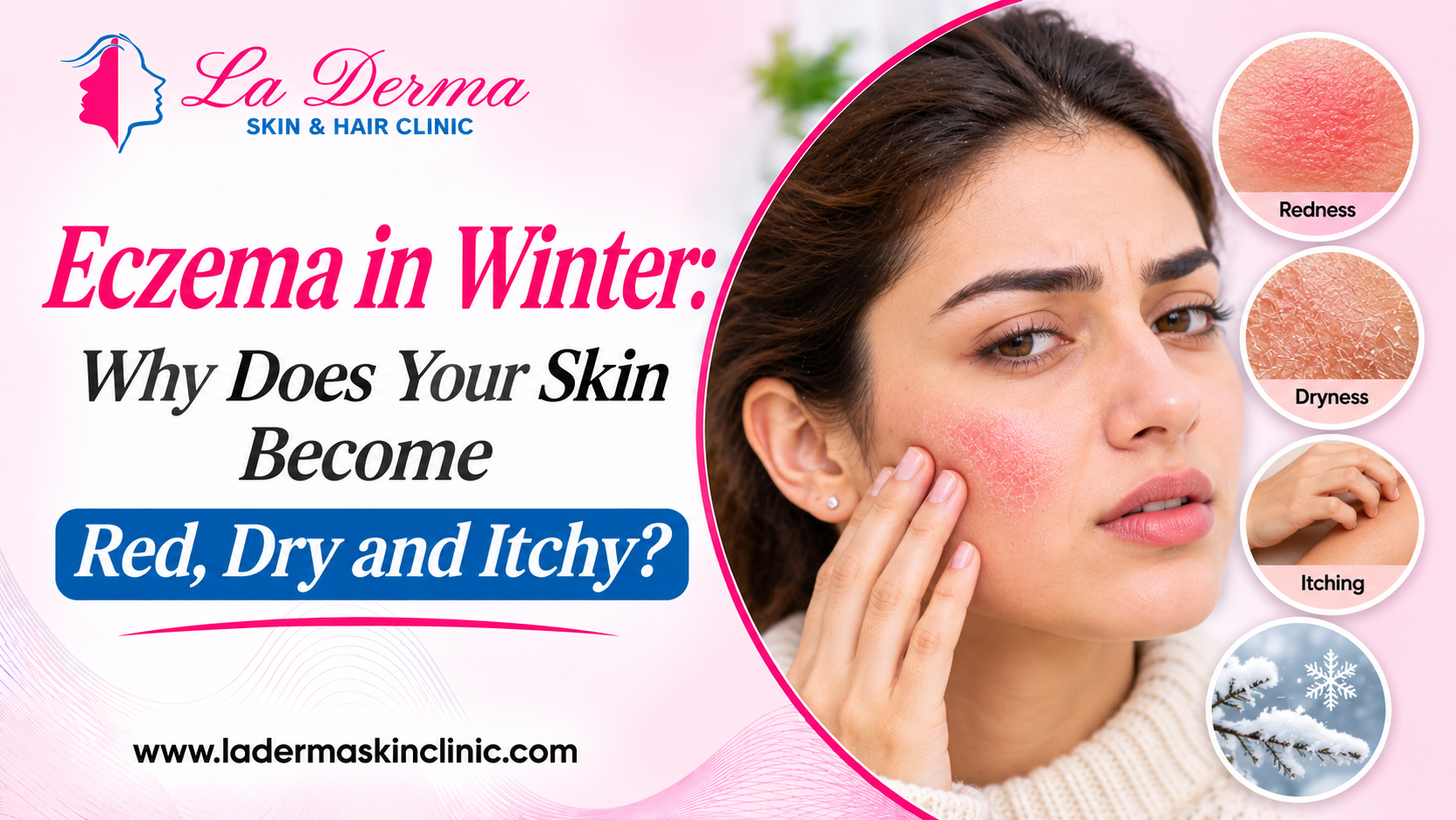
Eczema in Winter: Why Does Your Skin Become Red, Dry and Itchy?
Every November, the same story repeats in Kolkata: the morning air turns cool and dry, you reach for a heavier blanket, and suddenly your elbows, hands, or the back of your knees feel tight, red, and itchy. If this happens to you every year, it may not be “just dry skin.” It could be winter eczema, a common inflammatory skin condition that tends to flare when humidity drops.
If the itching keeps you awake or the patches keep coming back, consulting the Best Dermatologist in Kolkata is the safest way to get a clear diagnosis instead of guessing with creams from the pharmacy. In this guide, we explain why eczema worsens in winter, how to recognise it, what you can do at home, and when it is time to see a doctor.
Quick answer: Eczema flares in winter because cold, dry air and indoor heating pull moisture out of the skin. This weakens the skin barrier, lets irritants in, and triggers inflammation, which shows up as redness, dryness, and itching. Regular moisturising, gentle cleansing, and timely medical treatment keep flare-ups under control.
What Is Eczema and Why Does Winter Make It Worse?
Eczema, also called atopic dermatitis, is a long-term skin condition in which the skin barrier does not hold moisture well. A healthy barrier works like a wall that keeps water in and irritants, allergens, and germs out. In eczema, that wall has gaps. Skin loses water quickly, becomes sensitive, and reacts with inflammation.
Winter makes this worse in several ways:
- Low humidity: Cold air holds less moisture, so skin dries out faster, especially on the hands, face, and legs.
- Hot showers: Very hot water feels comforting but strips away the natural oils that protect the skin.
- Heaters and blowers: Indoor heating dries the air further and speeds up water loss from the skin.
- Woollen clothing: Rough fabrics such as wool and some synthetics rub against sensitive skin and trigger itching.
- Less sunlight and more time indoors: Exposure to dust mites, pet dander, and stale indoor air can set off flare-ups in people who are prone to allergies.
- Stress and poor sleep: Both are known to aggravate eczema, and itching at night creates a cycle of scratching and more irritation.
Common Symptoms of Winter Eczema
Eczema looks different from person to person, and it can look different at different ages. The most common signs are:
- Red or pinkish-brown patches, which may look darker, purple, or grey on brown and black skin
- Dry, rough, or scaly skin
- Intense itching, often worse at night
- Cracked skin, sometimes with small bleeding fissures on the hands and fingertips
- Small bumps that may ooze clear fluid when scratched
- Thickened, leathery skin after long-term scratching
In adults, eczema often appears on the hands, neck, inner elbows, behind the knees, and around the eyes. In babies, it commonly affects the cheeks and scalp.
Is It Eczema or Just Dry Skin?
Dry skin is usually mild, improves with a good moisturizer, and has no clear rash. Eczema is more persistent: the itch is stronger, the skin turns visibly red or inflamed, and patches return in the same places again and again. It can also be confused with other conditions. For example, flaky skin on the scalp may be dandruff rather than eczema, and a thick scaly patch could be psoriasis. If you are unsure, read about dandruff treatment or our guide on winter scalp problems, and then get the rash examined by a dermatologist for a proper diagnosis.
How to Manage Eczema in Winter: 8 Practical Tips
- Moisturise within three minutes of bathing. Pat the skin lightly dry and apply a thick, fragrance-free cream or ointment while it is still slightly damp. Repeat at least twice a day.
- Choose creams over lotions. Thicker products with ceramides, glycerin, or petroleum jelly hold moisture better than thin, watery lotions.
- Bathe in lukewarm water. Keep showers short, around 5 to 10 minutes, and avoid hot water on affected areas.
- Use a gentle, soap-free cleanser. Harsh soaps, scrubs, and strongly scented body washes can irritate eczema-prone skin.
- Wear soft cotton next to the skin. If you love your woollens, put a cotton layer underneath. Wash new clothes before wearing them.
- Add moisture to the air. If you use a room heater or blower, a humidifier or even a bowl of water in the room can reduce dryness.
- Avoid scratching. Keep nails short, and use a cold compress when the itch is unbearable.
- Know your triggers. Dust, certain detergents, fragrances, stress, and some foods can trigger flare-ups. A simple diary helps you spot patterns.
When Should You See a Dermatologist?
Home care works for mild flare-ups. Book a consultation if:
- The itching disturbs your sleep or daily routine
- Patches are spreading, oozing, bleeding, or looking infected (yellow crusts, pain, warmth, or fever)
- Moisturisers are no longer helping
- Your child has repeated rashes
- The condition affects your confidence, work, or mood
A dermatologist examines the pattern of the rash, asks about family history of eczema, asthma, or allergies, and checks for other conditions that look similar. Treatment depends on severity and may include medicated creams, anti-inflammatory medicines, antihistamines for itch, or other options chosen for your skin and age. Eczema cannot always be cured completely, but it can be controlled very well with the right plan.
If you are looking for a trusted Skin Care Clinic in Kolkata, choose one where a qualified dermatologist personally examines you and explains the diagnosis in simple words. Early treatment prevents thickened, darkened skin and recurring infections, and it also keeps winter far more comfortable.
Frequently Asked Questions About Winter Eczema
Why does eczema get worse in winter?
Cold, dry air and indoor heating draw moisture out of the skin. This weakens the skin barrier, so irritants enter easily and trigger redness, dryness, and itching.
Can eczema be cured permanently?
Eczema is a chronic condition that usually comes and goes. It cannot always be cured completely, but flare-ups can be controlled and often reduced with a proper skin-care routine and medical treatment.
Which moisturiser is best for eczema in winter?
A thick, fragrance-free cream or ointment containing ceramides, glycerin, or petroleum jelly is usually recommended. Apply it right after bathing and again during the day.
Is eczema contagious?
No. Eczema cannot spread from one person to another through touch.
Does hot water help eczema itching?
Hot water gives temporary relief but dries the skin further and can worsen the flare-up. Lukewarm water is a safer choice.
Which doctor should I consult for eczema?
A dermatologist is the right specialist. They confirm the diagnosis, rule out look-alike conditions, and plan treatment for your skin type and age.
Is winter eczema in babies different?
Baby eczema often appears on the cheeks, scalp, and body folds. Because infant skin is very delicate, always consult a doctor before using any medicated product on a child.
About La Derma Skin & Hair Clinic
La Derma Skin & Hair Clinic is a dermatology and cosmetology centre in Kolkata where every consultation is led by MD-qualified dermatologists. The clinic is run by Dr. Khushbu Tantia, who has over 12 years of experience treating conditions such as acne, pigmentation, hair loss, and eczema.