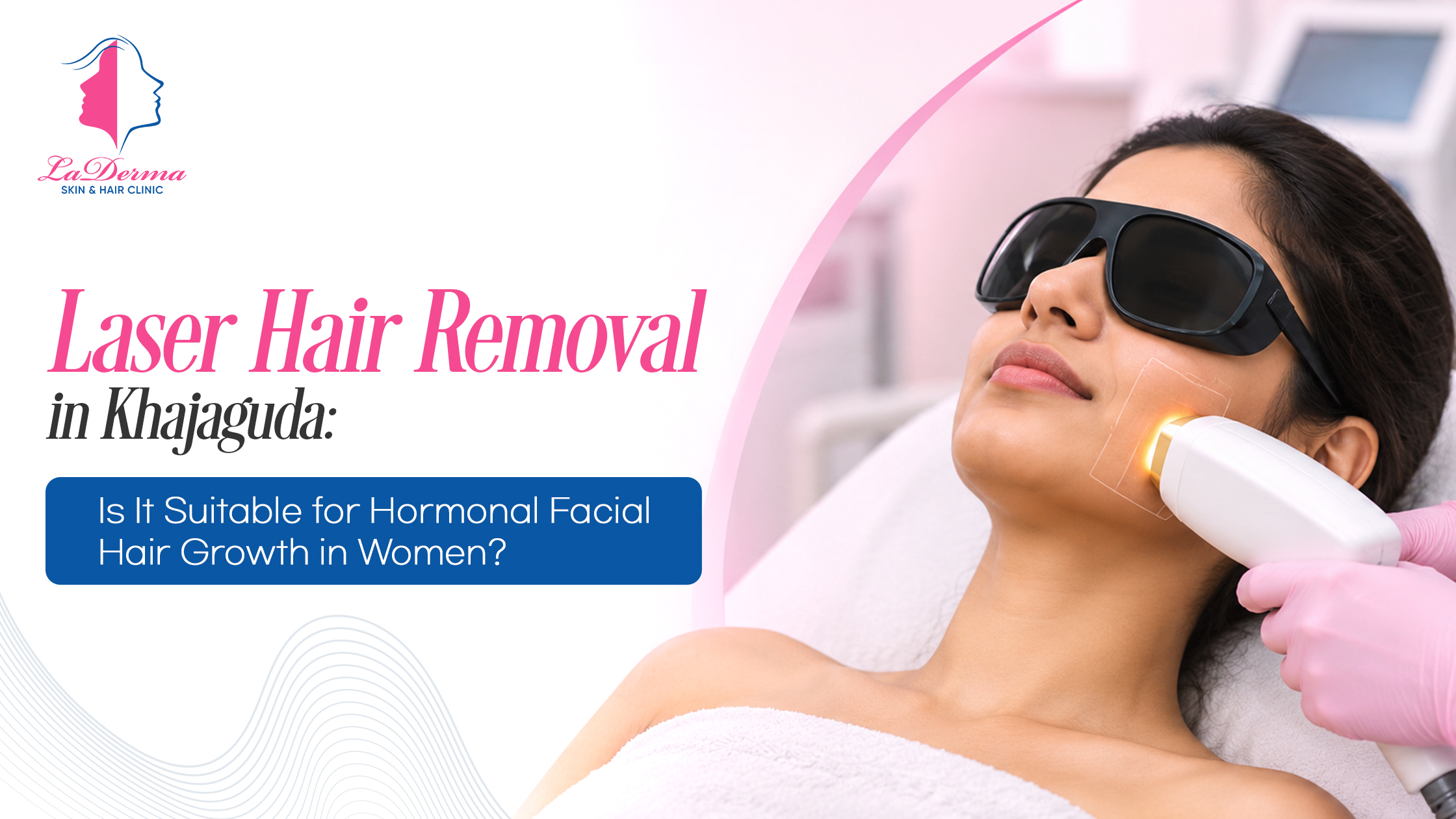
Laser Hair Removal in Khajaguda: Is It Suitable for Hormonal Facial Hair Growth in Women?
Noticing thick or dark hair growing on the chin, upper lip, or jawline can be frustrating, especially when it continues to return despite regular threading, waxing, or shaving. While facial hair growth is natural, excessive or coarse facial hair in women may sometimes be associated with hormonal changes.
Conditions such as polycystic ovary syndrome (PCOS), increased androgen activity, and certain hormonal disorders can influence facial hair growth. Although conventional hair removal methods provide temporary results, laser treatment offers an option for long-term hair reduction.
At La Derma Skin & Hair Clinic, women considering Laser Hair Removal in Khajaguda can receive personalised skin and hair assessments, understand the underlying causes of hormonal facial hair growth, and explore suitable laser hair reduction options based on their individual needs.
What Is Hormonal Facial Hair Growth in Women?
Hormonal facial hair growth occurs when hormonal activity influences the development of thicker, darker hair in areas where women typically have fine facial hair.
Excessive growth of coarse hair in an androgen-dependent pattern is medically known as hirsutism.
Commonly affected facial areas include:
- Upper lip
- Chin
- Jawline
- Sideburns
- Neck
- Cheeks
Androgens are hormones naturally present in both men and women. Increased androgen levels or greater hair follicle sensitivity to these hormones can contribute to excessive facial hair growth.
Identifying the underlying cause is important before choosing a suitable treatment approach.
What Causes Hormonal Facial Hair Growth in Women?
Several hormonal and medical factors can contribute to unwanted facial hair growth.
1. Polycystic Ovary Syndrome (PCOS)
PCOS is one of the most common causes of hirsutism in women. It may be associated with increased androgen production, which can stimulate the development of coarse facial hair.
Women with PCOS may also experience irregular menstrual cycles, acne, scalp hair thinning, and difficulty managing weight.
2. Increased Androgen Activity
Higher androgen levels or increased sensitivity of hair follicles to these hormones can contribute to thicker facial hair, particularly around the chin and upper lip.
3. Menopause and Hormonal Changes
Hormonal changes during perimenopause and menopause may influence facial hair growth. Declining oestrogen levels can make the effects of androgens more noticeable.
4. Genetic Factors
Some women naturally develop more facial hair because of inherited characteristics, even when their hormone levels are within the normal range.
5. Underlying Medical Conditions
Certain adrenal gland disorders, hormonal abnormalities, and medications may contribute to excessive facial hair growth.
A medical evaluation can help determine whether hormonal investigations are necessary.
How Does Laser Hair Removal Work on Hormonal Facial Hair?
Laser hair removal uses concentrated light energy to target melanin, the pigment present in hair.
The pigment absorbs the laser energy and converts it into heat, which damages the hair follicle and reduces its ability to produce new hair.
Hair follicles naturally progress through three main stages:
- Anagen phase: The active hair growth stage.
- Catagen phase: The transitional stage.
- Telogen phase: The resting stage.
Laser treatment is most effective during the active growth phase. Since facial hair follicles are not all in the same stage simultaneously, multiple treatment sessions are required.
Over time, treated hair may become finer, less dense, and less noticeable.
Is Laser Hair Removal in Khajaguda Suitable for Hormonal Facial Hair?
Yes, laser hair removal may be suitable for women experiencing hormonal facial hair growth, including those with PCOS.
However, laser treatment targets existing hair follicles rather than correcting hormonal imbalances.
Women with ongoing hormonal changes may experience new hair growth even after completing their initial treatment sessions.
The effectiveness of treatment depends on several factors, including:
- Hair thickness and colour.
- Skin tone and sensitivity.
- Underlying hormonal conditions.
- Type of laser technology used.
- Individual response to treatment.
- Consistency in attending treatment sessions.
Combining laser hair reduction with appropriate medical management may help improve long-term outcomes in women with hormonal conditions.
What Are the Benefits of Laser Hair Removal for Hormonal Facial Hair?
1. Long-Term Hair Reduction
Laser treatment can reduce the density and thickness of unwanted facial hair, making it easier to manage over time.
2. Reduced Dependence on Temporary Hair Removal Methods
Women who frequently rely on threading, waxing, or shaving may find that laser treatment reduces the need for these methods.
3. May Reduce Ingrown Hairs
Repeated shaving and waxing can sometimes contribute to ingrown hairs and inflammation. Reducing hair growth may help minimise these concerns.
4. Targets Specific Facial Areas
Laser technology allows selected areas, such as the upper lip, chin, and jawline, to be treated while limiting unnecessary exposure to surrounding skin.
5. Minimal Recovery Time
Most individuals can resume their regular activities shortly after treatment, although temporary redness or skin sensitivity may occur.
How Is the Laser Hair Removal Procedure Performed?
Step 1: Skin and Hair Assessment
A dermatologist examines the facial hair pattern, hair thickness, skin tone, and medical history.
Hormonal investigations may be recommended if symptoms suggest an underlying medical condition.
Step 2: Selection of Laser Technology
The appropriate laser technology and treatment settings are selected based on the patient’s skin tone and hair characteristics.
Step 3: Preparation of the Treatment Area
The facial area is cleaned, and hair may be trimmed or shaved before treatment. Protective eyewear is provided during the procedure to ensure eye safety.
Step 4: Laser Application
Controlled pulses of laser energy are delivered to the selected facial areas.
Patients may experience a mild warming or tingling sensation during the procedure.
Step 5: Post-Treatment Care
Cooling measures may be used to reduce temporary discomfort. The dermatologist provides aftercare instructions and recommends a suitable follow-up schedule.
How Many Laser Hair Removal Sessions Are Required for Hormonal Facial Hair?
Many women may require approximately six to eight initial sessions, although additional treatments may be necessary depending on their hormonal condition and treatment response.
Sessions are commonly scheduled around four to six weeks apart, with adjustments based on facial hair regrowth.
Women with PCOS or persistent hormonal imbalances may require periodic maintenance sessions.
The objective is long-term hair reduction rather than guaranteed permanent removal of every facial hair.
Laser Hair Removal vs. Traditional Facial Hair Removal Methods
| Feature | Laser Hair Removal | Threading, Waxing and Shaving |
| Treatment approach | Targets hair follicles | Removes existing hair |
| Results | Long-term hair reduction | Temporary hair removal |
| Frequency | Multiple sessions and maintenance | Frequent repetition |
| Hair regrowth | May become finer and less dense | Continues naturally |
| Skin irritation | Temporary redness or sensitivity | May cause irritation or ingrown hairs |
| Hormonal imbalance | Does not correct hormonal causes | Does not correct hormonal causes |
The appropriate method depends on individual skin sensitivity, hair characteristics, medical history, and treatment expectations.
Are There Any Side Effects of Facial Laser Hair Removal?
Laser hair removal may cause temporary skin reactions, including:
- Mild redness and swelling.
- Temporary skin sensitivity.
- Mild burning or tingling sensations.
- Temporary pigmentation changes.
Less common complications include burns, blistering, scarring, and paradoxical hypertrichosis, a condition in which hair growth increases after laser exposure.
Careful assessment is particularly important when treating fine facial hair and darker skin tones.
How Can Women Maintain Results After Laser Hair Removal?
Appropriate skincare and hormonal management can help support treatment outcomes.
A dermatologist may recommend:
- Using broad-spectrum sunscreen with SPF 30 or higher.
- Avoiding excessive sun exposure.
- Avoiding waxing, threading, or plucking between sessions.
- Using gentle skincare products after treatment.
- Following prescribed treatment for underlying hormonal conditions.
- Attending maintenance sessions when necessary.
When Should You Consult a Dermatologist for Excessive Facial Hair?
A dermatologist in Khajaguda can assess unwanted facial hair and determine whether laser treatment or medical management is appropriate.
Women experiencing excessive facial hair along with irregular periods, persistent acne, or scalp hair thinning should consider a medical evaluation.
Sudden facial hair growth accompanied by voice deepening or other significant physical changes requires prompt medical assessment.
Frequently Asked Questions
1. Is laser hair removal effective for PCOS-related facial hair?
Yes, laser treatment may reduce unwanted facial hair associated with PCOS. However, ongoing hormonal activity may require additional sessions, maintenance treatments, and appropriate medical management.
2. Can laser hair removal permanently remove hormonal facial hair?
Laser treatment provides long-term hair reduction. However, hormonal changes can stimulate new hair growth, making maintenance sessions necessary for some women.
3. Is laser hair removal suitable for Indian skin tones?
Yes, laser treatment can be suitable for Indian skin tones when appropriate technology, treatment settings, and skin cooling measures are used under professional supervision.
4. Can laser hair removal make facial hair thicker?
In uncommon cases, laser treatment may stimulate additional hair growth. Proper patient selection and assessment of hair thickness can help minimise this risk.
5. Does laser hair removal treat hormonal imbalance?
No, laser treatment targets hair follicles and does not correct hormonal imbalances. Women with underlying hormonal conditions may require separate medical treatment.
Get Personalised Treatment for Unwanted Facial Hair
Managing hormonal facial hair begins with understanding its underlying cause and choosing an appropriate treatment approach.
Book your appointment at La Derma Skin & Hair Clinic for personalised skin assessments and suitable laser hair reduction treatment based on your skin type, hair growth patterns, and individual concerns.
Call: 96031 22662