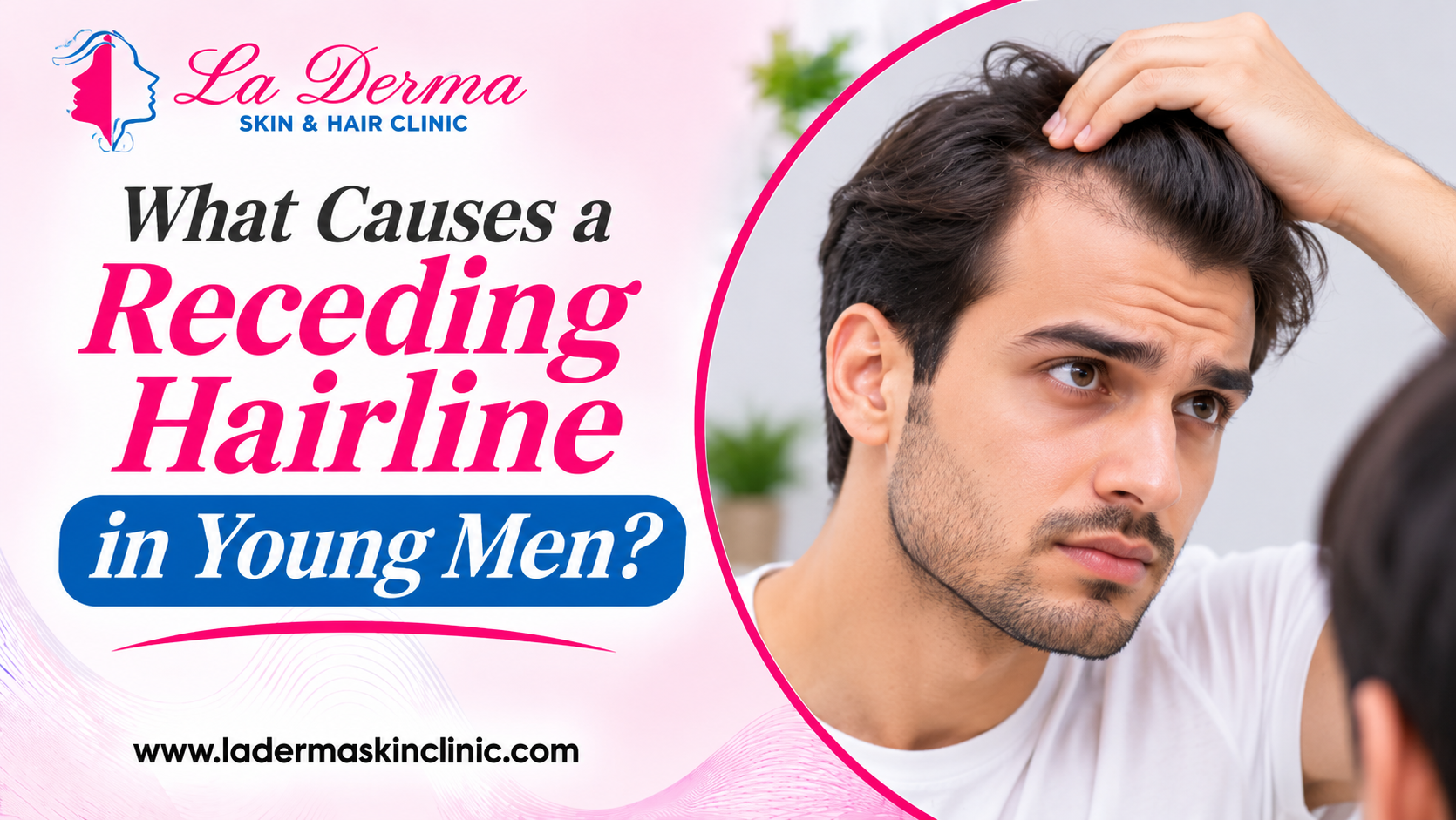
What Causes a Receding Hairline in Young Men?
You are in your twenties. When you look in the mirror, you see that your forehead looks a little bigger than it did a year ago. The corners at your temples seem to be creeping. This moment feels unsettling, and many young men go through it.
A receding hairline is more common than most people admit, and it is not always permanent. Once you understand what is behind the receding hairline, you can act early, which makes a difference.
Short Answer: A receding hairline in men is most often caused by genetics and a hormone called DHT (dihydrotestosterone). Stress, nutrition, scalp problems like dandruff, tight hairstyles, and some medical conditions can also trigger or speed up hair loss at the front of the scalp.
Is It Really a Receding Hairline?
Not every change at the forehead means you have a problem. Most men notice their hairline shifts a little as time passes. It often settles a bit higher with age. This is normal. It usually stops after moving about one finger’s width.
A receding hairline looks different.
- The temples keep pulling, forming an “M” shape over time.
- Hair at the front becomes thinner. It grows shorter. Starts to look wispy.
- You may begin to find hair in your comb. See it on your pillow. Even in the shower drain.
- The change doesn’t stop. It keeps going. It gets worse over months.
If any of this sounds like what you are seeing, it’s better to find out why. Don’t just. Hope it goes away on its own.
1. Genetics and DHT: The Biggest Culprit
The reason that a young man’s hairline moves back is a condition called androgenetic alopecia, also called male pattern baldness. If your father, grandfather, or maternal uncles lost hair early, your chances go up. Here is what happens inside the scalp. Testosterone turns into DHT, and in follicles that are sensitive because of genetics, DHT slowly shrinks the follicle. Each new hair becomes thinner and shorter. The growth cycle becomes shorter too. Eventually, the follicle may stop making hair. Hair at the temples and crown is sensitive to DHT, so the hairline is usually the first area to show it. Many men notice this in their twenties, and some even in their late teens.
2. Chronic Stress
Stress alone does not usually cause a hairline to recede. It can make the problem worse. Intense physical or emotional stress can push hairs into the resting phase all at once, a condition called telogen effluvium. A month later, you may shed noticeably more hair. Exam pressure, job demands, financial worries, and disturbed sleep are triggers for young men. If you already carry the tendency, stress can bring the visible thinning forward by years.
3. Nutritional Gaps
When nutrients run low, the body often stops caring about hair. Many young men skip meals, eat instant food, or follow crash diets or very low-protein routines. The usual deficiencies tied to hair fall include:
- Iron and ferritin support the hair growth cycle
- Vitamin D is linked to follicle cycling
- Vitamin B12 and zinc are important for cell growth and repair
- Protein is needed because hair is made of keratin
A blood test can show whether a deficiency is playing a part. Please avoid self‑prescribing supplements, because too much of some nutrients can create hair problems of their own.
4. Scalp Problems, Dandruff
This is a cause that people often overlook. A scalp that is flaky, itchy, oily, or inflamed is not a base for hair. Persistent dandruff, linked to seborrheic dermatitis, can irritate follicles, and constant scratching can damage the hairline further.
Dandruff does not directly cause pattern baldness. Ignoring dandruff can worsen shedding. If you have tried anti‑dandruff shampoos with no luck, you may need professional dandruff treatment in Kolkata from a specialist who can tell fungal dandruff, dry scalp, and dermatitis apart. Each condition needs an approach.
Kolkata’s humid climate makes this more common. Sweat, humidity, and pollution can feed yeast growth on the scalp. Clog follicles.
5. How You Style and Care for Your Hair
Pulling on your hair all the time can cause traction alopecia. This shows up first at the front and sides. For men, the usual culprits are:
- Tight caps, helmets worn for hours, or headbands
- Man buns and tight ponytails
- Frequent chemical straightening, bleaching, or colouring
- Very hot blow-drying and heavy styling gels or waxes
Helmets really deserve a mention here in India. Riding a two-wheeler every day with a sweaty, unwashed helmet can set off scalp irritation and fungal build-up. Clean the lining often. Let your scalp breathe.
6. Hormones and Medical Issues
Sometimes a receding hairline is a sign of something going on inside your body. Thyroid problems, insulin resistance, and some autoimmune conditions can all affect your hair. Certain medicines and supplements are also known to cause hair loss. This includes some anabolic steroids and protein or bodybuilding products that mess with your hormones.
If your hair loss comes on suddenly or shows up with tiredness, weight changes, or skin problems, get a check-up from a doctor instead of guessing.
7. Lifestyle Factors
Daily habits add up. Smoking reduces blood flow to the scalp and creates oxidative stress. Poor sleep disturbs your hormones and repair cycles. Heavy alcohol use can deplete nutrients. Long exposure to city pollution leaves residue on the scalp that can inflame follicles. None of these alone usually causes a receding hairline, but together they can speed up what genetics has already started.
When Should You See a Dermatologist?
Book a consultation if:
- Your hairline has visibly moved back within the last 6 to 12 months
- You’ve been losing more than 100 hairs a day for several weeks
- Your scalp is itchy, scaly, painful, or has patches
- Over-the-counter products haven’t helped
- Hair loss runs strongly in your family
A dermatologist in Kolkata will examine your scalp, often using a dermatoscope (trichoscopy), review your history, and order blood tests if needed. The earlier you start, the more hair you’re likely to save, because dormant but living follicles respond far better than ones that have fully closed.
Treatment Options That Actually Work
There’s no single magic fix, and anyone promising overnight regrowth should make you cautious. Evidence-based care usually combines several approaches:
- Medical therapy: Topical minoxidil and, in suitable cases, oral medication prescribed by a doctor to reduce DHT effects
- PRP therapy: Platelet-rich plasma uses your own blood components to support weakened follicles
- Mesotherapy and nutrient support: To nourish the scalp and strengthen the hair shaft
- Scalp treatments: For dandruff, oiliness, or inflammation
- Lifestyle correction: Diet, sleep, stress management, and gentler hair care
Choosing the right hair fall treatment in Kolkata depends on your cause, your age, and how far the recession has progressed. A good skin and hair clinic in Kolkata will build a plan around you instead of handing out the same package to everyone. Results usually take three to six months to show, so patience and consistency matter.
Simple Habits You Can Start Today
- Wash your scalp regularly with a gentle shampoo suited to your scalp type
- Eat enough protein, and include eggs, lentils, nuts, fish, or paneer
- Avoid tight hairstyles and keep helmets clean
- Don’t scratch flaky patches aggressively
- Manage stress through exercise, sleep, or a hobby
- Skip random supplements and “miracle” oils
Final Thoughts
A receding hairline in your twenties can feel like a blow to your confidence, but it’s not something to panic over or hide under a cap. Understanding the cause is the first real step toward managing it, and acting early gives you the best chance of keeping your hair.
If you’re noticing changes in your hairline, consider a professional evaluation. Dr. Khushbu Tantia at La Derma Skin & Hair Clinic can help you pinpoint what’s behind your hair loss, from genetics to dandruff to nutritional gaps, and guide you toward a treatment plan that fits your needs.
Frequently Asked Questions
Can a receding hairline grow back?
It depends on the cause. Hair loss from stress, deficiencies, or scalp conditions often improves once treated. Pattern baldness can’t be cured, but treatment can slow it and often thicken existing hair.
At what age does a receding hairline start?
It can begin as early as the late teens, though it’s most commonly noticed in the twenties and thirties.
Does dandruff cause a receding hairline?
Not directly, but untreated dandruff and scalp inflammation can increase shedding and make the hairline look thinner.
Is a receding hairline always genetic?
No. Genetics is the most common cause, but stress, nutrition, hairstyles, and health conditions can contribute.
Which doctor should I see?
A dermatologist with experience in trichology, the science of hair and scalp, is the right choice.