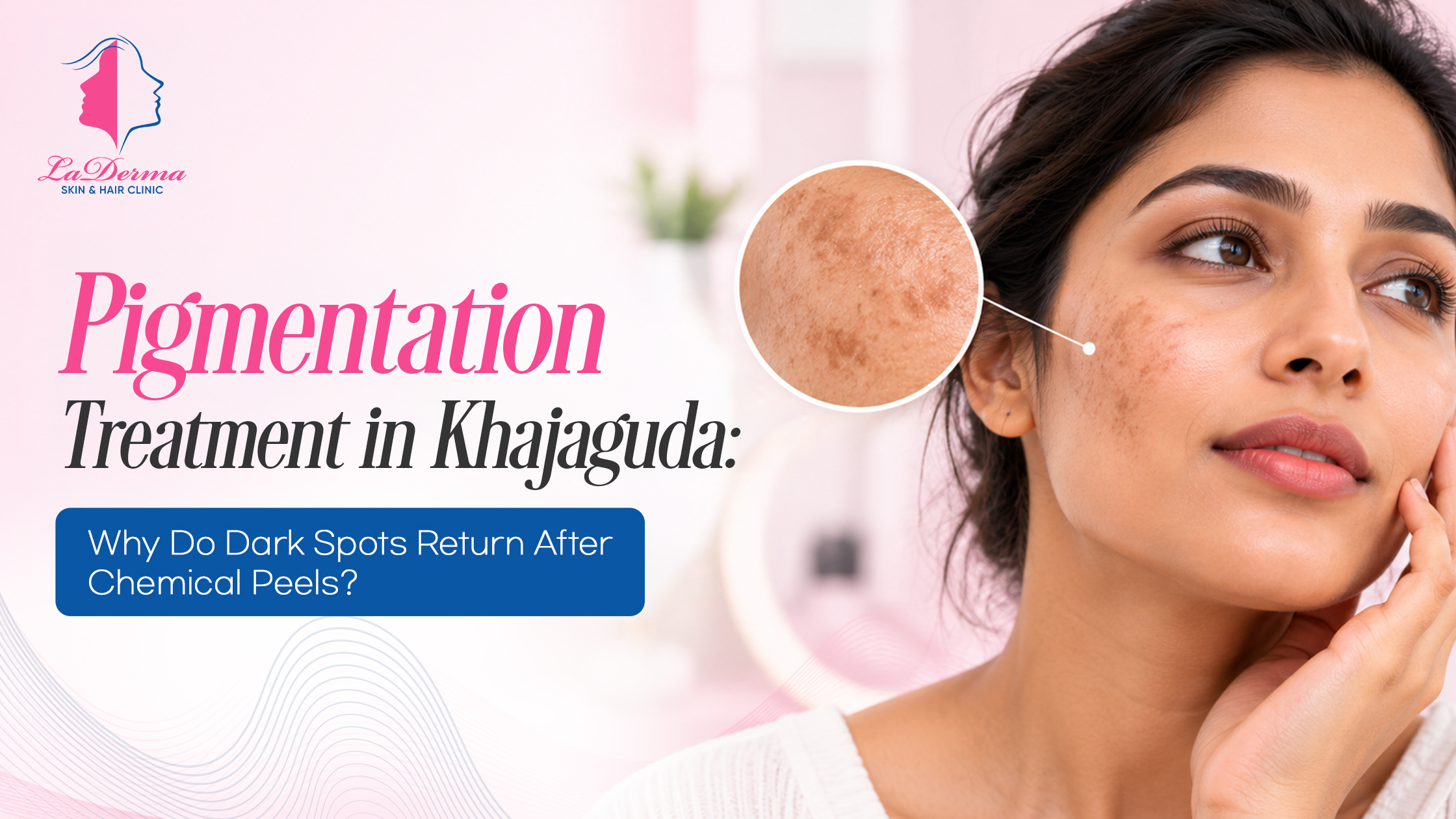
Pigmentation Treatment in Khajaguda: Why Do Dark Spots Return After Chemical Peels?
Have you noticed your dark spots fading after a chemical peel, only to see them gradually appear again a few weeks or months later? This can be frustrating, especially when you have followed your skincare routine and expected the results to last. The reason is that chemical peels help improve existing pigmentation, but they may not address every factor responsible for its recurrence.
Pigmentation can return because of sun exposure, hormonal changes, skin inflammation, or an underlying condition such as melasma. Understanding what triggers these changes is important for maintaining a more even skin tone. Pigmentation treatment in Khajaguda may involve a combination of professional procedures, suitable skincare products, and preventive measures based on the type of pigmentation and individual skin needs.
Why Do Dark Spots Return After Chemical Peels?
Chemical peels use specific acids to exfoliate the skin and encourage the removal of damaged surface cells. Depending on the type and depth of the peel, treatment may help reduce dark spots, improve uneven skin tone, and support skin renewal.
However, a chemical peel does not permanently prevent the skin from producing excess melanin, the pigment responsible for skin colour. If the original triggers remain, new pigmentation may develop even after the existing spots have faded.
Several factors can contribute to recurring dark spots.
1. Sun Exposure and UV Radiation
Sunlight is one of the most common triggers for pigmentation. Ultraviolet (UV) radiation stimulates melanin production, which can darken existing spots and encourage new areas of pigmentation.
After a chemical peel, the skin may be more sensitive during recovery. Unprotected sun exposure can increase the risk of post-inflammatory pigmentation and reduce the lasting benefits of treatment.
To help protect the skin:
- Apply a broad-spectrum sunscreen with SPF 30 or higher every day.
- Reapply sunscreen as directed, especially after sweating or prolonged outdoor exposure.
- Wear a hat and seek shade when sunlight is intense.
- Follow your dermatologist’s instructions about sun protection during recovery.
Consistent sun protection is an important part of maintaining improvements after a peel.
2. Hormonal Changes
Hormonal fluctuations can contribute to melasma, a condition that causes brown or grey-brown patches, commonly on the cheeks, forehead, nose, and upper lip.
Pregnancy, hormonal medications, and other hormonal influences may contribute to its development. Chemical peels can help lighten some areas of melasma, but they do not eliminate the underlying tendency to develop pigmentation.
As a result, dark patches may return when hormonal influences and environmental triggers continue. People with melasma often require a long-term management plan rather than relying on occasional peels alone.
3. Post-Inflammatory Hyperpigmentation
Post-inflammatory hyperpigmentation (PIH) develops when the skin produces excess melanin following inflammation or injury. Acne, eczema, irritation from skincare products, and certain cosmetic procedures can trigger this response.
Although chemical peels may improve existing marks, an overly strong peel or irritation during recovery can sometimes worsen pigmentation, particularly in darker skin tones.
Choosing an appropriate peel strength, allowing sufficient recovery time, and avoiding unnecessary irritation can help reduce this risk. Active acne or other inflammatory skin conditions should also be addressed where necessary.
4. The Wrong Type of Chemical Peel
Not every chemical peel is suitable for every pigmentation concern. Superficial peels may help with mild, surface-level pigmentation, while deeper or more persistent concerns may need a different approach.
For example, melasma involves pigment that can extend into deeper layers of the skin. Repeatedly using strong peels without proper assessment may irritate the skin and worsen dark patches.
The choice of peel should depend on the cause of pigmentation, skin sensitivity, medical history, and previous response to treatment. Stronger peels are not automatically more effective or safer.
5. Inconsistent Skincare and Aftercare
Results may be difficult to maintain if the skincare routine does not address the factors contributing to pigmentation.
Skipping sunscreen, using irritating products, picking at healing skin, or resuming exfoliating ingredients too soon can interfere with recovery. These habits may increase inflammation and encourage further darkening.
A consistent routine with gentle cleansing, moisturising, sun protection, and dermatologist-recommended pigmentation products can help support treatment results.
Which Types of Pigmentation Can Return After Chemical Peels?
Identifying the type of pigmentation helps explain why it may recur and which treatments could be appropriate.
Melasma: Melasma appears as irregular brown patches, often on sun-exposed areas of the face. It may recur because of sunlight, visible light, and hormonal influences.
Post-inflammatory hyperpigmentation: These marks develop after acne, irritation, burns, or other inflammation. They may persist or darken if the skin experiences further irritation or sun exposure.
Sunspots: Also called solar lentigines, these flat brown spots develop following cumulative sun exposure. A peel may lighten selected spots, but additional sun exposure can contribute to new ones.
Freckles: Freckles are small pigmented spots that often become more noticeable after sun exposure. Their appearance can fluctuate with changes in UV exposure.
Different pigmentation conditions can look similar. A dermatologist can assess the pattern and history of the spots to help determine the likely cause before treatment begins.
Which Treatments Can Help Prevent Pigmentation from Returning?
Managing recurring pigmentation usually requires more than removing visible spots. Treatment should address existing discolouration while reducing the triggers that contribute to new pigmentation.
1. A Suitable Chemical Peel
A dermatologist may recommend a superficial chemical peel using an appropriate acid, such as glycolic acid or mandelic acid, depending on the skin concern.
These peels can help improve selected forms of superficial pigmentation and uneven skin tone. The strength, frequency, and type of peel should be chosen carefully to minimise irritation.
Multiple sessions may be needed, and maintenance treatment may be considered when appropriate. Results vary, and no peel can guarantee that pigmentation will never return.
2. Prescription and Medical-Grade Topical Treatments
Topical products may help reduce excess melanin production or support gradual improvement in uneven skin tone.
Depending on the diagnosis, a dermatologist may recommend ingredients such as azelaic acid, retinoids, or other pigment-reducing agents. Hydroquinone may be prescribed for selected conditions under medical supervision.
Not every ingredient is suitable for every person. Some products can cause irritation, and inappropriate use may worsen pigmentation. A treatment plan should account for skin sensitivity, pregnancy-related considerations, and other medical factors where relevant.
3. Laser and Light-Based Procedures
Certain laser or light-based treatments may be considered for specific pigmentation concerns when appropriate.
However, these procedures are not suitable for all types of pigmentation. Melasma, in particular, can recur or worsen after some energy-based treatments, especially when the skin develops inflammation.
A thorough assessment of skin tone, pigmentation depth, and previous treatment response is important before proceeding.
4. A Long-Term Maintenance Routine
Maintaining results often involves daily sun protection and skincare that the skin can tolerate consistently.
A simple routine may include:
- Morning: Gentle cleanser, recommended moisturiser, and broad-spectrum sunscreen.
- Evening: Gentle cleansing, moisturiser, and any prescribed pigmentation treatment.
- Ongoing care: Avoid excessive exfoliation and introduce active ingredients only as advised.
For melasma and certain other conditions, a dermatologist may recommend visible-light protection through a tinted sunscreen containing iron oxides.
How Can You Choose the Right Pigmentation Treatment in Khajaguda?
Selecting an appropriate treatment begins with understanding why the dark spots developed and whether they are likely to recur.
During an assessment, a dermatologist may review the location and appearance of the pigmentation, previous procedures, skincare products, sun exposure, and possible hormonal influences.
The treatment plan may include a chemical peel, topical medication, another suitable procedure, or a combination of approaches. The goal is to improve pigmentation while minimising irritation and reducing the likelihood of further darkening.
Patients should also understand that different conditions respond at different rates. Some superficial marks gradually fade, while melasma may require ongoing management. Realistic expectations help guide decisions about treatment frequency and maintenance.
When Should You Consult a Dermatologist About Recurring Dark Spots?
Consider a professional assessment if pigmentation repeatedly returns after chemical peels, becomes darker, spreads, or does not improve with appropriate skincare.
You should also seek advice if a spot changes noticeably in size, shape, or colour, develops irregular borders, or begins bleeding. Such changes should not automatically be treated as routine pigmentation without an examination.
A dermatologist can determine whether another peel is appropriate or whether a different treatment strategy would be safer and more effective.
Frequently Asked Questions
1. Why do dark spots return after a chemical peel?
Dark spots may return because of sun exposure, hormonal changes, ongoing inflammation, or an underlying condition such as melasma. Chemical peels can improve existing pigmentation but do not permanently prevent new excess melanin production.
2. How long do chemical peel results last for pigmentation?
Results vary depending on the type of pigmentation, peel depth, skincare routine, and sun exposure. Some improvements may last for months, while conditions such as melasma can recur and require ongoing maintenance.
3. Can frequent chemical peels make pigmentation worse?
Yes. Peels that are too strong or performed too frequently can irritate the skin and trigger post-inflammatory hyperpigmentation. The appropriate treatment strength and interval should be determined according to skin type and recovery.
4. What is the best way to prevent pigmentation from returning?
Daily broad-spectrum sunscreen, appropriate skincare, avoiding unnecessary irritation, and managing the underlying cause can help reduce recurrence. Some people may also benefit from dermatologist-recommended maintenance treatments.
5. Is chemical peeling suitable for melasma?
Chemical peels may help selected cases of melasma, but they are not suitable for everyone and cannot guarantee permanent results. A dermatologist should assess the skin and consider the risk of irritation or worsening pigmentation before recommending a peel.
Get Personalised Care for Recurring Pigmentation
Dark spots that return after chemical peels may need a different treatment approach. Identifying the underlying cause can help determine whether another peel, topical medication, or alternative procedure is appropriate.
At La Derma Skin & Hair Clinic, you can discuss your pigmentation concerns and receive guidance on suitable treatment and long-term skin care.
Book an appointment with La Derma Skin & Hair Clinic.
Call: 96031 22662