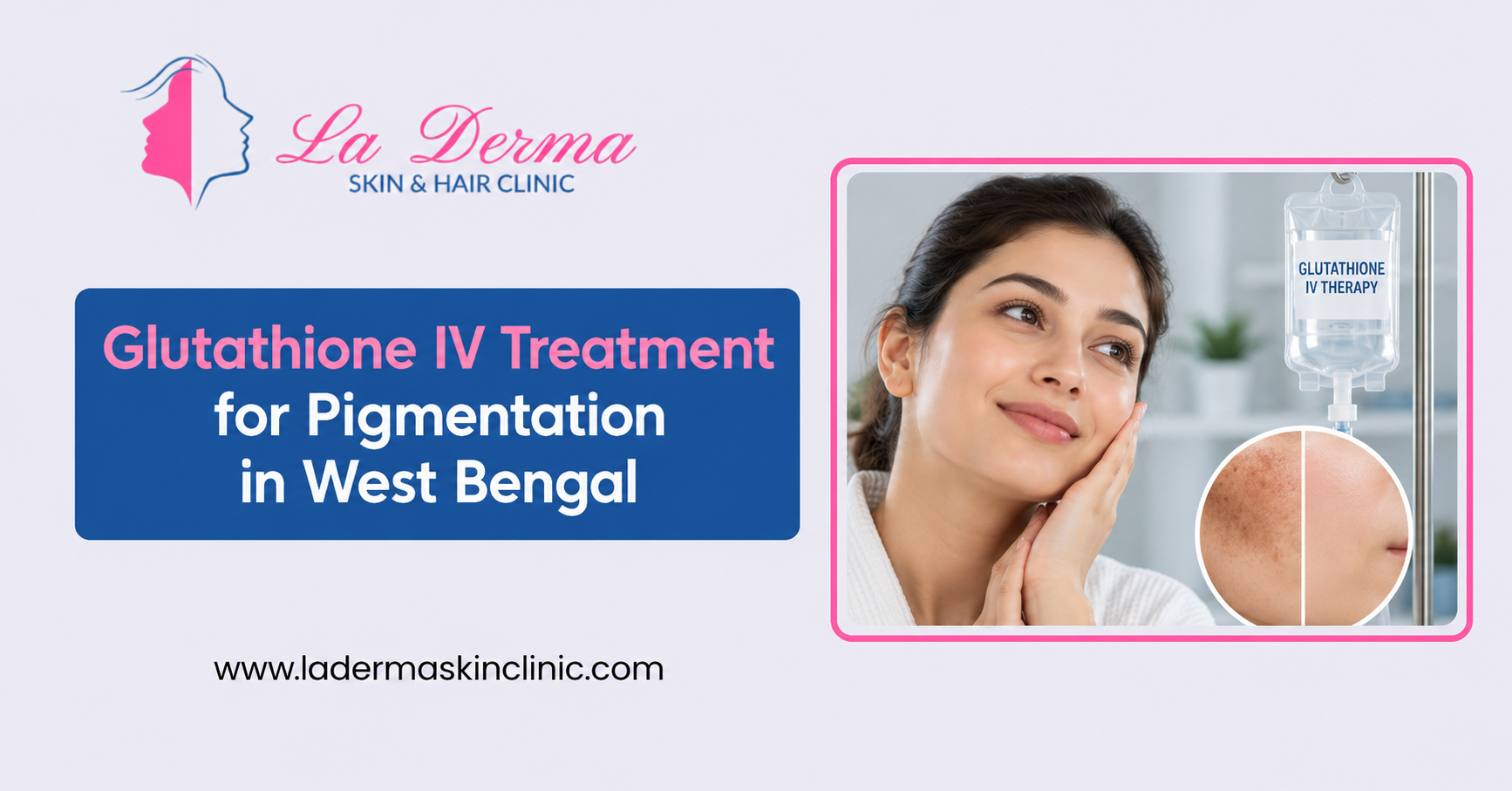
Glutathione IV Treatment for Pigmentation in West Bengal
If you’ve spent any time on Instagram or YouTube lately, you’ve probably seen glutathione drips promoted as a shortcut to glowing, even-toned skin. In humid, sun-heavy places like Kolkata, Howrah, Siliguri, and Durgapur, where dark spots, melasma, and uneven tone are everyday concerns, the appeal makes sense. But before you book a session with any Glutathione IV Doctor in Kolkata, it helps to know what the treatment can and can’t do. Let’s go through it honestly.
What is glutathione, and why is it linked to pigmentation?
Glutathione is a small antioxidant made naturally in your body from three amino acids: cysteine, glutamine and glycine. It protects cells from oxidative stress and supports the liver’s detox work.
Its link to skin tone comes from how it may influence melanin, the pigment that gives skin its colour. Lab research suggests glutathione can nudge melanin production away from dark eumelanin toward lighter pheomelanin, and may reduce the activity of tyrosinase, the enzyme that drives pigment formation. That is the theory behind using it for dark spots and dullness.
Does Glutathione IV Really Work for Pigmentation?
The short answer: it may help some people modestly, but the evidence is limited and results are not guaranteed.
Small studies have reported mild lightening in some participants, but many were short, small, or used different doses and routes. Dermatology bodies and regulators in several countries have raised concerns about IV glutathione used purely for skin whitening because long-term safety data is thin. In India, it is not an approved treatment for pigmentation disorders.
So a responsible clinic won’t promise “fairer skin in 4 sessions.” Any improvement is usually gradual, varies from person to person, and often fades if you stop treatment and keep getting sun exposure.
Which Types of Pigmentation are People Treating?
Not all pigmentation behaves the same, which is why diagnosis matters before any drip.
- Melasma: brownish patches on the cheeks, forehead, and upper lip, triggered by hormones, sun, and heat. Stubborn and likely to return.
- Post-inflammatory hyperpigmentation (PIH): dark marks left after acne, eczema, or injury. Very common in Indian skin tones.
- Sun spots and freckles: from cumulative UV exposure.
- Dark underarms, knees, elbows, or neck: sometimes linked to friction, insulin resistance, or hormonal conditions.
- General dullness or tanning: the most common reason people ask about glutathione.
Treating melasma like simple tanning often leads to disappointment.
Why is Pigmentation so Common in West Bengal?
- Strong UV and long humid summers keep pigment cells constantly active.
- Pollution in urban areas adds oxidative stress that can darken skin.
- Skin type: Most people here have Fitzpatrick types IV to V, which are more prone to pigmentation after even minor inflammation.
- Unregulated “fairness” products: creams containing steroids or mercury are widely sold and often cause thinning skin and rebound darkening.
What happens during a glutathione IV session?
- Consultation: the doctor reviews your skin, medical history, medicines, and goals.
- Basic checks: sometimes blood tests, especially for liver, kidney, or thyroid concerns.
- The drip: glutathione is diluted in a sterile solution and given slowly through a vein, usually over 15 to 45 minutes.
- Monitoring: you’re observed for any reaction.
Clinics usually recommend a course over several weeks, followed by maintenance. The dose and schedule should be set by the supervising doctor for you, not copied from a standard package.
Are There Side Effects or Risks?
- Nausea, bloating, or stomach cramps
- Headache or dizziness
- Rash, itching, or allergic reaction (rarely severe)
- Injection-site irritation or bruising
- Changes in liver or kidney markers with unsupervised or high-dose use
- Infection risk if the setup isn’t properly sterile
The biggest risk isn’t glutathione itself but who gives it and where. Beauty parlours and unlicensed “wellness” setups that cut corners on sterility, dosing, or emergency preparedness are where things go wrong.
Who Should Avoid Glutathione IV?
- Pregnant or breastfeeding women
- People with liver or kidney disease
- Asthmatic patients (some reports link glutathione to breathing issues)
- Anyone allergic to a component of the infusion
- Anyone under 18
- People taking medicines that may interact
How Many Sessions Will I Need, and What Does It Cost?
It varies. Skin type, kind of pigmentation, sun habits, and lifestyle all change the outcome. Some people notice a subtle brightness after a few weeks; others see little. Costs differ widely, and unusually cheap offers can signal diluted products or poor safety standards. Ask for a clear written plan before you start.
What Else Works for Pigmentation?
For most pigmentation, the foundation of treatment is not a drip. It’s usually a combination of:
- Daily broad-spectrum sunscreen (SPF 30 to 50), reapplied outdoors
- Topical actives such as vitamin C, niacinamide, azelaic acid, tranexamic acid, or prescription lightening agents
- Chemical peels chosen carefully for Indian skin
- Laser or light-based treatments for selected cases, used cautiously since wrong settings can worsen pigmentation
- Oral medication for stubborn melasma, under medical supervision
- Treating the root cause, like acne, hormonal imbalance, or irritation
Glutathione, if used at all, tends to play a supporting role.
How Do I Choose the Right Doctor?
Pigmentation is a medical skin concern, so many patients look for a Top rated Dermatologist in Kolkata rather than a generic wellness provider. Before booking, ask:
- Is a qualified dermatologist or physician personally assessing me?
- Will they explain the limits and risks, not just the benefits?
- Is the clinic clean, licensed, and equipped to handle reactions?
- Are the products genuine and sealed in front of me?
- Do they offer alternatives or push one package for everyone?
If a clinic promises permanent whitening or guaranteed results, walk away.
Final Thoughts
Glutathione IV can be one option in a bigger pigmentation plan, but it isn’t a magic fix. It works best when expectations are realistic, and the diagnosis is right. The smartest first step is a proper skin assessment, not a drip.
Choosing a trusted Skin and Hair Clinic in Kolkata means getting honest advice on safety, suitability, and alternatives. At La Derma Skin & Hair Clinic, you can book a consultation with Dr. Khushbu Tantia, who can assess your pigmentation type, discuss whether glutathione suits you, and build a plan that fits your skin and lifestyle.
Frequently asked questions
Is glutathione IV permanent?
No. Any effect typically fades without maintenance and sun protection.
Can it cure melasma?
No. It isn’t a proven treatment for melasma. Melasma can be managed, but it tends to relapse. Glutathione may be used as a supporting option in selected cases.
Will it change my natural skin colour?
Claims of dramatic whitening are overstated. Realistic goals are a brighter, more even tone.
Is it safe?
When supervised by a doctor for suitable candidates, risks are lower, but long-term safety isn’t fully established.
Do I still need sunscreen?
Yes. Without daily SPF 30 to 50, any improvement is likely to fade quickly.
How do I spot a fake offer?
Be wary of rock-bottom prices, “permanent whitening” claims, or pressure to buy large packages.
When should I see a dermatologist first?
If your pigmentation is spreading, darkening quickly, itchy, irregular in shape, or not improving with sunscreen and basic care.