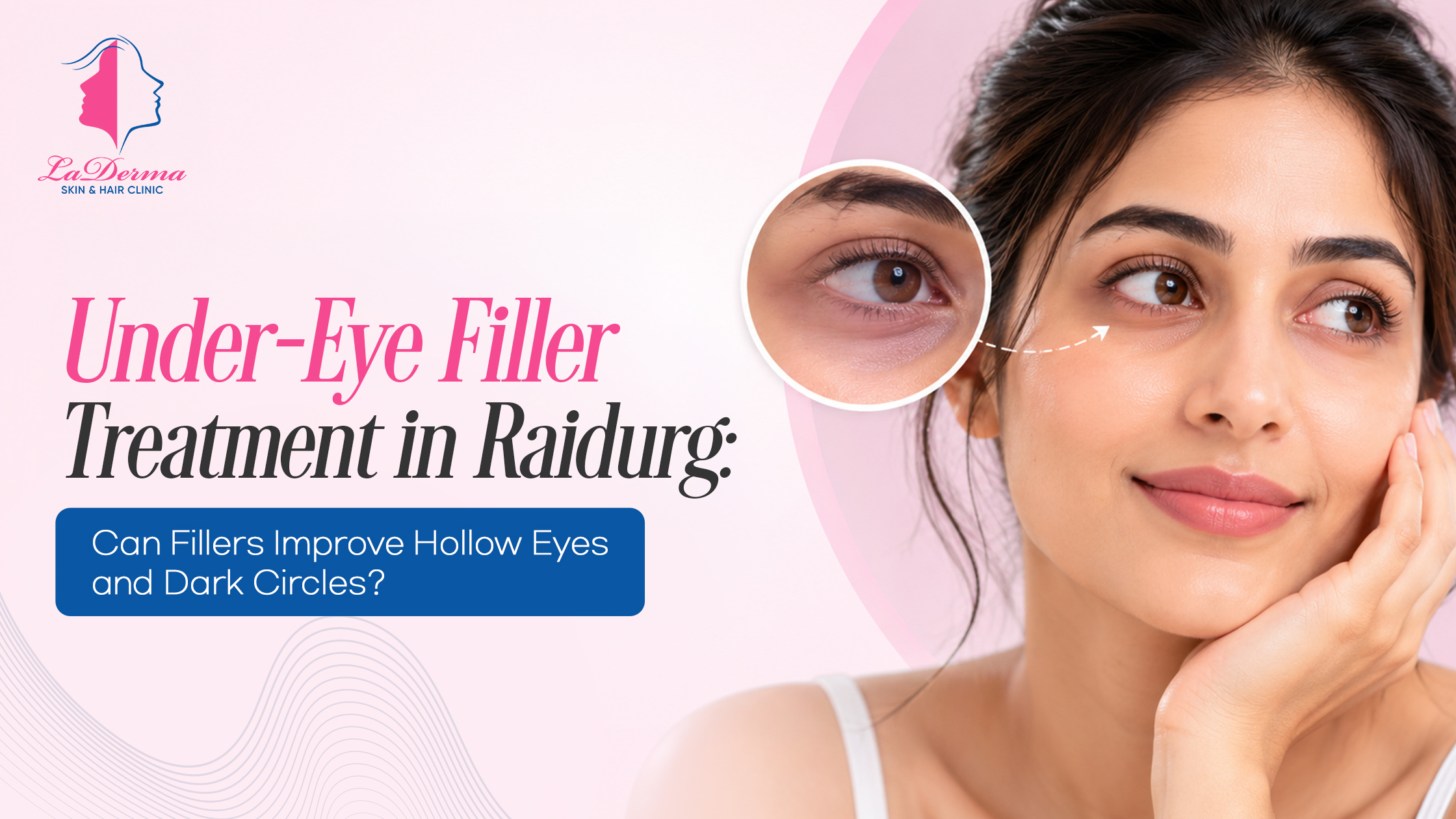
Under-Eye Filler Treatment in Raidurg: Can Fillers Improve Hollow Eyes and Dark Circles?
The area beneath the eyes can gradually develop a sunken appearance, making the face look tired even after adequate rest. For some people, this happens because of natural facial anatomy, while others notice changes due to ageing, reduced facial volume, or the appearance of shadows beneath the lower eyelids. These concerns can affect the overall appearance of the face, even when the skin itself is healthy.
Under-eye fillers are one option for improving the appearance of hollow tear troughs by restoring volume beneath the eyes. At La Derma Skin & Hair Clinic, patients can seek professional guidance to understand the causes of under-eye hollows and explore suitable treatment options. However, fillers are not suitable for every type of dark circle, and the results depend on the underlying cause, facial structure, and skin condition. Understanding how the treatment works can help you decide whether it is an appropriate option for your concerns.
Can Under-Eye Fillers Improve Hollow Eyes and Dark Circles?
Yes, under-eye fillers may improve hollow eyes and certain types of dark circles caused by volume loss. These fillers typically contain hyaluronic acid, a substance that attracts water and helps provide volume to the treated area.
When the under-eye area becomes hollow, the transition between the lower eyelid and cheek can create shadows that make the skin appear darker. Carefully placed filler can soften this transition, reduce the appearance of hollows, and create a smoother contour.
However, fillers do not treat every cause of under-eye darkness. Pigmentation, visible blood vessels, thin skin, allergies, and certain medical conditions may require different approaches.
A consultation helps determine whether volume restoration is likely to improve the concern or whether another treatment would be more suitable.
What Causes Hollow Eyes and Under-Eye Dark Circles?
Identifying the cause of the concern is an important step before choosing any cosmetic procedure. Several factors can contribute to changes beneath the eyes.
1. Loss of Facial Volume
As people age, the distribution of facial fat and the support provided by surrounding tissues can change. This may create hollows beneath the eyes, making shadows more noticeable.
2. Genetics and Facial Anatomy
Some people naturally have deeper tear troughs or prominent under-eye hollows. These features may be present even at a young age and are not necessarily related to poor sleep or an unhealthy lifestyle.
3. Pigmentation
Excess melanin in the skin beneath the eyes can create brown or dark patches. Since this concern involves skin colour rather than a lack of volume, fillers alone may not provide meaningful improvement.
4. Thin Under-Eye Skin
The skin beneath the eyes is delicate and relatively thin. Blood vessels beneath the surface may become more visible, contributing to a bluish or purplish appearance.
5. Allergies and Lifestyle Factors
Allergies, eye rubbing, lack of sleep, dehydration, and certain lifestyle habits may make dark circles more noticeable. Treating the contributing factors can be important alongside any cosmetic treatment.
Understanding these differences helps establish realistic expectations and prevents unnecessary procedures.
How Does Under-Eye Filler Treatment Work?
The procedure focuses on restoring volume in carefully selected areas beneath the lower eyelids. Hyaluronic acid filler is commonly used because it can provide temporary volume and, when appropriate, can be dissolved using an enzyme called hyaluronidase.
The treatment generally involves the following steps.
Step 1: Facial Assessment
The treating professional examines the depth of the tear trough, skin quality, under-eye bags, facial proportions, and the type of dark circles present. Medical history and previous cosmetic treatments are also reviewed.
Step 2: Treatment Planning
The practitioner determines whether filler is appropriate and discusses the expected benefits, limitations, and potential complications. In some cases, another treatment or no procedure may be recommended.
Step 3: Filler Placement
After preparing the area, small amounts of filler are placed at carefully selected points using an appropriate technique. The objective is to improve the contour without creating excessive fullness.
Step 4: Post-Treatment Assessment
The area is checked for immediate swelling, asymmetry, and other visible changes. You will receive aftercare instructions and guidance on when to return for a follow-up assessment.
The procedure is usually performed without surgery, but it requires detailed knowledge of under-eye anatomy and appropriate injection techniques.
What Results Can You Expect from Under-Eye Fillers?
Results vary according to facial anatomy, the amount of volume loss, skin quality, and the type of filler used.
Potential improvements include:
- A less hollow appearance beneath the eyes.
- A smoother transition between the lower eyelids and cheeks.
- Reduced shadowing caused by tear-trough depressions.
- A more rested appearance when hollowness is the main concern.
Some improvement may be visible immediately, although swelling can affect the initial appearance. The final result becomes easier to assess as the area settles.
Hyaluronic acid fillers are temporary, and their effects commonly last several months to around a year or longer in some individuals. Duration depends on the product, placement, metabolism, and individual response.
Fillers cannot eliminate all dark pigmentation, remove prominent eye bags, or reverse every age-related change. A subtle, carefully planned result is generally preferable to excessive correction in this delicate area.
Who Is a Suitable Candidate for Under-Eye Fillers?
People with mild to moderate tear-trough hollows and suitable skin characteristics may benefit from this treatment. However, not everyone with dark circles is a good candidate.
A practitioner may recommend caution or an alternative approach if you have:
- Significant under-eye bags or puffiness.
- Pronounced skin laxity or excess lower-eyelid skin.
- Persistent swelling or fluid retention beneath the eyes.
- Dark circles primarily caused by pigmentation.
- Certain medical conditions or a history of complications from previous fillers.
People who tend to develop under-eye swelling may experience a less satisfactory result because hyaluronic acid attracts water. In such cases, adding volume may worsen puffiness rather than improve the appearance.
A qualified medical professional should evaluate the area before deciding whether treatment is appropriate.
What Are the Risks and Side Effects of Under-Eye Fillers?
Although under-eye fillers are non-surgical, they are not risk-free. The delicate skin and blood vessels around the eyes require careful handling during treatment.
Common temporary effects may include:
- Mild swelling or bruising.
- Tenderness at the injection site.
- Temporary redness.
- Unevenness or small visible irregularities.
- A bluish discolouration known as the Tyndall effect if filler is placed too superficially.
Other complications can include persistent puffiness, infection, lumps, and asymmetry. Rarely, filler can enter or obstruct a blood vessel, potentially causing tissue damage or vision loss.
Sudden visual changes, severe or unusual pain, or skin discolouration after an injection require immediate emergency medical assessment. Choosing an appropriately qualified and experienced medical professional is essential for reducing risks and ensuring that complications can be recognised and managed promptly.
Are There Alternatives to Under-Eye Fillers?
The most suitable treatment depends on whether the main concern is hollowness, pigmentation, thin skin, or puffiness.
For individuals exploring dark circle treatment in Raidurg, the treatment plan may include options such as:
Topical skincare: Selected ingredients may help address pigmentation or improve the appearance of the skin over time. Products should be chosen carefully because the under-eye area is sensitive.
Chemical peels or laser treatments: Depending on the cause and skin type, selected procedures may help improve pigmentation or skin texture. These treatments require appropriate assessment to reduce the risk of irritation and pigment changes.
Lifestyle and allergy management: Adequate sleep, sun protection, avoiding eye rubbing, and managing allergies may help reduce the visibility of dark circles in some people.
Surgical assessment: Pronounced under-eye bags or excess skin may require evaluation for a surgical approach rather than filler injections.
A personalised assessment can help distinguish between concerns that may respond to volume restoration and those that need a different treatment strategy.
How to Choose the Right Professional for Under-Eye Filler Treatment in Raidurg
The under-eye area is delicate, and treatment requires an understanding of facial anatomy, filler selection, injection depth, and possible complications. Choosing a qualified medical professional is therefore an important part of the decision.
When selecting a provider, consider the following:
- Medical qualifications: Look for an appropriately qualified practitioner with relevant training in aesthetic procedures.
- Experience with under-eye treatments: Experience in treating tear-trough hollows and managing complications is particularly important.
- Individual assessment: The practitioner should evaluate your anatomy and explain whether fillers are suitable for your concern.
- Transparent expectations: You should receive clear information about likely results, limitations, risks, and costs.
- Emergency preparedness: Confirm that the provider can recognise and manage serious filler-related complications.
Consulting a dermatologist can help you understand whether your under-eye concern is related to volume loss, pigmentation, or another skin condition. The right treatment should be based on your individual needs rather than a standard procedure offered to everyone.
Frequently Asked Questions (FAQs)
1. Can under-eye fillers completely remove dark circles?
No. Fillers may reduce dark circles caused by hollowing and shadow formation, but they do not reliably treat pigmentation, visible blood vessels, or every other cause of under-eye darkness.
2. How long do under-eye fillers last?
Results commonly last several months to around a year or longer in some individuals. The duration depends on the filler used, treatment technique, facial anatomy, and individual response.
3. Is under-eye filler treatment painful?
Most people experience mild discomfort during the procedure. A topical numbing agent or other appropriate comfort measures may be used, depending on the treatment plan.
4. Can under-eye fillers make puffiness worse?
Yes. Hyaluronic acid attracts water, and filler may worsen swelling or puffiness in some individuals. People with prominent under-eye bags or fluid retention may not be suitable candidates.
5. Is under-eye filler treatment safe?
The procedure can be performed safely in appropriately selected patients by qualified professionals, but complications are possible. Rarely, vascular blockage can cause serious tissue damage or vision loss. A thorough assessment and appropriate emergency preparedness are essential.
Personalised Care for Hollow Eyes and Dark Circles
Under-eye fillers may help improve tear-trough hollows and reduce shadows when volume loss is the main concern. However, the treatment is not suitable for every type of dark circle, and careful assessment is necessary to achieve a natural-looking result while minimising risks.
If you are considering this procedure, consult a qualified medical professional to discuss your concerns, understand the available options, and determine whether filler treatment is appropriate for your under-eye area.
For appointments: 096031 22662
Visit: La Derma Skin & Hair Clinic