
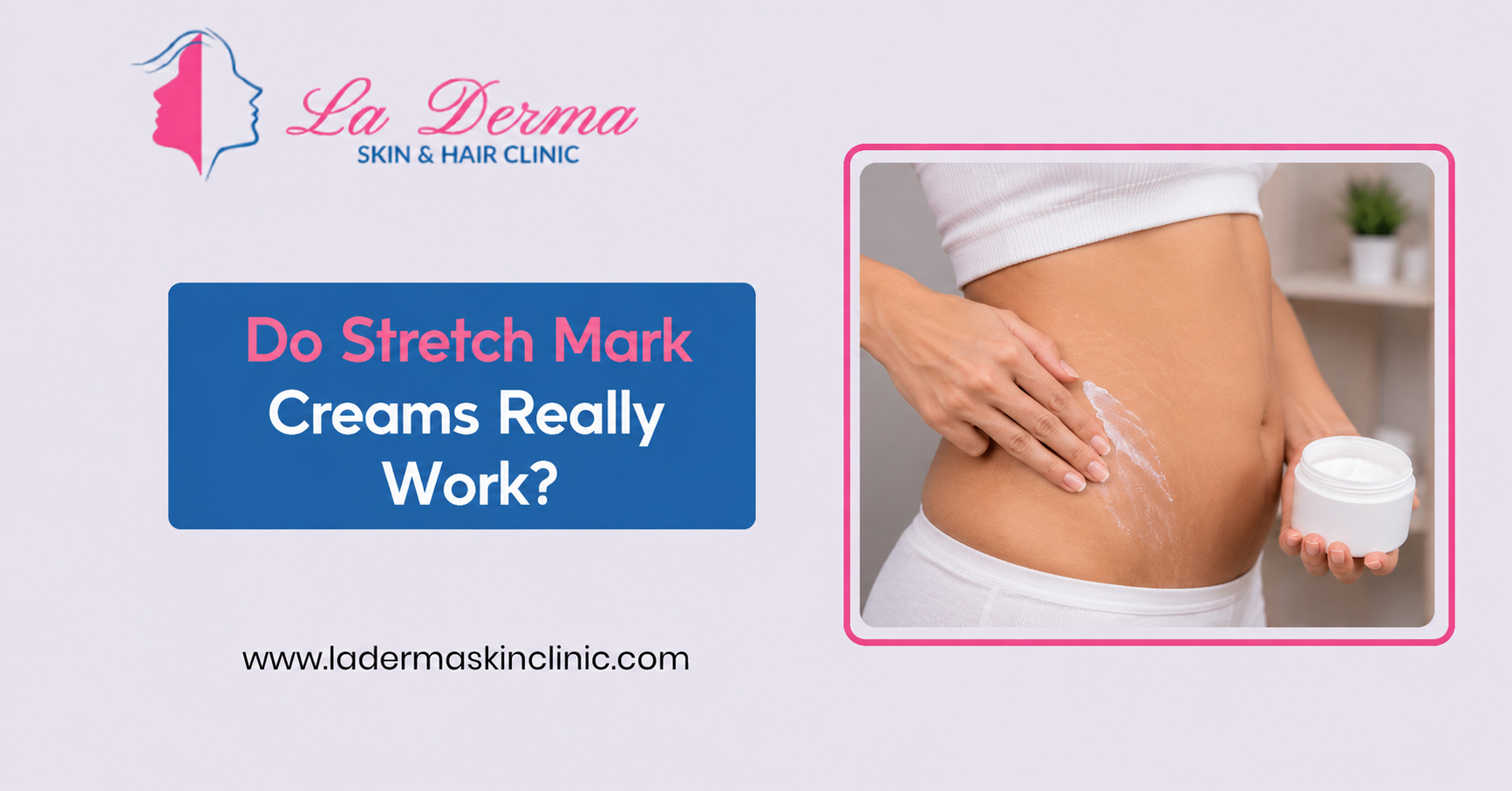
Do Stretch Mark Creams Really Work?
You’ve probably stood in front of the mirror, spotted those silvery or reddish lines on your thighs, belly, or arms, and wondered, “Is there actually a cream that can make these disappear?” You’re not alone. Stretch marks are one of the most common skin concerns people search for online, and the beauty aisle is flooded with creams, oils, and serums promising to erase them overnight.
But do these products actually deliver, or are we just rubbing expensive lotion into our skin for nothing? Let’s break down the science, the myths, and what actually works when it comes to Stretch Marks Treatment.
What Exactly Are Stretch Marks?
Stretch marks, medically known as striae, form when your skin stretches or shrinks quickly — think pregnancy, puberty, growth spurts, sudden weight gain or loss, or even intense muscle building. This rapid change causes the middle layer of your skin (the dermis) to tear slightly, disrupting collagen and elastin production.
Initially, stretch marks often appear pink, red, or purple (called striae rubra). Over time, they fade into silvery-white or pale lines (striae alba). This is important to understand because the colour and age of your stretch marks directly affect how well any treatment, including creams, will work.
So, Do Stretch Mark Creams Actually Work?
Here’s the honest answer: it depends on timing, ingredients, and expectations.
The Good News
Creams can genuinely help, especially when:
- They’re used on fresh, reddish stretch marks rather than old, faded ones
- They contain scientifically backed ingredients like retinoids, hyaluronic acid, centella asiatica, or peptides
- They’re used consistently over months, not days
- They’re combined with massage, which improves blood circulation and product absorption
Ingredients like tretinoin (a retinoid) have clinical backing for improving the appearance of early-stage stretch marks by boosting collagen production. Hyaluronic acid helps with hydration and elasticity, which can prevent marks from worsening.
The Not-So-Good News
Most drugstore stretch mark creams, especially the ones loaded with cocoa butter, shea butter, or vitamin E, primarily work as moisturisers. They keep your skin soft and supple, which can reduce itchiness and improve skin texture, but they don’t have strong clinical evidence of erasing stretch marks completely — particularly the older, white ones.
The truth many brands won’t tell you: once stretch marks turn silvery-white, creams alone rarely restore skin to its original texture. At that stage, the collagen damage is more serious, and topical products simply can’t reach it effectively.
Why Timing Matters So Much
Think of stretch marks like a scar. Fresh scars respond well to treatment because the skin is still in an active healing phase. Old scars, on the other hand, are more stubborn because the tissue has already remodelled itself.
The same logic applies here. If you catch your stretch marks early, while they’re still reddish or purple, a good cream combined with the right routine can noticeably fade them. If they’ve already turned pale and silvery, you’ll likely need more advanced interventions.
When Creams Aren’t Enough: What Actually Works Better
If you’ve been using creams for months without much change, it doesn’t mean you’re doing something wrong. It simply means your skin might need clinical-grade treatment. Dermatologists often recommend the following:
- Microneedling – stimulates collagen production by creating controlled micro-injuries
- Laser therapy – targets pigmentation and boosts collagen remodelling
- Chemical peels – help resurface the skin and improve texture
- Radiofrequency treatments – tighten skin and improve elasticity from within
These procedures work on a deeper level than any cream can, which is why visiting a professional Skin and Hair Clinic often gives far more visible and lasting results than home remedies alone.
What a Top Dermatologist in Kolkata Recommends
According to Dr. Khushbu Tantia, a respected name among skin specialists in the city, the most effective approach to stretch mark treatment isn’t about picking one magic product. It’s about combining topical care with professional in-clinic treatments tailored to your skin type and the age of your stretch marks.
Dr. Khushbu Tantia often emphasises that patience and consistency matter more than the price tag on a cream. A treatment plan personalised by a Top Dermatologist in Kolkata typically includes the following:
- A skin assessment to determine the stage of your stretch marks
- A combination of topical retinoids or peptides
- In-clinic procedures like microneedling or laser sessions if needed
- A realistic timeline since visible improvement usually takes 3 to 6 months
This kind of expert-guided approach tends to outperform over-the-counter creams simply because it targets the root cause rather than just moisturising the surface.
Realistic Expectations: What Creams Can and Can’t Do
Let’s set the record straight so you’re not disappointed:
Creams CAN help you:
- Prevent stretch marks from forming (especially during pregnancy)
- Reduce redness and itchiness in early-stage marks
- Improve skin hydration and softness
- Slightly fade the appearance of fresh marks
Creams generally CANNOT:
- Completely erase old silvery stretch marks
- Rebuild damaged collagen structures on their own
- Work overnight or within a few weeks
- Replace clinical treatments, for stubborn or deep marks
Tips to Get the Most Out of Any Stretch Mark Cream
If you are going to buy a stretch mark cream, you should use it in a way that really works.
- Apply the stretch mark cream when your skin is still damp, like after you take a shower, so it gets absorbed better.
- Massage the stretch mark cream into your skin in motions for a few minutes; this helps your blood flow better.
- You need to put the stretch mark cream on your skin every day, twice a day, for at least 8 to 12 weeks before you can see if it is really working.
- You should also drink plenty of water because skin that’s well hydrated heals and fixes itself more easily.
- Do not forget to wear sunscreen because the sun can make your stretch marks look worse by making the skin around them darker.
Should You See a Dermatologist?
If you have been using stretch mark creams for months and you do not see any difference, then you should go see a dermatologist. A dermatologist at a skin and hair clinic can help you understand what is going on with your skin and which treatment will really work for your stretch marks and your skin type.
A lot of people wait for years before they go see a dermatologist; they think that stretch marks are something they have to live with. The truth is, dermatologists have many treatments that can really help with stretch marks, and these treatments are much better than any stretch mark cream.
Final Thoughts
So do stretch mark creams really work? Yes, they do. Only if you use them correctly. Stretch mark creams work best when you use them to prevent stretch marks or when you use them when your stretch marks are still new; they do not work well on stretch marks.
If you really want to get rid of your stretch marks, you should use a stretch mark cream. Also, go see a dermatologist like Dr. Khushbu Tantia in Kolkata who can help you make a plan that is just right for your skin.
People Also Ask:
Q: Can stretch mark creams completely remove stretch marks?
No stretch mark cream can completely erase old stretch marks that are silvery. These creams are really good at softening the skin, reducing the redness, and making fresh stretch marks look better.
Q: How long does it take for stretch mark creams to show results?
Most stretch mark creams need you to use them for at least 8 to 12 weeks before you see any change. It can take months to see the full results of using stretch mark creams.
Q: What is the best stretch mark treatment for stretch marks?
For stretch marks that are silvery, going to a skin clinic for treatments like microneedling or laser therapy can be a lot more effective than just using stretch mark creams.
Q: Can stretch marks be prevented during pregnancy?
During pregnancy, keeping your skin moist and elastic with creams and oils can help reduce how bad new stretch marks are. It is also important to remember that genetics play a big role in getting stretch marks.
Q: When should I see a dermatologist for stretch marks?
If you use stretch mark creams for 2 or 3 months and do not see any improvement, or if you want to get rid of stretch marks faster, you should go see a dermatologist. They can help you make a plan to treat your stretch marks that’s just for you.