
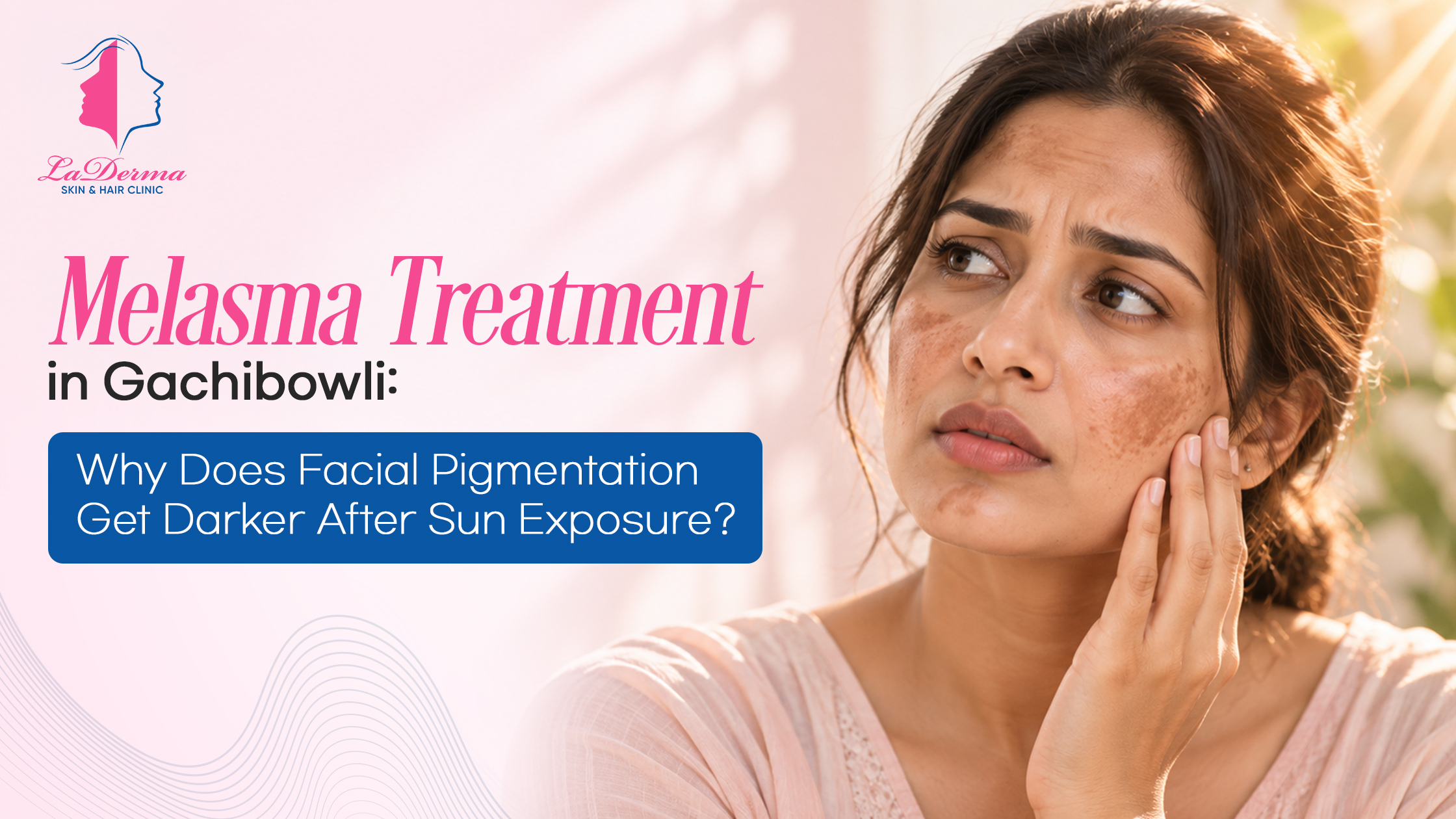
Melasma Treatment in Gachibowli: Why Does Facial Pigmentation Get Darker After Sun Exposure?
Facial pigmentation can sometimes seem to change with the weather, especially after spending time outdoors. You may notice that brown or greyish patches on the cheeks, forehead, upper lip, or other areas of the face appear more noticeable after sun exposure. For people with melasma, this is a common concern because sunlight can stimulate pigment production and make existing patches look darker.
Melasma is a common pigmentation condition that can be influenced by several factors, including ultraviolet (UV) exposure, visible light, hormonal changes, heat, and individual skin sensitivity. Understanding why pigmentation becomes more prominent in sunlight can help you take better care of your skin and make informed decisions about treatment.
If you are looking for melasma treatment in Gachibowli, professional evaluation can help determine the pattern and severity of pigmentation and identify an appropriate treatment approach.
What Is Melasma?
Melasma is a common skin condition that causes areas of increased pigmentation on the face. It usually appears as irregular, flat patches that may be light brown, dark brown, or greyish in color.
It commonly affects areas such as:
- Cheeks
- Forehead
- Upper lip
- Chin
- Bridge of the nose
Melasma does not usually cause pain or itching. However, the visible pigmentation can become a cosmetic concern, particularly when the patches become darker or more noticeable.
The condition can occur in different patterns, and the depth of pigment within the skin can also vary. This is one reason why treatment needs to be individualised rather than relying on a single approach for everyone.
Why Does Facial Pigmentation Get Darker After Sun Exposure?
Sun exposure is one of the most important factors that can worsen melasma.
When the skin is exposed to sunlight, UV radiation can stimulate melanocytes, the cells responsible for producing melanin. Melanin is the pigment responsible for skin colour and also provides some natural protection against UV radiation.
In people prone to melasma, increased stimulation of these pigment-producing cells can lead to greater melanin production. As a result, existing patches may become darker and more visible.
This can happen even without an obvious sunburn. Regular or repeated exposure can contribute to pigmentation becoming more persistent over time.
How UV Exposure Affects Melasma-Prone Skin
Ultraviolet radiation consists mainly of UVA and UVB rays that can affect the skin in different ways.
UVA rays can penetrate deeper into the skin and contribute to pigmentation and photoaging.
UVB rays are strongly associated with sunburn and can also stimulate pigment production.
For someone prone to melasma, repeated exposure to both types of UV radiation can make controlling pigmentation more difficult.
This is why protecting the skin from sunlight is an important part of managing melasma, even when you are already using a treatment prescribed by a dermatologist.
Can Visible Light Also Make Melasma Worse?
Sunlight is not limited to UV radiation. It also contains visible light, and certain wavelengths of visible light may contribute to pigmentation in some people, particularly those with darker skin tones.
This is important because simply avoiding obvious sunburn may not be enough to prevent pigmentation from becoming darker.
A dermatologist may therefore discuss broader photoprotection strategies depending on the person’s skin type and pigmentation pattern.
Other Factors That Can Trigger or Worsen Melasma
Sun exposure is important, but it is not necessarily the only factor involved.
Melasma can be influenced by several factors, including
- Hormonal changes
- Pregnancy
- Certain hormonal medications
- Genetic tendency
- Heat exposure
- Visible light
- Skin irritation
- Certain cosmetic products
Different people can have different triggers. For some, pigmentation may become more noticeable during periods of increased sun exposure. Others may notice changes during hormonal fluctuations or after using products that irritate their skin.
Understanding individual triggers can therefore be an important part of long-term pigmentation management.
Why Does Melasma Keep Coming Back?
One of the most frustrating aspects of melasma is its tendency to recur.
Even when pigmentation improves with treatment, continued exposure to sunlight or other triggers may stimulate pigment production again. This means that treating the existing pigmentation is only one part of the process.
Long-term maintenance and consistent sun protection can be important for helping reduce the likelihood of recurrence.
This is also why expectations should be realistic. Melasma can often be improved, but it may require ongoing care rather than a one-time treatment.
How Is Melasma Diagnosed?
A dermatologist usually diagnoses melasma by examining the appearance, location, colour, and distribution of the pigmentation.
During a consultation, the doctor may ask about:
- When the pigmentation first appeared
- Whether it becomes darker during summer or after outdoor exposure
- Previous pigmentation treatments
- Hormonal changes
- Skincare products being used
- Sun exposure habits
- Any history of skin irritation
In some cases, a specialised examination may help assess the pigmentation more closely and determine whether it appears to involve superficial or deeper layers of the skin.
Accurate assessment is important because not every dark patch on the face is melasma. Other pigmentation conditions can sometimes look similar.
What Treatments Can Help Manage Melasma?
Treatment depends on the individual’s skin type, pigmentation pattern, severity, and previous treatment history.
A dermatologist may consider approaches such as:
Topical Treatments
Certain prescription or dermatologist-recommended topical products can help reduce excess pigmentation by influencing melanin production or encouraging the gradual removal of pigmented skin cells.
The exact product and strength should be selected according to the individual’s skin condition because inappropriate use of strong products can cause irritation and potentially worsen pigmentation.
Chemical Peels
Selected chemical peels may be considered for some patients with pigmentation concerns. They work by promoting controlled exfoliation of the skin.
However, peels need to be chosen carefully, particularly for pigmentation-prone skin. Excessive irritation can sometimes lead to post-inflammatory pigmentation.
Laser and Light-Based Treatments
Certain laser or light-based procedures may be considered in selected cases. Their suitability depends on factors such as skin type, depth of pigmentation, and previous treatment response.
These treatments should be performed under professional supervision because aggressive or inappropriate settings can sometimes worsen pigmentation.
Combination Approaches
Melasma may respond better to a combination of approaches rather than relying on one treatment alone. A dermatologist may combine topical care, procedures, sun protection, and maintenance therapy depending on the patient’s needs.
Why Is Sunscreen Important During Melasma Treatment?
Treatment becomes much more difficult if the skin continues to receive significant sun exposure.
Using a broad-spectrum sunscreen consistently can help reduce exposure to UV radiation. Depending on individual needs, a dermatologist may also recommend additional protective measures such as:
- Wearing a wide-brimmed hat
- Using an umbrella outdoors
- Seeking shade when possible
- Avoiding prolonged midday sun exposure
- Reapplying sunscreen as recommended
- Considering visible-light protection when appropriate
Sun protection is not only important after treatment. It is an important part of maintaining results over the longer term.
How Can You Prevent Pigmentation From Becoming Darker?
Complete avoidance of sunlight is neither practical nor necessary for most people. Instead, the goal is to reduce unnecessary exposure and protect the skin consistently.
Simple habits can make a difference:
1. Use sunscreen regularly.
Apply sunscreen before going outdoors and follow the recommended reapplication schedule.
2. Protect your face physically.
Hats, umbrellas, sunglasses, and shade can reduce direct exposure.
3. Avoid unnecessary skin irritation.
Harsh scrubs, excessive exfoliation, and unsuitable skincare products may irritate pigmentation-prone skin.
4. Follow a consistent skincare routine.
A simple routine recommended for your skin type may be easier to maintain than frequently changing products.
5. Follow professional treatment advice
If pigmentation persists or keeps returning, a dermatologist can help identify suitable treatment and maintenance options.
When Should You See a Skin Specialist for Melasma?
If facial pigmentation is persistent, spreading, repeatedly becoming darker, or affecting your confidence, professional evaluation can be useful.
A skin specialist near Gachibowli can assess whether the pigmentation is consistent with melasma and determine whether another skin condition could be responsible.
Professional guidance is particularly useful if you have already tried multiple creams or home remedies without improvement. Using too many active ingredients without proper guidance can irritate the skin and make pigmentation more difficult to manage.
Why Choose La Derma Skin & Hair Clinic for Pigmentation Care?
Choosing the right approach to pigmentation starts with understanding your skin rather than simply trying the strongest available treatment.
At La Derma Skin & Hair Clinic, pigmentation concerns can be evaluated based on the individual’s skin type, pigmentation pattern, triggers, and treatment history. The goal is to develop a treatment approach that considers both improvement of existing pigmentation and long-term skin protection.
For people around Gachibowli and nearby areas, a professional consultation can help clarify whether the pigmentation is melasma and what treatment options may be appropriate.
Frequently Asked Questions
1. Why does melasma become darker after sun exposure?
Sun exposure can stimulate pigment-producing cells in the skin, increasing melanin production. In people with melasma, this can make existing brown or greyish patches appear darker.
2. Can sunscreen completely prevent melasma?
Sunscreen can help reduce UV exposure and is an important part of melasma management, but it cannot guarantee complete prevention. Consistent sun protection and appropriate treatment may help control pigmentation.
3. Can melasma go away permanently?
Melasma can often be improved with appropriate treatment, but it can recur. Continued sun protection and a suitable maintenance routine may help reduce recurrence.
4. Are chemical peels or laser treatments suitable for melasma?
They may be appropriate for selected patients, but not everyone is a suitable candidate. A dermatologist should assess the skin type, pigmentation depth, and risk of irritation before recommending a procedure.
5. What should I do if my facial pigmentation keeps getting darker?
If pigmentation continues to worsen despite skincare and sun protection, consider consulting a dermatologist. A professional assessment can determine whether it is melasma and whether your current skincare or treatment approach needs to be changed.
Take the Next Step Towards Managing Facial Pigmentation
Melasma can become more noticeable after sun exposure because UV radiation and other components of sunlight can stimulate pigment production in susceptible skin. While sun protection is essential, managing persistent pigmentation may require a combination of professional treatment, appropriate skincare, and long-term maintenance.
If you are concerned about recurring or darkening facial pigmentation, a consultation at La Derma Skin & Hair Clinic can help you understand the possible cause and explore suitable treatment options.