
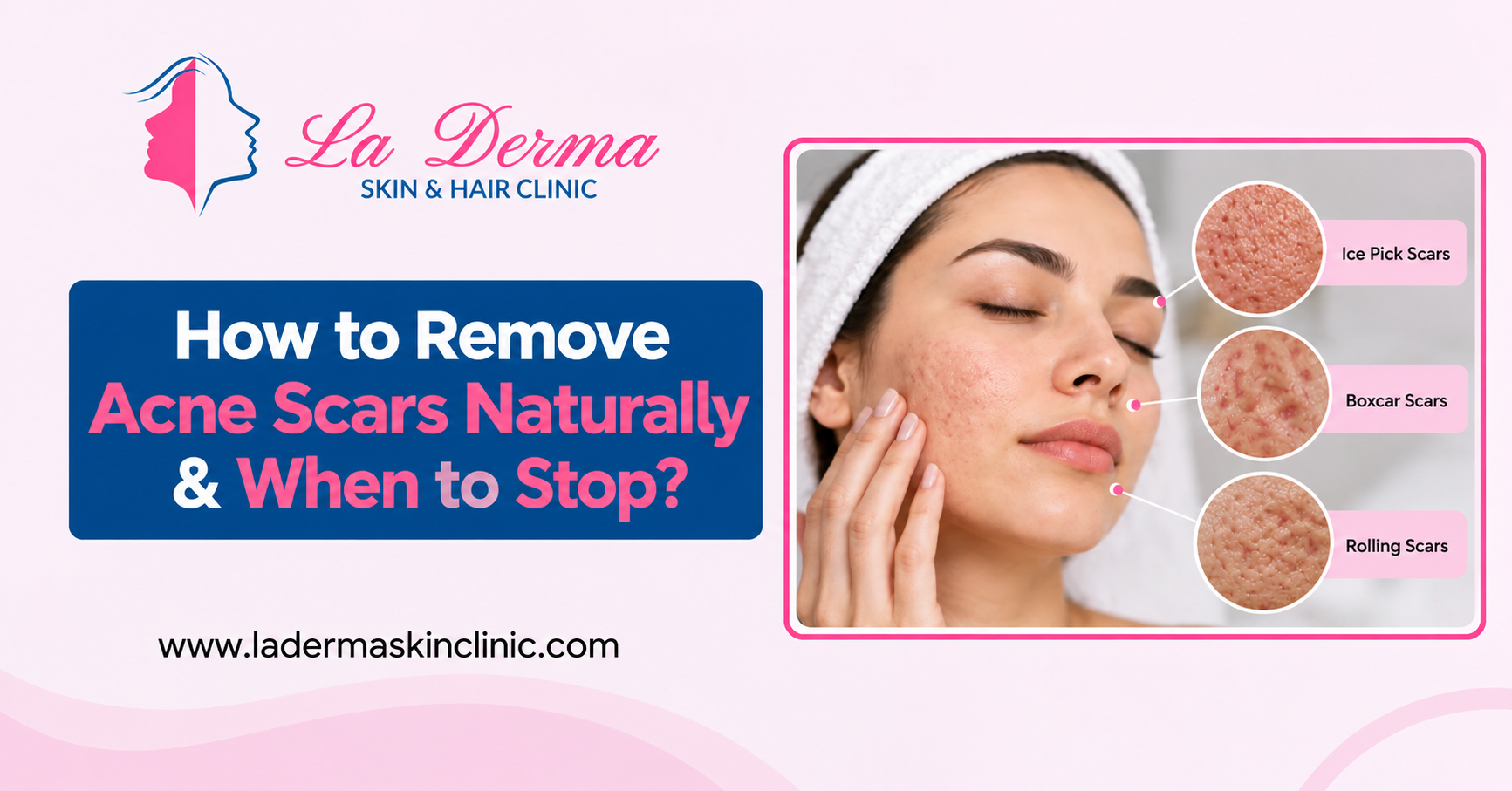
How to Remove Acne Scars Naturally & When to Stop
You finally got your breakouts under control, but they left a few souvenirs behind: dark patches, tiny dents, and a skin texture that catches the light in all the wrong ways. If that sounds familiar, you are in very good company. Almost everyone who has had acne is left with some kind of mark.
The good news is that many marks are removed with patient, gentle care. The harder truth is that not every scar will, and knowing when to stop experimenting at home matters just as much as knowing what to try. This guide walks you through both, whether you are planning on Acne Scars Treatment in Kolkata or just starting at home.
What are Acne Scars, and Why Do they Stay?
Acne scars are changes in your skin left behind after inflammation heals. They fall into two broad groups:
- Marks (flat discolouration): Red, pink, brown, or purple spots, known as post-inflammatory erythema or hyperpigmentation. They are not true scars, and they usually fade with time.
- True scars (texture changes): Pitted or indented scars such as ice pick, boxcar, and rolling scars, plus raised scars like keloids. These form when the skin loses or overproduces collagen while healing.
This difference is the key to everything that follows. Natural methods can help marks. They rarely fix a dent.
Can Acne Scars Really be Removed Naturally?
Yes, flat marks often can. Red or pink marks typically settle in about three to six months. Brown marks take longer, often six to twelve months, and on medium to deep skin tones they can linger even more because the skin is naturally more prone to pigmentation.
Indented scars are different. Once collagen has been lost, creams, oils, and kitchen remedies cannot rebuild it. That is where professional help comes in, such as a visit to a trusted Skin and Hair Clinic in Kolkata, and we will get to that shortly.
7 Gentle Ways to Remove Acne Marks at Home
1. Wear Sunscreen Every Single Day.
This is the most effective “natural” step and the one most people skip. Sun exposure darkens marks and slows their fading. Use a broad-spectrum sunscreen of SPF 30 or higher, even on cloudy days and even indoors near windows. Kolkata’s strong UV and humidity make daily reapplication worth it.
2. Stop Picking and Squeezing.
Picking turns a small pimple into a deeper wound, and deeper wounds scar. If a pimple is bothering you, use a hydrocolloid patch and leave it alone.
3. Keep Your Routine Simple.
A mild cleanser, a light moisturiser and sunscreen do more than a shelf full of products. A healthy skin barrier heals faster and handles marks better.
4. Use Soothing Ingredients.
Pure aloe vera gel can calm irritated skin, and green tea extracts have mild antioxidant benefits. The research on these for scars is modest, so think of them as supportive, not miraculous.
5. Add Vitamin C and Niacinamide.
Technically, these are not “natural” in the kitchen sense, but they are gentle, well-studied ingredients that help brighten uneven tones. Start with a low strength, patch test first, and introduce one product at a time. If your skin is sensitive, ask a Top Dermatologist in Kolkata which strength suits you.
6. Eat and Sleep for Healing.
Skin repairs itself while you rest. Aim for consistent sleep, plenty of water, and a diet rich in fruits, vegetables, and protein. Some people notice fewer breakouts when they cut back on sugary foods and refined carbs, though responses vary.
7. Be Patient.
Most marks need months, not days. Take a photo in the same light once a month so you can see slow progress that the mirror hides.
Home Remedies You Should Skip
Social media is full of scar “hacks” that do more harm than good:
- Lemon juice: Its acidity can burn the skin and trigger even darker patches when you step into the sun.
- Baking soda and toothpaste: Both disrupt your skin’s natural pH and can cause irritation.
- Harsh scrubs: Rubbing a scarred area makes inflammation worse.
- Home dermarollers: Poor technique can cause infection and fresh scarring.
- Raw turmeric or essential oils on broken skin: They can stain or cause allergic reactions. Always patch test.
If a remedy stings, burns, or leaves your skin red for hours, it is not working for you.
How Long Should You Wait Before Changing Your Approach?
A reasonable rule: give a sensible routine eight to twelve weeks. If flat marks are visibly lighter, keep going. If nothing has changed, or things look worse, it is time to stop guessing.
When to Stop Home Treatment and See a Doctor
Trying natural methods is perfectly fine, but there is a point where continuing only wastes time or damages your skin. Stop and book a consultation if:
- You have dents, pits, or raised scars. These need medical treatment.
- Marks have not improved after three months of consistent care.
- You are still getting new pimples. Active acne keeps creating new scars, so it has to be controlled first, and Acne Pimple Treatment in Kolkata can help you do that.
- Your skin is irritated, peeling, or darkening after using a remedy.
- Your scars affect your confidence or daily life. That alone is a valid reason to seek help.
Earlier treatment generally gives better results, because scars are easier to improve before they settle for years.
What Professional Scar Treatments Are Available?
A dermatologist will examine your skin type, scar type, and tone before suggesting a plan. Depending on your case, options may include:
- Chemical peels for marks and mild texture issues
- Microneedling to stimulate collagen in shallow scars
- Laser resurfacing for texture and stubborn pigmentation
- Subcision to release tethered rolling scars
- Fillers or other targeted procedures for selected deep scars
- Prescription topical medicines for discolouration
No single option suits everyone, and many people need a combination over several sessions. Results build gradually, so realistic expectations are important.
Whichever option you consider, choose a doctor who talks you through your skin type and the likely outcome rather than promising overnight results. Skin of colour needs especially careful handling, since the wrong laser settings or peel strength can cause more pigmentation.
Treat the Pimples Before the Scars.
Scar treatment works best on calm skin. If you are still breaking out, the first step is controlling the acne itself. A proper treatment plan may combine medicated creams, oral medicines where appropriate, and lifestyle guidance so new pimples stop turning into new scars. Treating both together saves time and money in the long run.
How to Choose the Right Clinic
When you compare clinics and doctors, look beyond the advertising. Good signs include:
- A qualified, experienced dermatologist who personally examines you
- A clear explanation of the diagnosis, options, costs, and downtime
- Honest talk about what can and cannot be improved
- Hygienic, well-maintained treatment rooms
- Follow-up care after every procedure
At La Derma Skin & Hair Clinic, Dr. Khushbu Tantia focuses on understanding each patient’s skin before recommending anything, whether the concern is stubborn acne, scars, pigmentation, or hair problems. A personalised plan always beats a copied one.
Final Thoughts
Fading acne scars naturally comes down to three habits: protect your skin from the sun, leave your pimples alone, and give gentle routines enough time to work. Those steps handle most flat marks well. But when you see dents, raised scars, continuing breakouts, or no progress after a few months, the kindest thing for your skin is to stop experimenting and get expert advice.
If you are ready to take that step, book a consultation at La Derma Skin & Hair Clinic with Dr. Khushbu Tantia and get a plan built around your skin, not someone else’s.
People Also Ask
How long do acne scars take to remove naturally?
Red and pink marks usually remove in three to six months. Brown marks may take six to twelve months or longer. Indented scars do not remove fully without professional treatment.
What is the best natural remedy for acne scars?
Daily sunscreen, gentle skincare, and not picking at your skin are the most reliable natural steps. Aloe vera can help soothe, but it will not remove deep scars.
Can lemon juice remove acne scars?
No. Lemon juice can irritate and darken skin. It is best avoided.
When should I stop home remedies for acne scars?
Stop if you see no improvement after eight to twelve weeks, if your skin becomes irritated, or if you have visible dents or raised scars. These are signs to see a dermatologist.
Can all acne scars be removed completely?
Not always. Many can be improved significantly, but a dermatologist can only estimate how much improvement is realistic after examining your skin.