
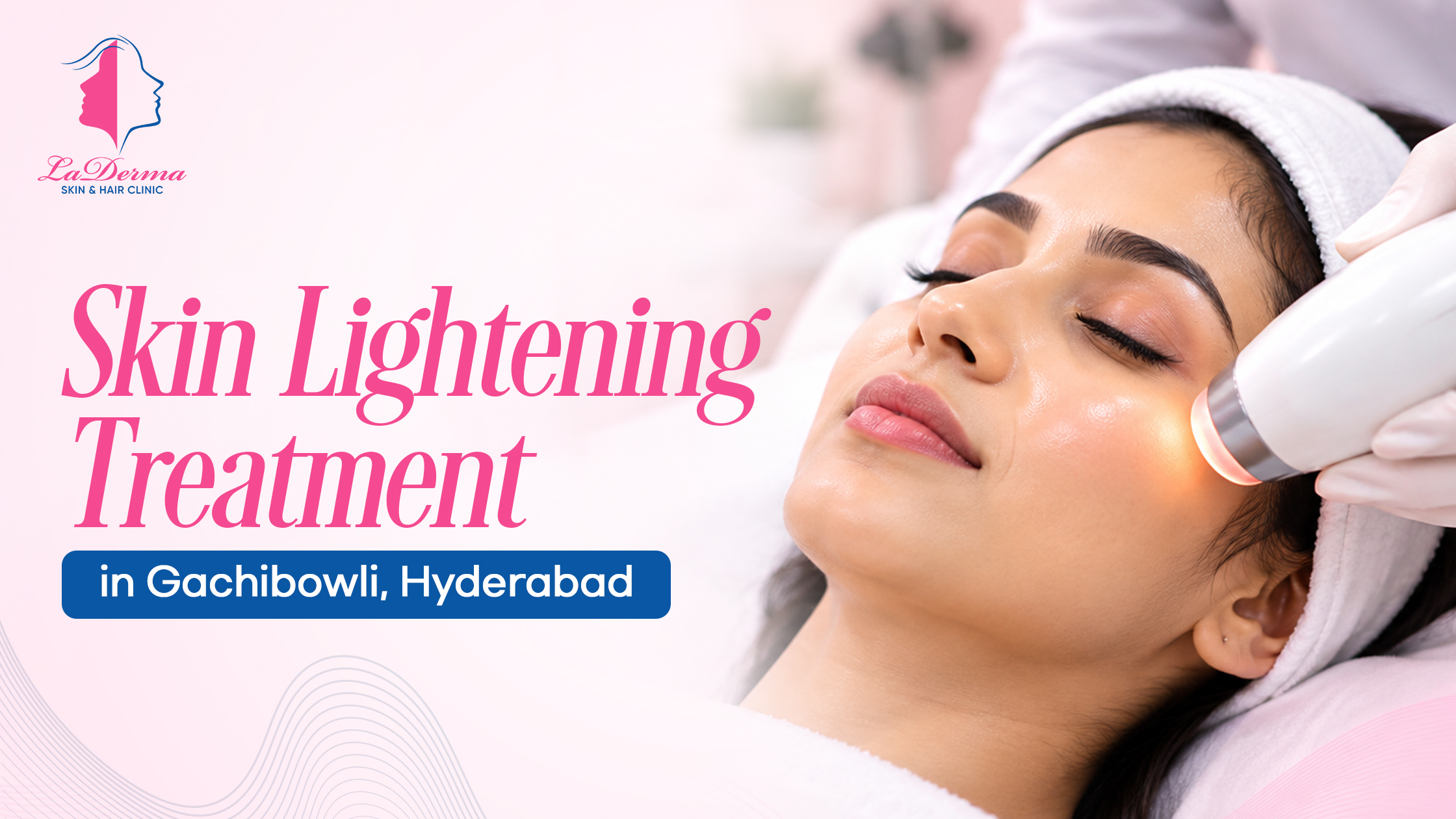
Skin Lightening Treatment in Gachibowli, Hyderabad – La Derma Skin & Hair Clinic
Clear, healthy-looking skin is not always about changing your natural skin colour. Concerns such as tanning, pigmentation, acne marks, melasma, and sun-induced darkening can make the complexion appear less even or dull. When these changes persist, choosing a treatment based only on the promise of “lightening” may not address the actual cause.
Skin colour is influenced by melanin, genetics, sun exposure, hormones, inflammation, and several other factors. For this reason, skin lightening treatment in Gachibowli is generally approached by first understanding why darker areas or uneven tone have developed. At La Derma Skin & Hair Clinic, dermatological evaluation can help identify the underlying concern and guide treatment according to individual skin type and needs.
The goal is to improve uneven pigmentation and promote a more balanced, healthy appearance rather than simply trying to alter your natural complexion.
What Does Skin Lightening Treatment Involve?
Skin lightening treatment can refer to dermatological approaches used to reduce the appearance of unwanted pigmentation, tanning, dark spots, and other causes of an uneven skin tone.
The appropriate treatment depends on what is causing the colour change. For example, someone with post-acne marks may require a different approach from someone experiencing melasma or pigmentation caused by repeated sun exposure.
A dermatologist may consider:
- Type and extent of pigmentation
- Skin type and sensitivity
- Duration of the concern
- Previous skincare or cosmetic treatments
- Sun exposure
- Acne or inflammation history
- Hormonal factors
- Response to previous treatments
This assessment helps avoid using strong or unnecessary products without understanding the skin concern first.
Common Reasons People Seek Skin Lightening Treatment
Several factors can make certain areas of the skin appear darker or less uniform. Some of the more common concerns include:
Sun Tan and Sun-Related Darkening
Frequent exposure to ultraviolet radiation can stimulate melanin production and cause the skin to become darker. The face, neck, arms, and other exposed areas are particularly susceptible.
Consistent sun protection is an important part of managing tanning and preventing further pigmentation.
Post-Acne Marks
Acne can leave brown or darker marks after the inflammation settles. These marks are different from acne scars and may gradually fade, although persistent pigmentation may require dermatological treatment.
Melasma
Melasma usually appears as brown or greyish-brown patches, commonly affecting the cheeks, forehead, nose, or upper lip. Hormonal influences and sun exposure may contribute to its development.
Because melasma can be persistent and may recur, treatment often involves long-term management rather than a single procedure.
Pigmentation After Skin Inflammation
Inflammation caused by acne, irritation, allergic reactions, or certain skin conditions can sometimes leave darker areas after the original problem has improved. Treating the underlying inflammation and managing the remaining pigmentation may both be important.
How a Dermatologist Assesses Your Skin
Before beginning treatment, a dermatologist may examine the affected areas and ask about when the pigmentation appeared and whether it has changed over time.
During the consultation, the following may be discussed:
- Your primary skin concern
- When the pigmentation first developed
- Previous acne or skin inflammation
- Current skincare products
- Daily sun exposure
- Sunscreen use
- Previous procedures or pigmentation treatments
- Hormonal or other relevant factors
This information can help determine whether the concern is primarily related to tanning, pigmentation, post-inflammatory changes, melasma, or another skin condition.
For people considering skin-lightening treatment in Gachibowli, professional assessment can also help establish realistic treatment expectations before starting a procedure or prescription-based routine.
Treatment Options That May Be Considered
There is no universal treatment for every pigmentation concern. Depending on the assessment, a dermatologist may recommend topical care, procedures, or a combination approach.
Dermatologist-Recommended Topical Treatments
Dermatologist-recommended topical treatments may be used to address pigmentation and support a more even-looking skin tone. Depending on the formulation, ingredients may work by influencing melanin production, supporting skin renewal, or reducing the appearance of existing pigmentation.
Prescription-strength products should be used under professional guidance because inappropriate use may cause irritation, dryness, or worsening pigmentation in some individuals.
Chemical Peels
Chemical peels use selected exfoliating agents to remove controlled layers of the skin. Certain peels may be considered for pigmentation, tanning, and uneven skin tone.
The formulation and strength need to be selected according to the person’s skin type and concern. Stronger does not necessarily mean better, particularly for pigmentation-prone skin.
Laser and Light-Based Procedures
Certain laser or light-based technologies may be used for selected pigmentation concerns. These procedures work differently depending on the technology and type of pigment being treated.
Not every pigmentation problem requires a laser, and these procedures may not be suitable for everyone. A dermatologist should assess the skin before recommending this type of treatment.
Combination Approaches
Some people may benefit from combining topical treatment with procedures and a consistent skincare routine. Combining approaches can help address different aspects of pigmentation while supporting ongoing skincare.
The treatment plan may also change depending on how the skin responds over time.
Why Skin Type Matters During Treatment
Skin does not respond identically to every pigmentation treatment. Individual skin characteristics can influence the choice of products, procedures, treatment intensity, and aftercare.
People with pigmentation-prone skin may need particular attention to irritation and inflammation because excessive irritation can sometimes lead to additional pigmentation.
A personalised approach may therefore involve starting with suitable treatments and adjusting them according to the skin’s response rather than following a fixed routine.
The Role of Sunscreen in Maintaining Results
Sun protection is one of the most important parts of pigmentation management. Ultraviolet exposure can stimulate melanin production and may make existing pigmentation more noticeable.
A dermatologist may recommend:
- Regular use of broad-spectrum sunscreen
- Reapplication when necessary
- Protective clothing or hats during prolonged outdoor exposure
- Reducing unnecessary direct sun exposure
- Following specific post-procedure sun-protection instructions
Even after pigmentation improves, maintaining sun-protection habits can be important for reducing the likelihood of recurrence.
What Should You Avoid During Skin Lightening Treatment?
Trying multiple strong products at the same time can sometimes irritate the skin and make pigmentation more difficult to manage. Home remedies, unregulated fairness products, and products containing inappropriate ingredients may also create unwanted skin reactions.
It is better to discuss persistent pigmentation with a dermatologist before introducing strong active ingredients or undergoing procedures.
For those exploring skin treatment, an assessment can help determine whether pigmentation is the main concern or whether another skin condition is contributing to the change in appearance.
How Long Does It Take to See Improvement?
Pigmentation usually does not disappear immediately. The time required for improvement depends on the cause, depth, duration, skin type, treatment method, and individual response.
Some concerns may show gradual improvement with consistent topical care, while others may require multiple treatment sessions. Melasma and recurrent pigmentation can require longer-term management.
Following the recommended skincare routine and avoiding unnecessary changes during treatment can help support consistent progress.
Choosing a Dermatology Clinic for Pigmentation Concerns
When choosing a clinic for pigmentation or skin tone concerns, it is useful to look beyond procedures alone. A proper evaluation, explanation of treatment options, discussion of possible side effects, and appropriate follow-up can all be part of responsible dermatological care.
La Derma Skin & Hair Clinic in Hyderabad provides dermatology and aesthetic care for a range of skin and hair concerns. Treatment recommendations can be based on the individual’s skin condition rather than applying the same procedure to every patient.
A consultation can help you understand whether your concern is related to tanning, pigmentation, acne marks, melasma, or another skin condition and what options may be appropriate.
Frequently Asked Questions
1. What is the best treatment for skin lightening?
There is no single treatment that is suitable for everyone. The appropriate option depends on whether the concern is tanning, pigmentation, post-acne marks, melasma, or another condition. A dermatologist may recommend topical products, chemical peels, laser-based procedures, or a combination approach.
2. Is skin-lightening treatment safe?
When treatment is selected and monitored appropriately by a dermatologist, different options can be used safely for suitable candidates. Using strong or unregulated lightening products without professional guidance may increase the risk of irritation and pigmentation problems.
3. Can skin-lightening treatment remove tanning?
Tanning caused by sun exposure may gradually improve as the skin renews itself. Depending on the extent of tanning and individual skin characteristics, a dermatologist may recommend skincare, sun protection, or selected procedures to help improve the appearance.
4. Can pigmentation return after treatment?
Yes. Pigmentation can return when contributing factors such as sun exposure, hormonal influences, inflammation, or other triggers continue. Consistent sun protection and a dermatologist-recommended maintenance routine may help manage recurrence.
5. How should I prepare for a skin lightening consultation?
You can make the consultation more useful by informing the dermatologist about your current skincare products, previous procedures, medications if relevant, history of acne or pigmentation, and how long you have experienced the concern. Avoid starting multiple new active products immediately before the appointment unless advised.
A Personalised Approach to Brighter, More Even-Looking Skin
Skin lightening should not be viewed as a one-size-fits-all process. Dark spots, tanning, acne marks, melasma, and other pigmentation concerns can have different causes, and the treatment approach needs to reflect those differences.
A dermatology consultation can help identify what is affecting your skin and whether topical care, chemical peels, laser-based procedures, or a combination approach may be suitable. Protecting the skin from further sun exposure and following a consistent routine can also remain important throughout treatment.
At La Derma Skin & Hair Clinic, individuals can discuss pigmentation, tanning, post-acne marks, melasma, and concerns about skin tone with a dermatologist and understand the available treatment options.
Book your consultation at La Derma Skin & Hair Clinic: 096031 22662