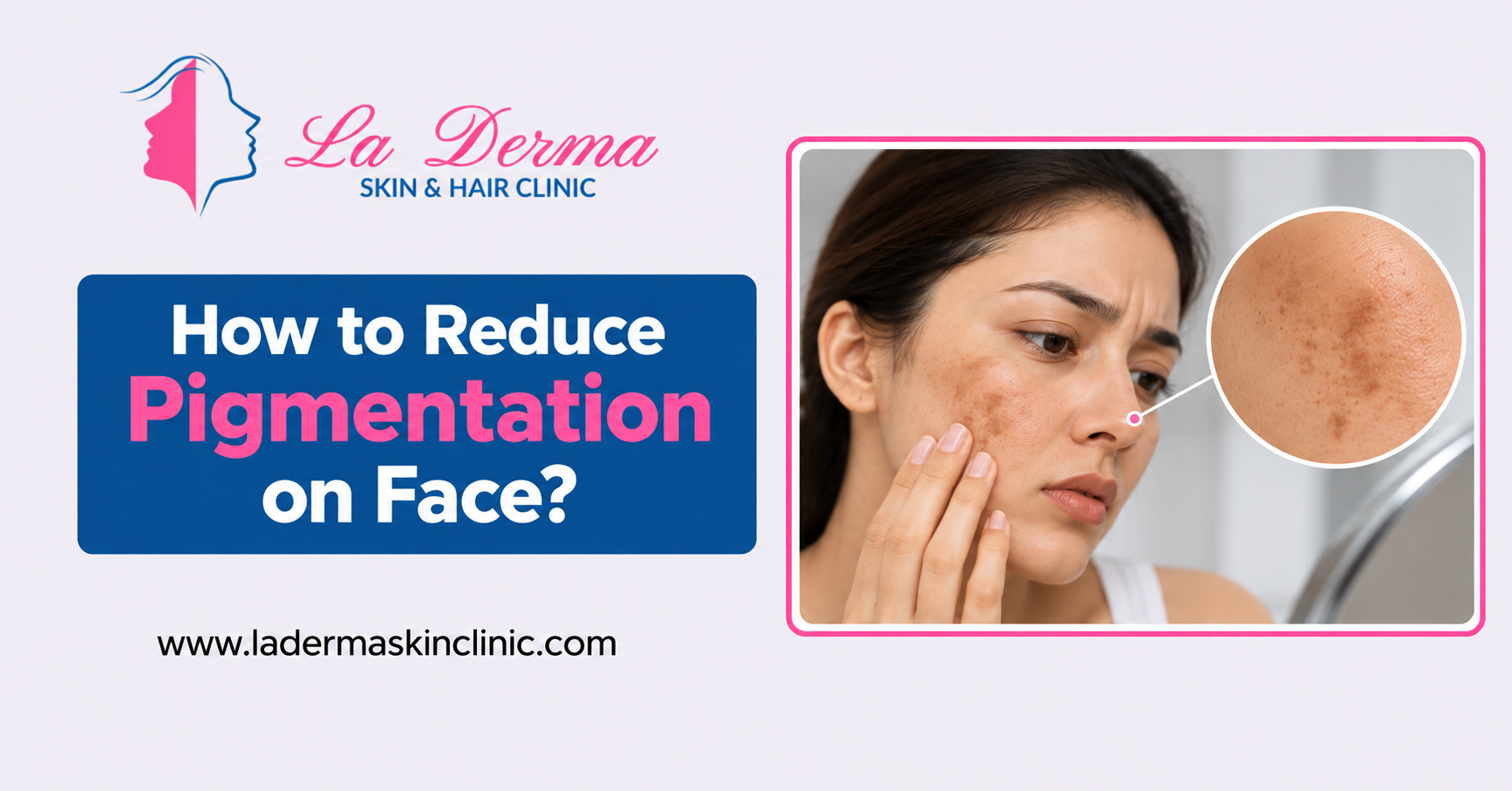
How to Reduce Pigmentation on Face
That dark patch on your cheek wasn’t there last year. The acne marks from months ago still haven’t faded. Maybe a brownish shadow has settled across your upper lip. Facial pigmentation is one of the most common skin worries, and it’s easy to make worse by guessing at the fix.
It can be improved, though. You need to know what type you have, protect your skin from the sun, and stay consistent. Here’s how.
What Is Facial Pigmentation?
Facial pigmentation is the darkening of skin in certain areas because of excess melanin, the natural pigment that gives skin its colour. When melanin-producing cells become overactive in one spot, that patch looks darker than the skin around it. It’s usually harmless, but it can affect your confidence, especially when it sits right on your face.
What Causes It?
- Sun exposure: UV rays make your skin produce more melanin. In India’s strong sunlight, this is the most common cause.
- Melasma: Symmetrical brown or grey-brown patches on the cheeks, forehead, and upper lip, often linked to hormones, pregnancy, or birth control pills.
- Post-acne marks: Pimples, rashes, and injuries can leave dark spots behind. Indian skin is especially prone to this.
- Ageing: Sun spots build up slowly over the years.
- Products and medicines: Some cosmetics and medications trigger patches.
- Internal factors: Stress, thyroid problems, and low vitamin B12 or iron can contribute.
Can Pigmentation Be Reduced Completely?
Most pigmentation can be lightened noticeably, but how much depends on its type and depth. Surface marks like tanning and acne spots fade faster. Melasma is stubborn and tends to return, so think of it as something you manage rather than cure once and forget.
Daily Habits That Make the Biggest Difference
- Wear sunscreen daily. No cream or treatment will hold without it. Choose a broad-spectrum SPF 30 or higher, apply it about 15 minutes before going out, and reapply every two to three hours outdoors. Cloudy days count too.
- Use one brightening ingredient at a time. Vitamin C, niacinamide, azelaic acid, kojic acid, and alpha arbutin can all help fade dark spots. Patch test first, and give each product 8 to 12 weeks before judging it.
- Leave your pimples alone. Every squeezed pimple can turn into a dark mark. Treat active acne early.
- Look after your skin barrier. Irritated skin produces more pigment. A gentle cleanser and a fragrance-free moisturiser do more than most people expect.
- Skip the kitchen “hacks.” Lemon juice, baking soda, and toothpaste can burn the skin and deepen pigmentation. If it stings, stop.
- Support your skin from within. Sleep, hydration, fruit and vegetables, and lower stress won’t erase dark patches on their own, but they help treatments work better.
When Home Care Isn’t Enough
If three months of steady care hasn’t changed much, get your skin examined. Pigmentation that looks like simple tanning may actually be melasma, and the wrong product can make it darker. A skin care clinic in Kolkata will start with a proper skin analysis instead of offering the same package to everyone.
Professional Treatments That Work
- Chemical peels: Glycolic, mandelic, salicylic, or lactic acid peels lift pigmented surface skin and bring out fresher, more even skin. Mandelic acid is often gentler on Indian skin.
- Laser toning: Low-energy lasers target excess melanin with little downtime. They’re used for melasma, tanning, and uneven tone, usually across several sessions.
- Microneedling with serums: Tiny controlled punctures stimulate collagen and help brightening serums absorb better, which is useful for post-acne marks.
- Prescription creams: Doctors may prescribe hydroquinone, tretinoin, or combination creams. These are effective but should only be used under supervision.
- Medifacials: Customised facials that exfoliate, hydrate, and support an even complexion.
What to Look for in a Pigmentation Clinic
When you’re choosing a pigmentation clinic in Kolkata, a few things separate a trustworthy clinic from a risky one:
- A qualified doctor who examines your skin before suggesting anything
- Honest timelines and no “overnight results” promises
- Clear explanations of risks, downtime, and aftercare
- Plans designed for your skin type
- Regular follow-ups to track progress
Getting Expert Help
Every skin is different, and pigmentation treatment works best when it’s planned around you. At La Derma Skin & Hair Clinic, Dr. Khushbu Tantia begins by understanding your skin type, medical history, and daily routine. She then explains what’s realistic, what’s safe, and how long results may take.
How Long Do Results Take?
Early changes usually show within 4 to 8 weeks, with greater improvement over 3 to 6 months. Melasma needs longer and ongoing maintenance. Consistency beats intensity, and a few unprotected days in the sun can undo weeks of progress.
Mistakes That Make Pigmentation Worse
- Skipping sunscreen or using too little
- Layering several strong actives together
- Scrubbing or over-exfoliating
- Changing products every two weeks
- Delaying professional advice
Final Thoughts
Reducing pigmentation isn’t about finding a miracle product. It’s about knowing your skin, protecting it from the sun, using the right ingredients, and getting expert help when needed. Stay patient and consistent.
If stubborn spots, melasma, or acne marks are bothering you, book a consultation with Dr. Khushbu Tantia, dermatologist in Kolkata, at La Derma Skin & Hair Clinic for a plan made for your skin.
Frequently Asked Questions
1. What is the fastest way to reduce facial pigmentation?
Peels or laser toning, combined with daily sunscreen and a doctor-advised cream, usually work fastest and most safely.
2. Does pigmentation go away on its own?
Mild post-acne marks may fade over months. Sun-related pigmentation and melasma generally need treatment and protection.
3. Are lasers safe for Indian skin?
Yes, in experienced hands with the right settings. Indian skin reacts easily, so the doctor’s skill matters.
4. Can pigmentation come back?
Yes, especially melasma. Sunscreen, steady skincare, and occasional maintenance sessions keep it in check.
5. When should I see a dermatologist?
See one if pigmentation is spreading, darkening fast or not improving, or if a spot changes shape or colour. You can book an assessment with Dr. Khushbu Tantia, dermatologist, to identify your pigmentation type and plan treatment.
6. Is facial pigmentation permanent?
Rarely. Most types can be lightened, though melasma may recur without long-term sun protection.
7. How many laser toning sessions will I need?
It depends on the depth and type of pigmentation. Most people need a series spaced a few weeks apart, adjusted after your doctor reviews your progress.
8. Can a vitamin deficiency cause pigmentation?
Sometimes. Low B12, iron, or vitamin D, and thyroid issues have been linked to uneven skin tone. A blood test can help.
9. Which sunscreen is best for pigmentation?
A broad-spectrum SPF 30 or higher. For melasma, tinted sunscreens with iron oxide protect better against visible light.
10. Is skin brightening safe?
Yes, when a qualified doctor uses approved products and procedures. Avoid unsupervised creams and unverified “whitening” injections.