
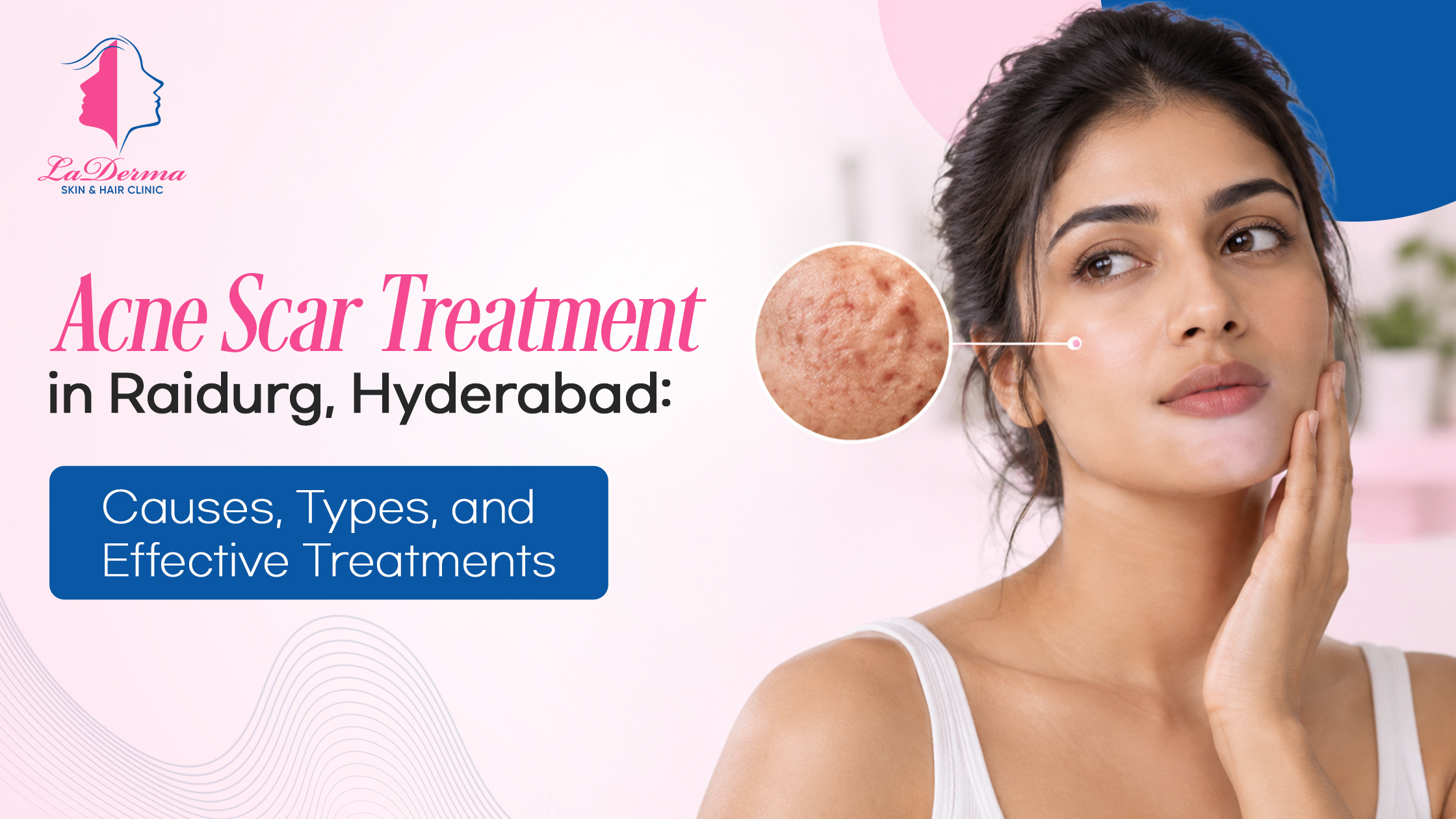
Acne Scar Treatment in Raidurg, Hyderabad: Causes, Types, and Effective Treatments
Acne may clear over time, but the marks and changes it leaves behind can sometimes remain for months or even years. Acne scars can affect skin texture, create visible depressions, or leave areas of uneven pigmentation. The right treatment depends on the type of scar, its severity, skin type, and whether active acne is still present.
For people dealing with persistent acne scarring, professional dermatological assessment can help identify the underlying scar pattern and determine suitable treatment options. A personalised approach is particularly important because different scars respond differently to procedures and skincare.
If you are considering acne scar treatment in Raidurg, understanding the causes, types, available procedures, and expected treatment process can help you approach your skin concerns with realistic expectations.
How Do Acne Scars Develop?
Acne scars usually develop when inflammation from acne damages deeper layers of the skin. Severe or prolonged acne can increase the likelihood of scarring, particularly when lesions are repeatedly squeezed, picked, or manipulated.
Several factors can contribute to acne scar formation, including:
- Severe inflammatory acne
- Nodules and cysts
- Repeated acne breakouts
- Picking or squeezing pimples
- Delayed acne treatment
- Individual healing response
- Family tendency towards scarring
- Prolonged skin inflammation
Not every mark left after acne is a permanent scar. Some are temporary changes in skin colour that gradually fade, while others involve changes in the skin’s structure.
Acne Marks and Acne Scars: What Is the Difference?
Acne marks and acne scars are often used interchangeably, but they are not the same.
Post-inflammatory hyperpigmentation refers to darker patches that remain after an acne lesion heals. These marks do not involve a change in skin texture and may gradually become lighter.
Post-inflammatory erythema refers to red or pink areas that can remain after inflammation settles.
Acne scars, on the other hand, involve a structural change in the skin. They may appear as depressions, raised areas, or uneven texture.
Identifying whether you have pigmentation, redness, or a true scar is important because treatment options can differ considerably.
Common Types of Acne Scars
Acne scars can have different shapes and depths. A dermatologist usually examines the skin closely to determine the scar type before recommending treatment.
1. Ice Pick Scars
Ice pick scars are narrow, deep depressions that extend into the skin. They can appear as small but noticeable openings and may be difficult to treat with superficial skincare alone.
Depending on their depth and location, a dermatologist may consider procedures specifically designed to target individual deep scars.
2. Boxcar Scars
Boxcar scars are broader depressions with relatively defined edges. They can be shallow or deep and are commonly seen on the cheeks and temples.
Treatment may involve procedures that stimulate collagen production or improve the appearance of depressed areas.
3. Rolling Scars
Rolling scars create an uneven, wavy appearance because of changes beneath the surface of the skin. They often have softer, less defined edges than boxcar scars.
Treatments that address the underlying tethering and encourage collagen remodelling may be considered after assessment.
4. Raised Acne Scars
Some people develop raised scars rather than depressions. These scars may occur when excess collagen forms during the healing process.
Raised scars require a different treatment approach from depressed acne scars. A dermatologist may recommend appropriate medical or procedural treatment depending on the scar characteristics.
What Can Increase the Risk of Acne Scarring?
Not everyone who develops acne will develop permanent scars. However, certain factors can increase the possibility.
Severity of Acne
Deep inflammatory acne, nodules, and cysts can cause greater damage to the deeper layers of the skin.
Picking and Squeezing
Repeatedly touching, squeezing, or picking acne can increase inflammation and interfere with normal healing.
Delayed Treatment
Persistent inflammatory acne may continue causing skin damage when it is not appropriately managed.
Individual Healing Response
The way skin responds to inflammation and injury varies between individuals. Some people naturally develop more noticeable scars or pigmentation after acne.
Recurrent Breakouts
Frequent acne in the same areas can contribute to repeated inflammation and an increased risk of long-term skin changes.
How Is Acne Scarring Evaluated?
Before selecting a treatment, a dermatologist examines the skin and determines what type of changes are present.
The assessment may consider:
- Type of acne scars
- Scar depth
- Overall skin texture
- Skin type
- Active acne
- Pigmentation
- Previous acne treatments
- History of skin sensitivity
- Previous procedures
- Individual treatment expectations
If active acne is still present, controlling new breakouts may be an important part of the treatment plan. Treating existing scars while new inflammatory acne continues to develop may make long-term improvement more difficult.
Treatment Options for Acne Scars
There is no single procedure that works for every type of acne scar. Dermatologists may recommend one treatment or combine different approaches according to the individual condition.
Microneedling
Microneedling uses fine needles to create controlled micro-injuries in the skin. This process can stimulate the skin’s natural healing response and collagen production.
It may be considered for selected acne scars and uneven skin texture. Multiple sessions are often required, and the treatment plan depends on scar depth and skin characteristics.
Chemical Peels
Chemical peels use selected chemical solutions to produce controlled exfoliation of the skin. Certain peels may be useful for acne, post-acne marks, and selected superficial textural concerns.
The type and concentration of the peel should be chosen according to the patient’s skin type and concern. Stronger treatments are not automatically more suitable.
Laser Treatments
Certain laser procedures can help improve acne scars, pigmentation, and uneven skin texture. Different laser technologies work in different ways, so the appropriate option depends on the scar type and skin characteristics.
A dermatologist may assess the skin before deciding whether laser treatment is appropriate.
Subcision
Subcision is a procedure used for selected depressed acne scars, particularly scars caused by fibrous bands beneath the skin.
During the procedure, a specialised needle is used to release these bands beneath the scar. This allows the depressed area to become less tethered to the underlying tissue.
Subcision may sometimes be combined with other scar treatments depending on the individual case.
Scar-Specific Procedures
Deep or individualised scars may require targeted procedures rather than a general treatment applied to the entire face.
The choice depends on factors such as scar depth, shape, location, and the surrounding skin.
Combination Treatment
Some people have multiple types of acne scars at the same time. For example, one person may have rolling scars, boxcar scars, pigmentation, and active acne.
In such cases, a dermatologist may create a combination treatment plan using different procedures at appropriate stages.
What to Expect During Acne Scar Treatment
Acne scar treatment usually begins with a consultation rather than immediately performing a procedure.
The dermatologist may first assess the scars, discuss previous acne treatments, review skincare products, and determine whether active acne is present.
After evaluation, the treatment plan may include:
- Recommended procedure or combination
- Number of sessions
- Expected recovery period
- Possible temporary side effects
- Skincare instructions
- Sun protection requirements
- Follow-up appointments
The number of sessions varies from person to person. Acne scars develop differently in different skin types, and improvement is generally gradual rather than immediate.
Why Professional Assessment Matters
Using multiple scar creams or home remedies without understanding the type of scar may not address the underlying structural changes.
Some procedures can also cause irritation or pigmentation when used inappropriately, particularly in skin that is prone to post-inflammatory pigmentation.
A qualified skin specialist in Hyderabad can assess the scar pattern, skin characteristics, and treatment history before recommending an appropriate approach.
Professional guidance is particularly useful when:
- Scars are deep or widespread
- Active acne continues
- Pigmentation is also present
- Previous treatments have not helped
- Skin is sensitive
- You are considering laser or procedural treatment
How to Support Your Skin During Scar Treatment
Professional procedures are only one part of acne scar management. Daily skincare and sun protection can also support the treatment process.
1. Use Sun Protection
Regular sunscreen use can help reduce the risk of pigmentation becoming more noticeable and protect the skin during treatment.
2. Avoid Picking Acne
Touching and squeezing active acne can increase inflammation and contribute to further marks or scarring.
3. Follow Post-Treatment Instructions
After procedures, the skin may temporarily become sensitive, red, or dry. Following the dermatologist’s recommended aftercare can support recovery.
4. Keep Skincare Simple
Using too many active ingredients at the same time may irritate the skin. A dermatologist can recommend which products should be continued, paused, or introduced gradually.
Acne Scar Treatment at La Derma Skin & Hair Clinic
At La Derma Skin & Hair Clinic, acne and acne scarring can be evaluated according to the individual’s skin condition and treatment history.
Treatment planning may consider the type of scar, severity, skin type, active acne, pigmentation, and previous procedures. Depending on the assessment, suitable options may include chemical peels, microneedling, laser-based treatments, or other scar-specific procedures.
The aim is to develop a treatment approach that addresses the patient’s particular concerns rather than applying the same procedure to every acne scar.
When Should You Consult a Dermatologist for Acne Scars?
You can consider a dermatology consultation if acne has left persistent depressions, uneven texture, or pigmentation that does not appear to be improving.
Consultation can also be useful when active acne continues to cause new marks or scars. Early management of inflammatory acne may help reduce the risk of additional scarring.
A dermatologist can distinguish between temporary acne marks and structural scars and explain which treatment options may be appropriate.
Frequently Asked Questions (FAQs)
1. Can acne scars be completely removed?
Acne scar treatments generally aim to reduce the visibility and uneven texture of scars rather than guarantee complete removal. The degree of improvement depends on scar type, depth, skin characteristics, and the treatment approach.
2. Which treatment is best for acne scars?
There is no single treatment that is suitable for every acne scar. Microneedling, chemical peels, laser procedures, subcision, and other treatments may be considered depending on the type and severity of scarring.
3. How many sessions are needed for acne scar treatment?
The number of sessions varies according to the type and depth of scars and the selected procedure. During consultation, the dermatologist can provide a more individualised treatment plan.
4. Can acne scars be treated if I still have active acne?
Active acne may need to be controlled before or alongside scar treatment. Managing ongoing breakouts can help reduce the development of additional scars.
5. Is acne scar treatment painful?
The level of discomfort depends on the procedure. Some treatments may involve mild discomfort, warmth, or sensitivity, while others may require topical numbing before treatment. Your dermatologist can explain what to expect before the procedure.
Consult La Derma Skin & Hair Clinic for Acne Scar Care
Acne scars can vary significantly from one person to another, which is why identifying the type of scar is an important part of treatment planning. Professional assessment can help determine whether the skin changes are pigmentation, redness, depressed scars, raised scars, or a combination of concerns.
If you are dealing with persistent acne scarring in Raidurg or nearby areas, consult La Derma Skin & Hair Clinic for an individualised evaluation and treatment plan.
For appointments: 096031 22662
Visit: La Derma Skin & Hair Clinic