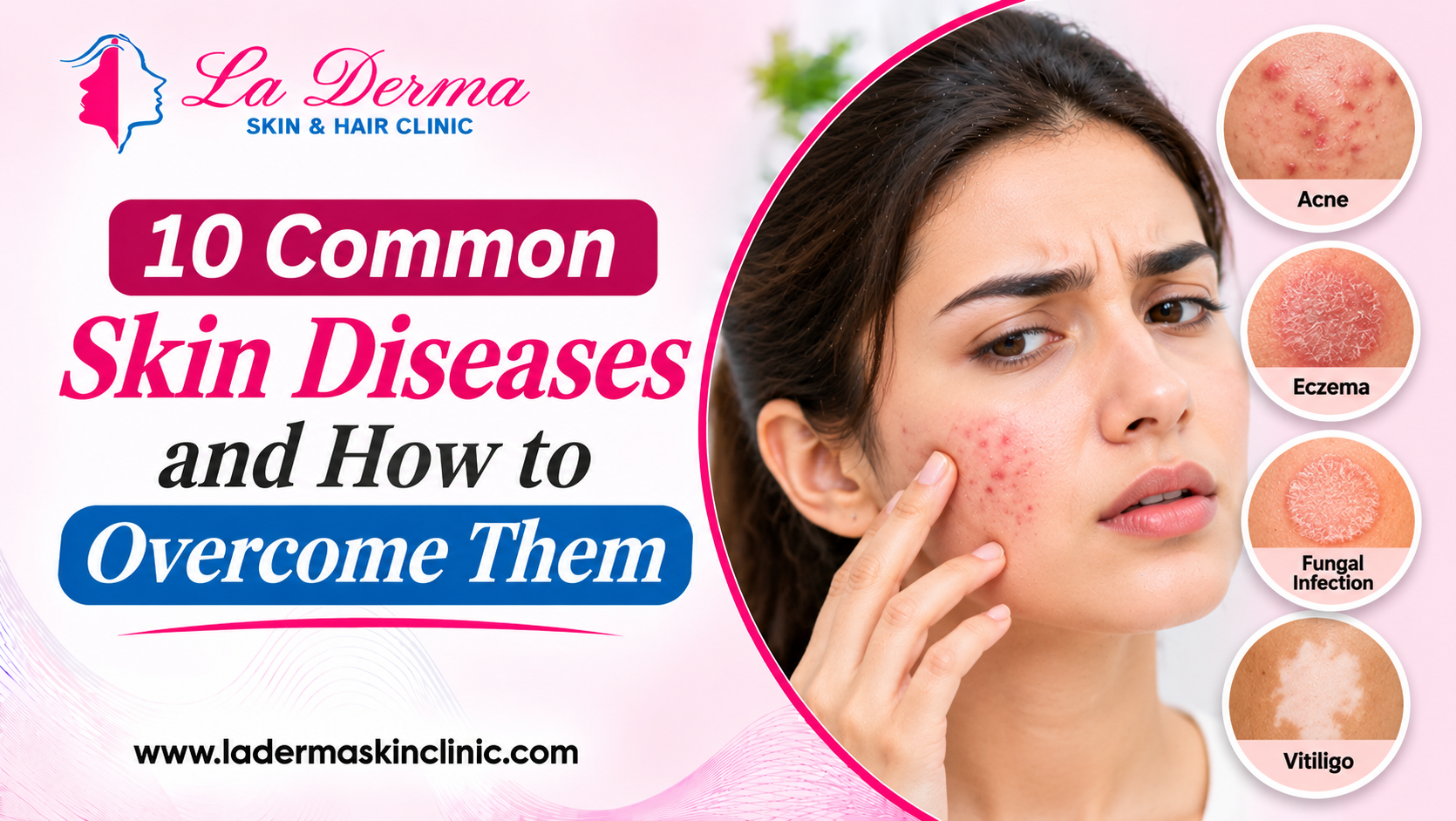
10 Common Skin Diseases and How to Overcome Them
Your skin is your body’s largest organ, and it works hard every single day. It shields you from pollution, germs, sun, and stress. So when something goes wrong, you notice it quickly, and it can affect your confidence as much as your comfort.
The good news is that most skin problems are treatable once you understand what is causing them. Here are ten of the most common skin diseases, what triggers them, and what you can do about them.
1. Acne
Acne happens when oil, dead skin cells, and bacteria clog your pores. It usually shows up as blackheads, whiteheads, painful pimples, or deep cysts. Hormonal changes, stress, diet, and certain cosmetics can all make it worse.
How to overcome it: Wash your face twice a day with a gentle cleanser, and never pick or squeeze pimples. Ingredients like salicylic acid, benzoyl peroxide, and retinoids can help. Moderate to severe acne needs a proper medical plan because delaying treatment raises the risk of permanent marks.
2. Acne Scars
Acne scars are what remain after pimples heal, especially if they were picked at or treated late. They can appear as pits, shallow dents, or dark flat marks.
How to overcome it: The right treatment depends on the scar type. Options include chemical peels, microneedling, laser resurfacing, and subcision. If you are searching for the best acne scars treatment in Kolkata, choose a clinic that examines your skin type and scar pattern first rather than offering one standard procedure for everyone. At La Derma Skin & Hair Clinic, Dr. Khushbu Tantia designs scar treatment plans around each patient’s skin, not a template.
3. Eczema (Atopic Dermatitis)
Eczema causes dry, itchy, inflamed patches that can crack or ooze. It often runs in families and flares up with dust, harsh soaps, sweat, stress, or weather changes.
How to overcome it: Moisturise generously, ideally right after bathing. Avoid hot showers and fragranced products, and identify your personal triggers. Doctors may prescribe mild steroid creams or non-steroidal alternatives during flare-ups. Scratching only worsens the cycle, so early care matters.
4. Psoriasis
Psoriasis is a long-term autoimmune condition in which skin cells multiply too quickly. This creates thick, red patches covered with silvery scales, commonly on elbows, knees, and the scalp. It is not contagious, though many people feel self-conscious about it.
How to overcome it: Psoriasis cannot be cured, but it can be controlled very well. Treatment includes medicated creams, phototherapy, and oral or injectable medicines for severe cases. Managing stress, avoiding smoking, and keeping skin moisturised also reduce flare-ups.
5. Fungal Infections (Ringworm, Tinea)
Despite the name, ringworm has nothing to do with worms. It is a fungal infection that causes circular, itchy, red rashes. Warm, humid weather and sweaty clothing make it especially common in India.
How to overcome it: Keep the affected area clean and dry, wear loose cotton clothes, and do not share towels. Antifungal creams or tablets prescribed by a doctor usually clear it. Stopping treatment too early is the main reason it keeps coming back, so complete the full course.
6. Dandruff and Scalp Conditions
Dandruff causes flaking, itching, and sometimes redness on the scalp. It is often linked to a yeast called Malassezia, along with oily skin, dry weather, or stress.
How to overcome it: Use an anti-dandruff shampoo containing ketoconazole, zinc pyrithione, or selenium sulfide a few times a week. Avoid scratching and heavy oils on an inflamed scalp. If flakes persist despite regular shampooing, it may be seborrhoeic dermatitis or psoriasis, and you should look for professional dandruff treatment in Kolkata instead of trying product after product.
7. Vitiligo
Vitiligo appears as white patches on the skin when pigment-producing cells stop working. It can affect any part of the body and is not contagious or harmful physically, though it can be emotionally hard.
How to overcome it: Early treatment gives better results. Options include topical medicines, narrowband UVB phototherapy, and, in stable cases, surgical techniques. Always use sunscreen, because the white patches burn easily. Emotional support and a patient, consistent approach are just as important as medication.
8. Melasma and Pigmentation
Melasma shows up as brown or grey-brown patches, mostly on the cheeks, forehead, and upper lip. Sun exposure, hormonal changes, and some medications are common causes. Women are affected more often.
How to overcome it: Sun protection is non-negotiable. Apply a broad-spectrum sunscreen every day, even indoors near windows, and reapply outdoors. Dermatologists may suggest brightening creams, peels, or laser toning. Be patient, since pigmentation fades slowly and can return without sun care.
9. Urticaria (Hives)
Hives are raised, itchy welts that appear suddenly and may move from one body area to another. Triggers include food, medicines, infections, heat, and stress, though sometimes no cause is found.
How to overcome it: Avoid known triggers and keep a simple diary of what you ate or used before an outbreak. Antihistamines usually control symptoms. If hives last more than six weeks or come with swelling of the lips or face or difficulty breathing, seek medical help immediately.
10. Rosacea
Rosacea causes persistent facial redness, visible blood vessels, and sometimes acne-like bumps. Spicy food, alcohol, heat, and sun can trigger flare-ups. It is often mistaken for plain sensitive skin or acne.
How to overcome it: Use gentle, fragrance-free skincare and daily sunscreen. Note your triggers and avoid them. Prescription creams, oral medicines, or light-based therapies can calm the redness and bumps when home care is not enough.
When Should You See a Dermatologist?
Many people wait too long, hoping a problem will fade. Book an appointment if:
- A rash or patch lasts more than two weeks
- Over-the-counter products are not helping or are making things worse
- Your skin condition is spreading, painful, or affecting sleep
- You notice a mole that changes in size, shape, or color
- You are leaving scars or marks behind
If you are looking for the best dermatologist, look beyond popularity. Check qualifications, experience with your specific concern, hygiene standards, and whether the doctor takes time to explain the diagnosis and treatment options. Dr. Khushbu Tantia at La Derma Skin & Hair Clinic focuses on exactly this: accurate diagnosis, honest advice, and treatment that fits your skin and lifestyle.
Simple Daily Habits for Healthier Skin
Treatment works best when paired with good everyday care:
- Cleanse gently and moisturise daily
- Use sunscreen with SPF 30 or higher every morning
- Drink enough water and eat fresh, balanced meals
- Sleep well and manage stress
- Avoid sharing personal items like towels and razors
- Never use steroid creams without medical advice
Final Thoughts
Skin diseases are common, but you do not have to live with them. Understanding what you are dealing with and acting early makes treatment simpler, faster, and more effective. Whether you are struggling with stubborn acne, flaky scalp, or marks that will not fade, expert care can make a real difference.
If you need personalised guidance, visit Dr. Khushbu Tantia at La Derma Skin & Hair Clinic, Kolkata. Book a consultation today and take the first step toward clear, healthy, confident skin.
Frequently Asked Questions
Are all skin diseases contagious?
No. Conditions like eczema, psoriasis, vitiligo, and acne are not contagious. Fungal infections can spread through contact or shared items.
Can acne scars be removed completely?
Scars can be improved significantly, though results depend on scar type and depth. A combination of treatments often works better than a single one.
How often should I use anti-dandruff shampoo?
Usually two to three times a week, or as your doctor advises. Leave it on the scalp for a few minutes before rinsing.
Is it safe to use home remedies for skin problems?
Some are harmless, but others can irritate skin or delay proper treatment. Get a diagnosis first, especially for persistent problems.