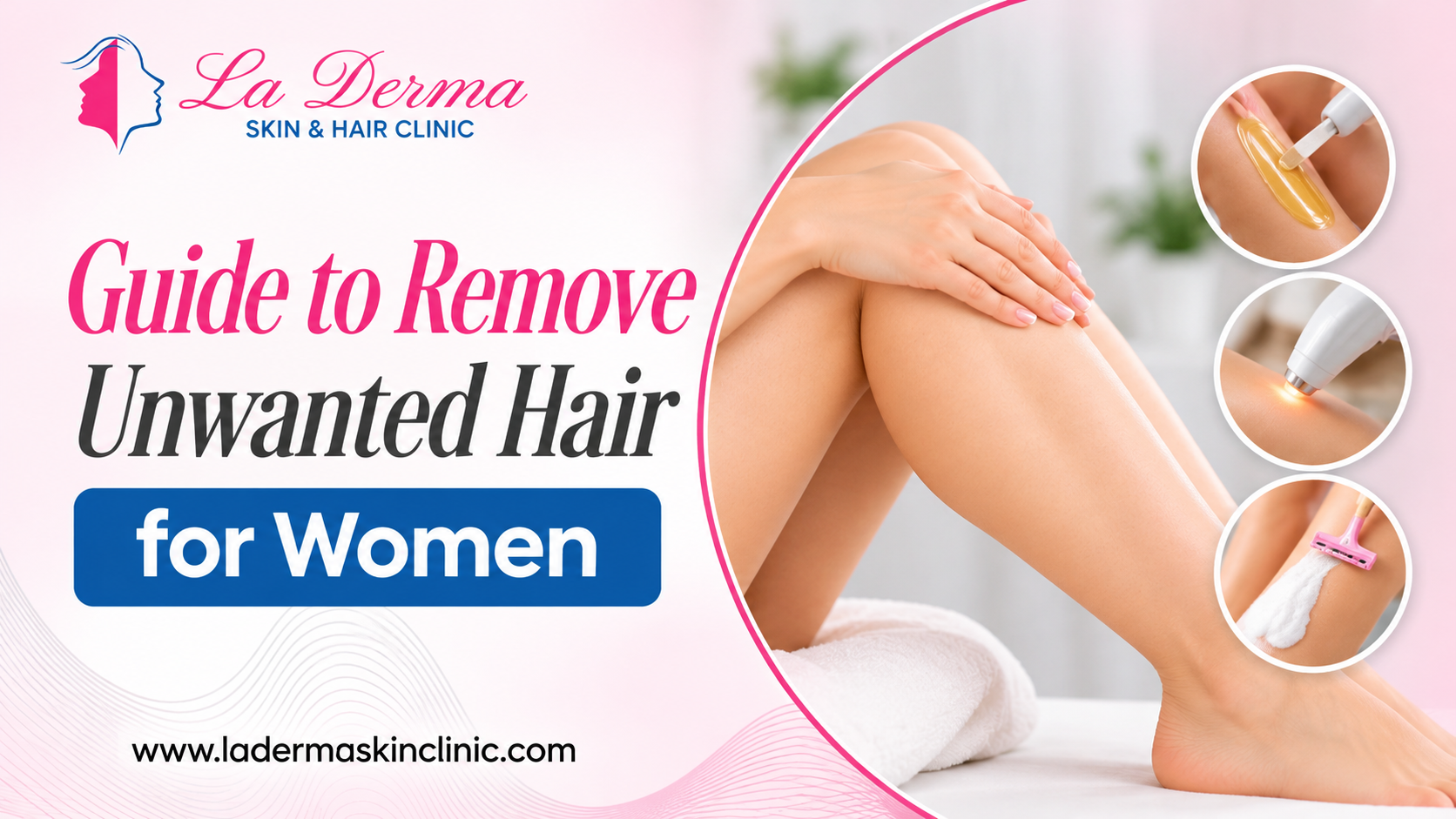
Guide to Remove Unwanted Hair for Women
Let’s be honest: almost every woman has stood in front of the mirror at some point, tweezers in hand, wondering if there is a better way to deal with unwanted hair. Maybe it’s the stubborn hair on your upper lip, the dark stubble that returns two days after shaving, or the coarse strands that appear on your chin out of nowhere. You are not alone, and there is nothing to be embarrassed about.
The real question is not whether you should remove unwanted hair. It is which method suits your skin, your budget, your pain tolerance, and your lifestyle. This guide walks you through every option in plain language, so you can choose with confidence.
Why Does Unwanted Hair Grow in the First Place?
Hair growth is a natural process controlled mostly by genetics and hormones. Every woman has fine, light hair across her body. Androgens, the so-called male hormones that women also produce in small amounts, can turn that fine hair into thicker, darker hair in certain areas like the face, chest, abdomen, and back.
So what causes excess hair growth in women? The most common reasons include family history, hormonal changes during puberty or pregnancy, menopause, polycystic ovary syndrome (PCOS), thyroid problems, and some medications. If the hair appears suddenly or grows rapidly, it is worth getting checked rather than just removing it again and again.
Temporary Hair Removal Methods: Quick but Short-Lived
Temporary methods remove hair on the surface or pull it from the root, but the follicle stays active. That means the hair always returns. They are fine for occasional use, but they can feel like a never-ending routine.
- Shaving is fast, painless, and cheap. The downside? Regrowth shows up in a day or two, and razor bumps, nicks, and ingrown hairs are common, especially on sensitive skin.
- Waxing pulls hair from the root, so smoothness lasts around three to five weeks. It hurts, though, and repeated waxing can irritate the skin, cause redness, and sometimes lead to dark patches.
- Threading is a favourite for eyebrows and facial hair. It is precise and gentle on most skin types, but it works best on small areas and can be uncomfortable if you have sensitive skin.
- Depilatory creams dissolve hair just below the surface. They are painless, but the chemicals can cause burning or allergic reactions, so always do a patch test first and never use them on the face unless the product is made for it.
- Epilators are small devices that pull out several hairs at once. They give results similar to waxing, though the first few sessions can feel quite intense.
The common problem with all of these is repetition. You spend years, and a surprising amount of money, doing the same thing over and over.
Long-Term Hair Reduction: Is Laser the Answer?
If you are tired of the cycle, laser treatment is the most popular option for long-term results. It uses a focused beam of light that is absorbed by the pigment in the hair. This light turns into heat and damages the follicle, which slows down future growth.
How does laser hair removal actually work?
The laser targets the melanin in the hair shaft and travels down to the root. Because hair grows in cycles, and only hairs in the active growth phase respond well, you need multiple sessions, usually spaced four to eight weeks apart. Most women need six to eight sessions, depending on the area, hair thickness, and hormonal factors.
Is it permanent?
The accurate answer is “permanent hair reduction,” not complete removal forever. Most women see a significant drop in hair density, often 70 to 90 percent, and the hair that does return is usually finer and lighter. Occasional maintenance sessions may help, particularly if hormones are involved.
Who is a good candidate?
Laser works best when there is a contrast between hair and skin colour, but modern devices are designed to work safely on Indian skin tones too. The key is the right technology and the right settings, which is why the technician’s experience matters as much as the machine.
If you are searching for a trustworthy Laser Hair Removal Clinic in Kolkata, look for a place like La Derma Skin & Hair Clinic, where a qualified dermatologist examines your skin first, explains the number of sessions honestly, and uses US-FDA-approved devices. Cheap packages from unqualified centres can lead to burns, pigmentation, and disappointment.
What About Electrolysis?
Electrolysis uses a tiny probe inserted into each hair follicle to destroy it with a small electric current. It is the only method that is officially labelled permanent, and it works on all hair colours, including white and grey hair where lasers struggle.
The catch is time. Each hair is treated one by one, so it suits small areas such as the chin, upper lip, or a few stray hairs. It can be slow and slightly uncomfortable, but for the right person it is very effective.
When Unwanted Hair Is a Sign of Something Else
Sometimes unwanted hair is not just a cosmetic issue. If you notice thick hair on your face, chest, or back along with irregular periods, acne, hair thinning on the scalp, or sudden weight gain, your body may be trying to tell you something. PCOS and thyroid imbalances are the usual suspects.
In such cases, removing hair alone will not solve the root cause. Hormonal evaluation, lifestyle changes, and, where needed, medication can make a big difference. A combined plan of skin and hair treatment that looks at both the cause and the cosmetic concern tends to give far better and longer-lasting results than any single hair removal method used alone.
Aftercare Tips for Smooth, Healthy Skin
Whichever method you choose, how you treat your skin afterwards matters just as much as the removal itself.
- Avoid direct sun for at least a week after laser or waxing, and use a broad-spectrum sunscreen every day.
- Skip hot showers, saunas, and heavy workouts for the first 24 to 48 hours.
- Moisturise regularly with a gentle, fragrance-free product to calm irritation.
- Do not scrub, bleach, or use strong exfoliants on freshly treated skin.
- Never wax or thread an area you are planning to laser, because the root needs to be present for the treatment to work. Shaving is the only method allowed in between sessions.
If you notice persistent redness, blisters, dark patches, or ingrown hairs that do not settle, do not ignore them. A good Skin Care Clinic in Kolkata can assess the problem early and treat it before it becomes a bigger concern.
How to Choose the Right Method for You
Think about three things: how long you want results to last, which body area you are treating, and what your skin can tolerate. If you only want a quick touch-up before an event, shaving or threading is enough. If you are done with constant maintenance, laser is worth exploring. If you have a few white or light hairs, electrolysis might be the better fit. And if the hair growth feels sudden or excessive, a medical check-up should come first.
Also, be patient. No method gives overnight miracles, and anyone promising 100 percent hair-free skin in one sitting is not being honest with you.
Final Thoughts
Unwanted hair is incredibly common, and choosing how to deal with it is a personal decision. Whether you prefer a simple at-home routine or a long-term clinical solution, the goal is the same: to feel comfortable and confident in your own skin.
If you would like professional guidance, a consultation with Top Dermatologist in Kolkata, Dr. Khushbu Tantia at La Derma Skin & Hair Clinic, can help you understand what is behind your hair growth and which treatment suits your skin type best. A personalised plan, honest advice, and safe technology make all the difference. After all, you deserve results that are not just smooth but also healthy and long-lasting.
Frequently Asked Questions
Can I use lasers on all skin tones?
Yes, but the device and settings must match your skin type. Darker skin needs longer-wavelength lasers and careful settings to avoid burns or pigmentation.
How many sessions will I need?
Most women need six to eight sessions for good results. Hormonal conditions like PCOS may need extra sessions or occasional top-ups.
Can a laser remove white or grey hair?
Not effectively. Laser needs pigment to work, so white, grey, and very fine blonde hair respond poorly. Electrolysis is the better choice for these.
Is it safe to remove hair on the face, underarms, and bikini line?
Yes, when done correctly. These are among the most commonly treated areas, but always choose a qualified professional for sensitive zones.
What should I do before a laser session?
Shave the area a day before, avoid sun exposure and tanning for two weeks, and stop waxing, threading, or plucking at least four weeks ahead.
Why does hair sometimes grow back after a laser?
Hairs in the resting phase are not affected in the first few sessions, and hormones can wake dormant follicles later. This is normal and usually much finer.