What Are the Most Common Types of Pigmentation?
The common types of pigmentation are melasma, post‑inflammatory hyperpigmentation, sun spots, freckles, under‑eye dark circles, lichen planus pigmentosus (LPP) and macular amyloidosis. Every type looks different, has a cause, and requires a different treatment. Knowing which type you have is the step toward proper care.
If you have ever wondered why one patch of skin looks darker than the rest, you are not alone. Pigmentation is one of the common reasons people visit a skin clinic in India, where strong sun and deeper skin tones make uneven colour more noticeable and often more stubborn.
What Is Pigmentation?
Skin colour comes from melanin, a pigment produced by cells called melanocytes. When these cells make more melanin in some areas, you get darker patches or spots, which we call hyperpigmentation. When the cells make less melanin, the skin shows lighter patches, known as hypopigmentation. This is a form of pigmentation.
Hyperpigmentation is usually harmless. It can be treated incorrectly. That is why many people looking for pigmentation treatment in Kolkata feel frustrated after trying creams that do not suit their skin.
Types of Pigmentation
1. Melasma
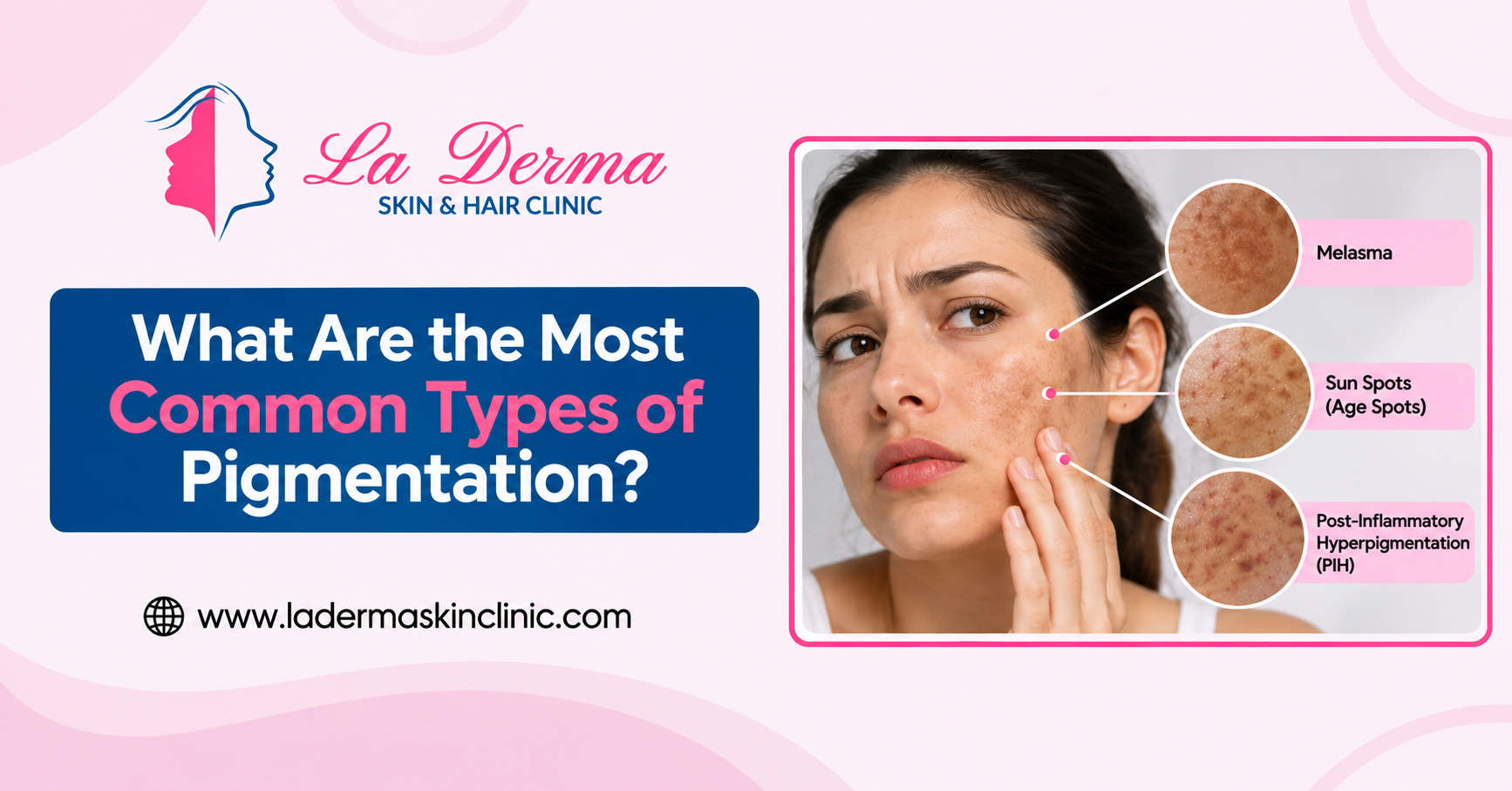
Melasma, called “chhaya” in Hindi and other Indian languages, shows up as grey‑brown patches on the cheeks, forehead, upper lip, and nose. The patches are usually symmetrical on both sides of the face.
Causes: Hormones are a factor, which is why melasma is more common in women, especially during pregnancy or while using birth control pills. Sun exposure is the biggest trigger, and genetics also play a role.
Why is melasma tricky? Melasma is chronic and often relapses. The patches may fade with treatment. Can return after a sunny holiday or when sunscreen is skipped. That is why a melasma specialist in Kolkata can make a difference by creating a long‑term plan instead of a quick fix.
2. Post‑Inflammatory Hyperpigmentation (PIH)
That mark that remains long after a pimple has healed is post‑inflammatory hyperpigmentation (PIH). PIH appears after skin inflammation or injury, such as from acne, eczema, burns, insect bites, or harsh scrubbing. Depending on skin tone, PIH may look pink, red, brown, or dark brown.
PIH usually fades on its own over months, sometimes a year or more. The correct treatment and sun protection can speed up the fading. Importantly, do not pick at pimples because picking only darkens the marks.
3. Sun Spots (Solar Lentigines)
Sun spots are flat tan to brown spots on sun‑exposed areas such as the face, hands, shoulders, and chest. They result from years of UV exposure and usually appear after the age of 30 or 40. Unlike melasma, sun spots are well‑defined individual spots rather than large patches.
Any spot that changes in size, shape, or color; bleeds; or has irregular edges should be examined by a dermatologist promptly.
4. Freckles (Ephelides)
Freckles are flat, light brown or reddish‑brown spots, usually the size of a pinhead. They appear mainly on the nose, cheeks, shoulders, and arms. Freckles are more common in people with light skin, and they often run in families because they are linked to genes that control melanin production.
Freckles usually appear in childhood after strong sun exposure. They darken in summer and fade in winter, which helps distinguish them from sun spots. Sunspots keep the colour all year and appear later in life.
Freckles are completely harmless. Many people love them. If you want to lighten freckles, options such as peels, topical brightening creams, or carefully selected lasers can help. However, freckles can return with sun exposure, so daily sunscreen is the key to keeping them under control. Having many freckles also means the skin burns easily; extra sun care is important.
5. Lichen Planus Pigmentosus (LPP)
Lichen planus pigmentosus (LPP) is a fairly common condition in Indian skin. It appears as brown to grey‑brown patches usually on the face, neck and skin folds such as the underarms. LPP may cause itching or slight burning, although some people feel no symptoms.
Causes: The exact cause of LPP is not fully understood. LPP is considered a variant of lichen planus, a skin condition. Possible triggers include hair oils, hair dyes, and sun exposure.
Why does it matter? LPP is often mistaken for melasma. LPP needs treatment. Melasma creams rarely help LPP. A dermatologist can confirm LPP with dermoscopy or sometimes a small biopsy. Treatment for LPP is slow. Treatment for LPP combines sun protection, anti-inflammatory creams, and supervised medical therapy.
6. Macular Amyloidosis
Macular amyloidosis causes small, brown, rippled, or net‑like pigmentation. Macular amyloidosis is often on the upper back between the shoulder blades. Macular amyloidosis can also appear on the arms and chest. Macular amyloidosis frequently itches.
Causes: A protein called amyloid builds up in the layer of the skin. Chronic friction is a factor. Chronic friction can come from scrubbing with nylon towels, loofahs, or rough bath brushes.
Common mistake: Many people assume macular amyloidosis is dirt or tanning. Many people scrub harder, which makes macular amyloidosis worse. Treatment for amyloidosis includes stopping the friction. Treatment for amyloidosis includes prescribed creams for itching and pigmentation. Treatment for amyloidosis may also include lasers or phototherapy. Results for amyloidosis take patience.
How Do You Know Which Type You Have?
Many types of pigmentation look alike. Melasma, sun spots, and LPP can appear on the face. PIH can overlap with any of them. A dermatologist uses an exam. A dermatologist may use a dermoscope or Wood’s lamp. A dermatologist tells the types apart. A dermatologist sees how deep the pigment sits. That depth decides which treatments will work.
What Are the Treatment Options?
- No single treatment works for every type. Depending on diagnosis and skin tone, a dermatologist may recommend:
- Medical-grade creams with acid, azelaic acid, niacinamide, vitamin C, or retinoids
- Anti‑inflammatory topicals for LPP and macular amyloidosis
- Chemical peels to gently lighten pigmented layers
- Laser and light‑based treatments chosen carefully for Indian skin
- Oral medications in selected supervised cases
- Daily broad‑spectrum sunscreen, which is non‑negotiable
For pigmentation treatment, choose La Derma Skin and Hair Clinic that tailors treatment to your skin. Aggressive lasers or strong peels on skin tones can worsen pigmentation.
Why Choose an Expert Dermatologist?
Over-the-counter lightening creams and home remedies can thin the skin or cause rebound darkening. If you are looking for a dermatologist in Kolkata, find someone who focuses on long‑term skin health. At La Derma Skin & Hair Clinic, Dr. Khushbu Tantia focuses on finding the root cause of your pigmentation before recommending a plan. At La Derma Skin & Hair Clinic, Dr. Khushbu Tantia ensures that you are not just treating symptoms.
Everyday Habits That Help
- Wear SPF 30+ sunscreen daily.
- Use a hat or umbrella.
- Don’t. Scrub.
- Keep skincare simple.
When Should You See a Dermatologist?
Book a consultation if your pigmentation is spreading, darkening, and itchy or affecting your confidence.
See a doctor away if a spot changes shape, bleeds, or looks unusual.
Final Thoughts
From melasma and post‑acne marks to LPP and macular amyloidosis, most pigmentation types can be improved with diagnosis, treatment, and sun protection. If you are ready to stop guessing, consider booking a consultation with a trusted melasma specialist. Dr. Khushbu Tantia and the team at La Derma Skin & Hair Clinic can help you understand what is behind your pigmentation and build a plan that fits your skin.
Frequently Asked Questions
Can pigmentation be completely cured?
PIH and sunspots can fade significantly or clear. Melasma and LPP can be controlled well but may return, so ongoing care matters.
How long does treatment take?
Improvement often begins within weeks, but full results usually take two to six months or longer.
Is treatment safe for Indian skin?
Yes, when done by an experienced dermatologist who understands how deeper skin tones react.
Do home remedies like lemon juice or turmeric remove pigmentation?
Not reliably. Lemon juice can irritate skin and cause even darker marks. It’s safer to use dermatologist-approved products.
Why does pigmentation come back after treatment?
Sun exposure, hormonal changes, stress, and skipping sunscreen can trigger it again. This is especially true for melasma (chhaya), which needs long-term maintenance.
How is melasma different from lichen planus pigmentosus (LPP)?
Melasma usually appears on the cheeks and forehead and is linked to sun and hormones. LPP is often itchier, can affect the neck and folds, and needs a different treatment.
Do I need sunscreen if I mostly stay indoors?
Yes. UV rays and visible light from windows can still darken pigmentation, so daily sunscreen is a good habit.