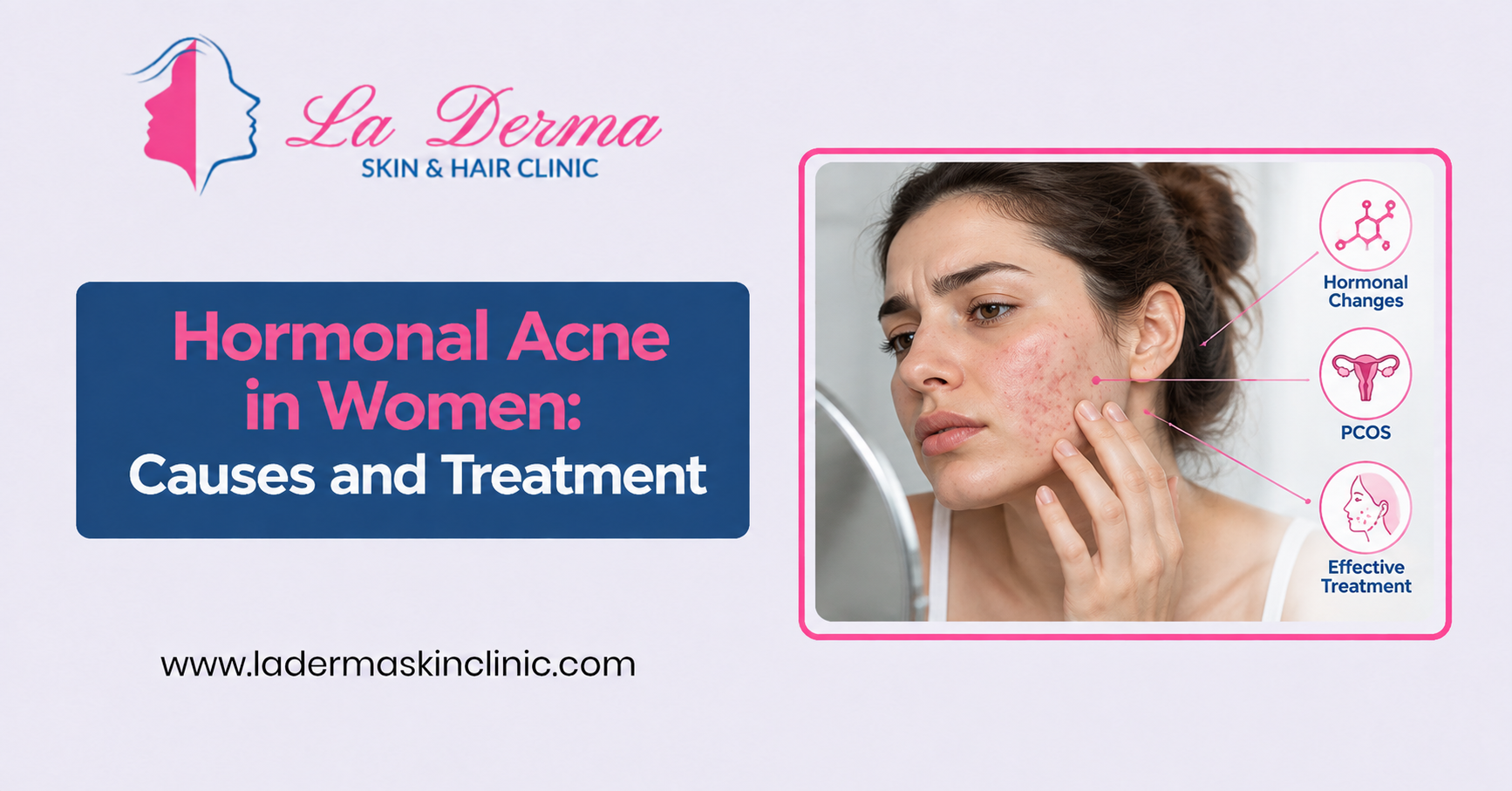
Hormonal Acne in Women: Causes and Treatment
If you’re an adult woman who thought acne was something you’d leave behind in your years, only to find angry breakouts showing up along your jawline in your late 20s or 30s, you’re not alone. Hormonal acne is one of the most common. And most frustrating. Skin concerns dermatologists see today. It doesn’t care about your age, your skincare budget, or how many “miracle” products sit on your bathroom shelf. Understanding what’s actually happening beneath your skin is the step toward clearing it up for good.
What Is Hormonal Acne?
Hormonal acne refers to breakouts triggered primarily by fluctuations in hormone levels, such as androgens like testosterone. These hormones stimulate the oil glands in your skin, causing them to produce excess sebum. When that extra oil combines with skin cells and gets trapped in pores, it creates the perfect environment for acne-causing bacteria to thrive.
Unlike the acne you might have had as a teenager, which often appeared across the forehead, nose, and cheeks, hormonal acne in adult women tends to concentrate around the face. The jawline, chin, and sometimes the neck. It usually shows up as tender, cystic bumps rather than surface-level whiteheads or blackheads, which is exactly why it’s so much harder to treat with over-the-counter products alone.
What Causes Hormonal Acne in Women?
There isn’t one trigger. Hormonal acne is usually the result of overlapping factors:
- Menstrual Cycle Fluctuations: Many women notice breakouts appearing like clockwork a week before their period. This happens because estrogen levels drop while progesterone and androgen levels rise slightly, prompting oil glands to go into overdrive.
- Polycystic Ovary Syndrome (PCOS): PCOS is one of the leading causes of persistent hormonal acne. It causes elevated androgen levels, which directly increase oil production. If your acne comes along with periods, unexplained weight gain, or excess facial hair, it’s worth getting evaluated for PCOS.
- Postpartum Changes: The dramatic hormonal shifts during pregnancy and after childbirth can trigger breakouts or worsen existing acne even in women who never struggled with skin issues before.
- Stress: Chronic stress raises levels, which in turn can increase androgen production. This is why breakouts often flare up during demanding or emotional periods of life.
- Coming Off Birth Control: Many women experience a surge of breakouts after stopping contraceptives as the body’s natural hormone levels readjust.
- Diet and Insulin Resistance: Diets high in sugar and dairy have been linked to increased insulin and androgen activity, both of which can aggravate acne in susceptible individuals.
- Genetics: If your mother or sister dealt with adult acne, there’s a chance you might too. Family history plays a role in how your skin responds to hormonal shifts.
Why Hormonal Acne Is Stubborn
One of the biggest frustrations with hormonal acne is that it often doesn’t respond to the same treatments that work for typical teenage acne. The root cause lies internally. It lies in hormone fluctuations. Simply changing your cleanser or spot-treating pimples usually isn’t enough. This is exactly why many women end up seeing a specialist rather than continuing to experiment on their own.
Effective Treatment Options
The good news is that hormonal acne is very treatable once it’s properly diagnosed. Treatment usually works best when it addresses both the surface symptoms and the internal hormonal triggers.
- Topical Treatments: Retinoids, benzoyl peroxide, and azelaic acid can help manage surface-level breakouts and prevent pore clogging, though they’re often more effective when combined with other approaches for hormonal acne specifically.
- Oral Medications: Dermatologists frequently prescribe androgen medications such as spironolactone, which directly reduces the effect of androgens on oil glands. Certain combined oral contraceptives can also help regulate hormone levels and reduce breakouts in women.
- Professional Procedures: For breakouts and inflammation, treatments like chemical peels, medical-grade facials, and light or laser therapy can significantly reduce flare-ups when performed under professional supervision. This is where seeking out a clinic for Acne Pimple Treatment in Kolkata makes a real difference since these procedures need to be customised to your skin type and severity.
- Lifestyle Adjustments: Managing stress, maintaining a diet with a lower glycemic load, staying hydrated, and following a consistent gentle skincare routine all support faster healing and fewer future breakouts.
The Acne Scar Problem Nobody Talks About Enough
Here’s the part many women don’t anticipate: even after the active breakouts are under control, the scars they leave behind can linger for years. Hormonal acne, because it’s often deep and cystic, has a tendency to leave behind post-inflammatory hyperpigmentation, pitted scars, or textural unevenness.
This is a separate treatment journey from managing active acne, and it requires targeted intervention. Options like microneedling, chemical peels, laser resurfacing and subcision (for deeper pitted scars) have shown excellent results when performed by an experienced professional. If you’ve been dealing with marks long after your breakouts have cleared, consulting an Acne Scars Specialist in Kolkata can help you understand which combination of treatments will genuinely work for your skin rather than relying on trial-and-error home remedies that rarely make a visible dent in deeper scarring.
When Should You See a Dermatologist?
Not every breakout needs intervention, but there are clear signs it’s time to book an appointment rather than wait it out:
- Breakouts are deep, painful, and cystic rather than surface-level
- Acne keeps returning in the same spots along your jawline or chin
- Over-the-counter products haven’t made any real difference after several weeks
- You notice irregular periods, excess hair growth, or other symptoms alongside acne
- You’re developing scarring or dark marks after breakouts heal
A proper diagnosis matters enormously here because hormonal acne caused by PCOS needs a very different treatment plan compared to acne triggered by stress or diet. This is where working with the best dermatologist in Kolkata becomes genuinely valuable. Someone who can run the tests, understand your hormonal history, and build a treatment plan tailored specifically to you rather than a generic one-size-fits-all skincare routine.
Dermatologists in Kolkata like Dr. Khushbu Tantia often emphasise that successful hormonal acne treatment isn’t about chasing the skincare trend but about understanding the individual patient’s hormonal profile, lifestyle and skin type before recommending a combination of topical, oral and procedural treatments. This personalised approach tends to produce more consistent long-term results than generic acne solutions bought off a pharmacy shelf.
Final Thoughts
Hormonal acne can feel deeply discouraging, especially when you feel like you’ve tried everything. It’s important to remember that this type of acne has an internal root cause, which means it genuinely responds to the right combination of medical treatment, lifestyle changes and patience. You don’t have to live with it or hide behind layers of makeup.
Whether you’re dealing with breakouts, lingering scars, or both, getting a proper evaluation is the single most effective thing you can do with guidance. From lifestyle adjustments to professional treatments for both acne and the scars it leaves behind. Clear, healthy skin is absolutely achievable no matter how long you’ve been struggling.
If your acne has been persistent, painful or leaving marks behind, it may be time to stop guessing and start with an opinion tailored to your skin and your hormones.
People Also Ask
1. How do I know if my acne is just regular acne?
Hormonal acne typically shows up along the jawline, chin and lower cheeks, appears as tender cysts rather than small whiteheads and often flares up around your menstrual cycle. If your breakouts follow this pattern and worsen with stress or before your period, hormones are likely playing a role.
2. At what age does hormonal acne usually occur?
While it can start in the years, hormonal acne is especially common in women in their 20s, 30s, and even 40s. It can appear at any time in adulthood, even if you never had acne-prone skin as a teenager.
3. Can hormonal acne go away on its own?
In some cases, mild hormonal fluctuations settle down. Breakouts reduce naturally. However, if the underlying cause is something like PCOS or a persistent hormonal imbalance, acne usually keeps recurring until it’s properly diagnosed and treated.
4. Is birth control a treatment for hormonal acne?
Certain combined oral contraceptives can help regulate hormone levels and reduce breakouts for women. However, they aren’t the choice for everyone, so it’s best to discuss the options with a dermatologist or gynaecologist before starting one.
5. Does diet really affect acne?
Yes, to some extent. Diets high in sugar and dairy have been linked to increased insulin activity, which can worsen androgen-driven breakouts. Reducing processed sugar and keeping an eye on dairy intake may help some women see improvement.
6. How long does it take to see results from acne treatment?
Most treatments, whether topical, oral or procedural, take from 6 to 12 weeks to show noticeable improvement since skin cell turnover and hormonal regulation both take time. Consistency with the treatment plan is key.
7. Can hormonal acne scars be completely removed?
While scars can’t always be erased entirely, treatments like microneedling, chemical peels, laser resurfacing and subcision can dramatically reduce their appearance. Consulting an acne scars specialist helps determine which combination will work best for your specific scar type.
8. Should I see a dermatologist or a gynaecologist for acne?
It’s often best to start with a dermatologist who can evaluate your skin and, if needed, refer you for testing or coordinate care with a gynaecologist, especially if conditions like PCOS are suspected.