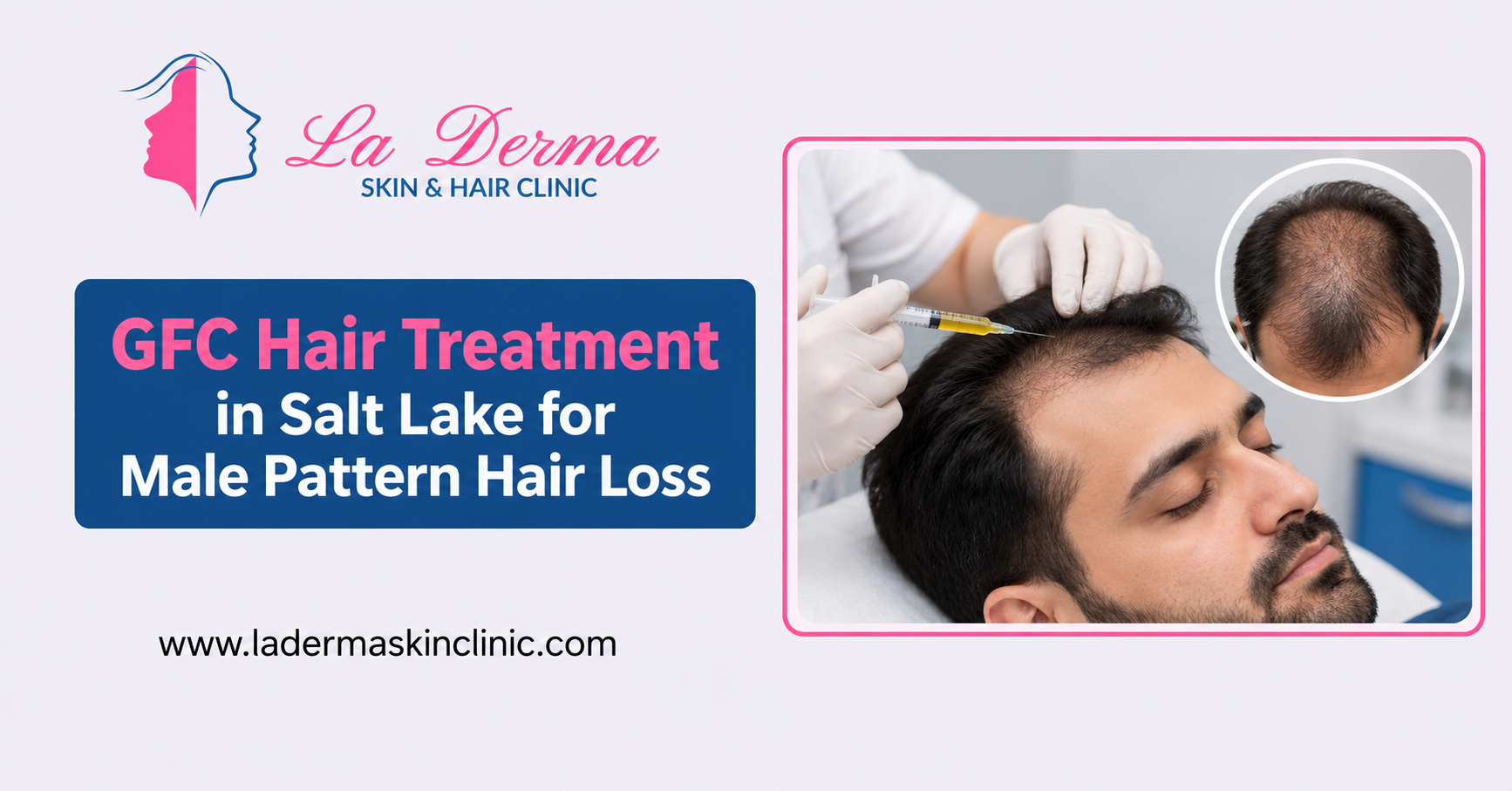
GFC Hair Treatment in Salt Lake for Male Pattern Hair Loss
It usually starts small. You notice a few extra strands in the shower drain, then your forehead looks a little taller in photos, and one day a friend casually mentions your crown is thinning. If you are a man in your twenties, thirties, or forties, this probably feels familiar. The good news is that male pattern hair loss is common, well understood, and far more treatable when you act early. One option many men are asking about is GFC hair treatment in Salt Lake for male pattern hair loss, and in this guide we explain what it is, who it suits, and what you can honestly expect.
Quick Answer: Does GFC Work for Male Pattern Hair Loss?
GFC (Growth Factor Concentrate) therapy uses growth factors drawn from your own blood and injected into the scalp to wake up weakened hair follicles. It works best in the early to moderate stages of male pattern baldness, when follicles are shrinking but still alive. It can reduce shedding, improve hair thickness, and support regrowth, but it is not a one-session miracle, and it cannot revive follicles that have been bald for many years. Most men need a course of sessions plus maintenance.
What Is Male Pattern Hair Loss?
Male pattern hair loss, medically called androgenetic alopecia, is the most common reason men lose hair. It is driven by genetics and a hormone called DHT (dihydrotestosterone). In sensitive follicles, DHT gradually shortens the growth phase of each hair. Over time, thick, dark hairs turn into thin, short, almost invisible ones, a process called miniaturisation.
The typical pattern looks like this:
- A receding hairline, often forming an “M” shape
- Thinning at the crown or vertex
- Gradual widening of the parting
- Hair that feels finer and breaks more easily
Stress, poor sleep, crash diets, low vitamin D, thyroid problems, and iron deficiency can make things worse, which is why a proper diagnosis matters before you start any hair fall treatment in Kolkata.
What Is GFC Hair Treatment?
GFC stands for Growth Factor Concentrate. It is a newer, more refined cousin of PRP (platelet-rich plasma). A small amount of your blood is collected and processed in a centrifuge so that a concentrated, platelet-rich portion rich in growth factors is separated. This portion is then injected into the areas of thinning on your scalp.
Growth factors are natural proteins that signal cells to repair, multiply, and function better. In the scalp, they help improve blood supply around the follicle, extend the growth phase of the hair cycle, and nourish follicles that have become sluggish. Because the material comes from your own body, the risk of allergic reaction is very low.
How Does a GFC Session Work?
Many men worry that this will be painful or time-consuming. In reality, it is a fairly simple outpatient procedure.
- Consultation and scalp analysis. The doctor examines your scalp, checks the stage of hair loss, and asks about your family history, diet, and medicines. Blood tests may be advised.
- Blood draw. A small sample is taken from your arm, much like a routine blood test.
- Processing. The blood is spun in a centrifuge to extract the growth factor concentrate. This takes around 15 to 20 minutes.
- Numbing and injection. The scalp is cleaned, a numbing method is used if needed, and the concentrate is injected with a fine needle across the thinning areas.
- Go home. There is no hospital stay. Most men return to work the same day or the next.
The whole visit typically takes about an hour.
Who Is a Good Candidate?
GFC tends to work well for men who:
- Are in the early or moderate stages of pattern hair loss
- Still have fine, miniaturised hairs in the thinning area
- Want a non-surgical option
- Are willing to follow a full course and a maintenance plan
It may not be the right choice if you have advanced baldness with smooth, shiny skin, active scalp infection, or certain blood disorders, or if you are on blood thinners. This is exactly why an in-person assessment by a qualified doctor is essential. Anyone promising the same result for everybody should make you pause.
What Results Can You Realistically Expect?
Honesty matters here. Hair grows slowly, so patience is part of the treatment.
- First 4 to 6 weeks: Some men notice reduced hair fall. A mild temporary shedding can occur, which is usually part of the cycle resetting.
- Around 3 months: Fine baby hairs may start appearing, and existing hair may feel stronger.
- 4 to 6 months: Better density and thickness become more visible.
Most clinics recommend a series of sessions spaced about four to six weeks apart, followed by maintenance sessions every few months. Results vary from person to person depending on age, genetics, how long the hair loss has been going on, and how well you follow the aftercare plan.
Is GFC Safe? Possible Side Effects
When done by a trained doctor in a clean clinical setting, GFC is considered safe. Possible side effects are usually mild and short-lived: slight redness, tenderness, a feeling of tightness, or minor swelling on the scalp for a day or two. Rarely, there can be small bruising or a headache. Serious complications are uncommon, but you should always share your full medical history with your doctor beforehand.
GFC vs PRP vs Medicines: How Do They Compare?
GFC vs PRP: Both use your own blood. GFC aims for a more concentrated and purified growth factor preparation, which many doctors find gives more consistent results and a more comfortable experience.
GFC vs minoxidil and finasteride: These are proven first-line medicines for male pattern hair loss. Minoxidil stimulates follicles, while finasteride reduces DHT. GFC does not replace them in many cases. Often the best results come from combining treatments, because you are attacking hair loss from different angles. Your doctor will guide you on what suits your stage and health.
GFC vs hair transplant: A transplant is a surgical option for advanced loss. GFC is non-surgical and can also be used to support the results of a transplant.
Hair Fall and Dandruff: Often Connected
Many men are surprised to learn that a flaky, itchy scalp can quietly worsen hair shedding. Persistent dandruff, seborrheic dermatitis, and scalp inflammation can irritate follicles and make hair weaker. If you have been struggling with white flakes, oiliness, or itching along with thinning, it makes sense to visit a dandruff clinic in Kolkata that also understands hair loss. The right clinic treats scalp conditions alongside hair fall so that the scalp is healthy enough to respond to treatments like GFC.
Simple Habits That Support Your Treatment
No procedure works well in isolation. These small habits can help your results last:
- Eat enough protein, iron, and vitamin-rich foods
- Get your vitamin D, thyroid, and iron levels checked
- Avoid harsh hair products and very hot water
- Manage stress and aim for seven to eight hours of sleep
- Avoid smoking, which affects scalp blood flow
- Do not skip follow-up sessions
Final Thoughts
Hair loss can chip away at your confidence, but you do not have to simply accept it. GFC hair treatment can be a valuable option for men with early to moderate male pattern hair loss, especially when it is combined with the right medicines and a healthy scalp. The most important step is getting an accurate diagnosis early.
If you are ready to understand your options, book a consultation with Dr. Khushbu Tantia at La Derma Skin & Hair Clinic in Salt Lake, Kolkata. Searching for Skin and Hair Treatment in Kolkata? Our clinic is easily reachable from Salt Lake and Bidhannagar. A short visit today could protect the hair you have and help bring back the hair you have been missing.
Frequently Asked Questions
How many GFC sessions are needed for male pattern hair loss?
Most men need three to six sessions, spaced a few weeks apart, followed by periodic maintenance. Your doctor will decide the exact number after assessing you.
Is GFC painful?
There is some discomfort from the injections, but numbing techniques keep it manageable. Most men describe it as tolerable.
Is GFC permanent?
No. Male pattern hair loss is ongoing, so the benefits need maintenance. Stopping treatment altogether may let hair loss continue.
When will I see results?
Early improvements in shedding may show in about a month or two, with visible thickness usually appearing by four to six months.
Can GFC cure baldness?
No treatment can promise a cure. GFC can slow loss and improve density in suitable candidates.