
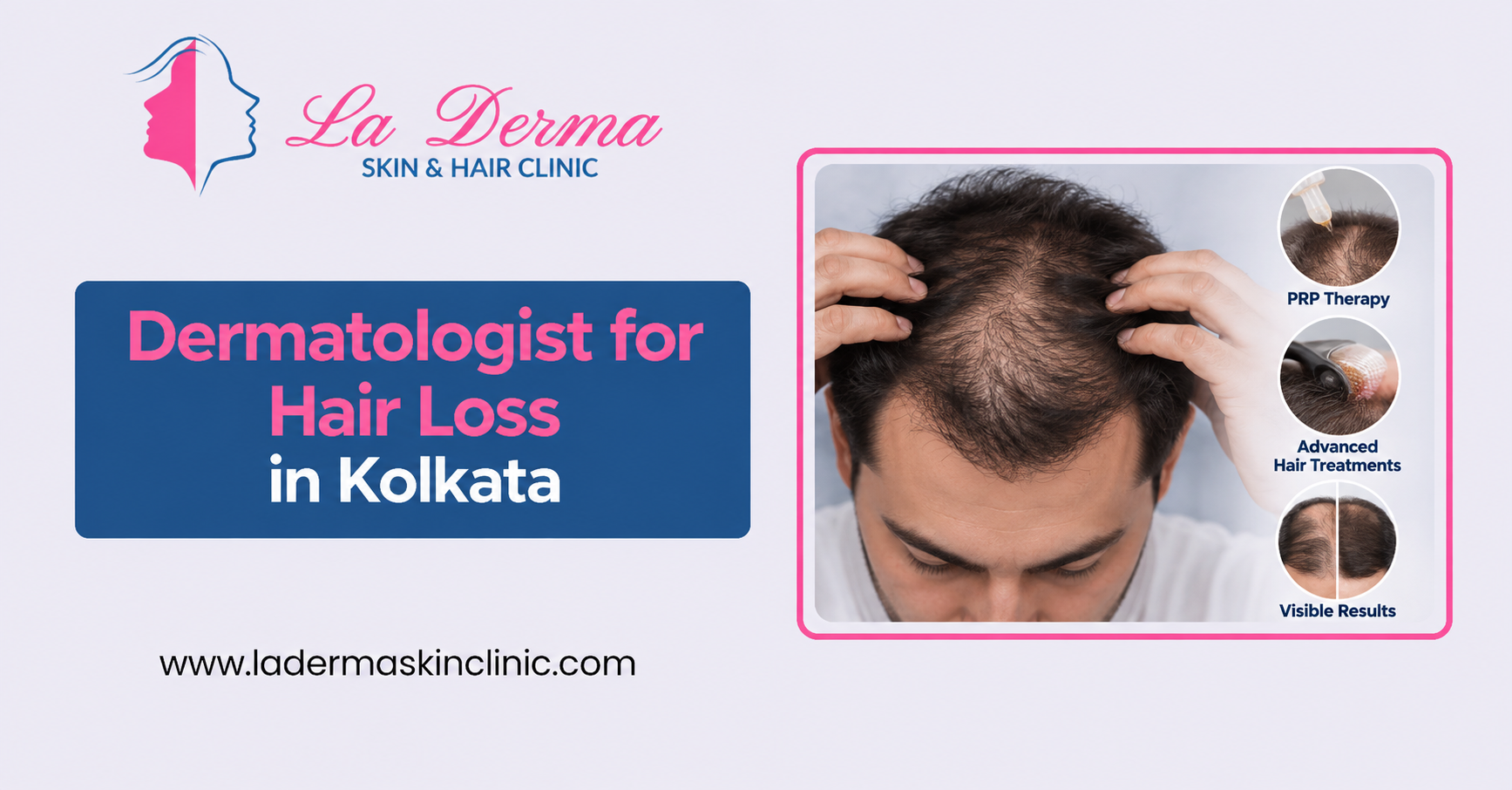
Dermatologist for Hair Loss in Kolkata
Waking up to hair on your pillow, finding clumps in the shower drain, or noticing your scalp showing through more than it used to. These are the kinds of things that slowly bother you. If you’ve been searching for “dermatologist for hair loss in Kolkata” at 1, you’re not alone. Hair fall is one of the common reasons people in Kolkata look for hair fall treatment in Kolkata, and honestly, it’s also one of the most confusing conditions out there.
This guide explains what causes hair loss, when it’s time to see a specialist, what actually happens during a consultation, and how to choose the dermatologist in Kolkata for your specific situation.
Why Hair Loss Needs a Dermatologist, Not a Salon Fix
There is an urge to grab the nearest “hair fall shampoo” or book a spa treatment the moment shedding increases. Sure, sometimes stress or a change in weather is really behind it. Hair loss can also be a sign your body is telling you something more serious. Thyroid imbalance, iron deficiency, hormonal changes, or a deeper scalp condition like a fungal infection or scarring alopecia.
A dermatologist is trained to look beyond the surface. They don’t just look at your hair; they check your scalp, ask about your diet, sleep, stress, and family history, and sometimes run blood tests to rule out problems. That’s something a salon or an over-the-counter product can’t offer, which is exactly why proper treatment should begin with a dermatology visit instead of guessing.
Dr. Khushbu Tantia, a dermatologist known for her patient-approach way of working, often says that hair loss treatment works best when it’s tailored to the real cause rather than treated as a general problem.
Common Causes of Hair Loss Dermatologists in Kolkata See
Kolkata’s weather. Hot summers, high pollution, and hard water in many areas. Has a real effect on scalp health. Dermatologists here often deal with:
- Alopecia (male or female pattern baldness): The most common cause, often from family genes showing up as thinning at the crown or a receding hairline.
- Telogen effluvium: Sudden widespread shedding caused by stress, illness, crash dieting, or childbirth.
- Alopecia areata: A system condition that causes sudden bald patches.
- Nutritional deficiencies: Iron, vitamin D, or protein intake is especially common among women.
Thyroid disorders: Both underactive and overactive thyroid can cause hair thinning.
Scalp infections and dandruff: Fungal problems and flaking are very common in Kolkata’s weather, and dandruff-related issues are one of the most common concerns patients mention along with hair fall.
- Post-COVID or post-fever shedding: A pattern many clinics have seen increase in recent years.
Because the reasons are so different, trying to diagnose it from Instagram videos usually doesn’t solve the issue.
Dandruff and Hair Fall: Why They’re Often Connected
Many patients think dandruff and hair fall are two problems, but they’re often connected. Constant dandruff causes irritation, itching, and weak hair follicles, which can speed up hair loss over time. Effective dandruff treatment usually involves medicated shampoos, treating the growth (like Malassezia), and sometimes short-term use of steroids. Followed by a regular routine to stop it from coming back, especially with the city’s humidity.
If your hair fall is linked to flaking, itching, or a greasy scalp, telling the dermatologist about this clearly helps them treat both issues at the same time.
Signs It’s Time to Book a Dermatology Visit
Not every hair fall needs a doctor. Losing 50 to 100 strands a day is normal. You should think about seeing a specialist if you see:
- Hair thinning that’s getting worse over a few months
- A wider parting line or a receding hairline
- Round or unusual bald spots
- Much itching, flaking, or redness on the scalp
- Hair fall that comes with tiredness, weight changes, or irregular periods
- No improvement after trying many shampoos or home remedies
If any of these sound familiar, it’s worth getting a professional opinion instead of waiting.
What Happens During a Hair Loss Visit
If this is your time, knowing what to expect can help you feel better.
- History: The dermatologist will ask about how long the hair fall has been happening, the pattern, your diet, stress, medicines, and whether anyone in your family has baldness.
- Scalp check: Using a tool, they’ll look closely at the hair density, health of the follicles, and the overall condition of the scalp.
- Possible tests: Depending on what they see, they might do blood tests. Thyroid levels, iron, vitamin D, and vitamin B12. To check for reasons.
- Plan: Based on what they find, a personalised plan is created. This might include creams, pills, PRP (rich plasma) treatment, or lifestyle changes.
Dr. Khushbu Tantia and other experienced dermatologists usually avoid jumping to treatments without first understanding the real cause. This is something to keep in mind when choosing where to get help.
Treatment Options Dermatologists in Kolkata Usually Offer
Treatment isn’t the same for everyone. It often depends on what the problem is:
- Topical minoxidil: A common first treatment for pattern baldness.
- Oral medicines, such as finasteride for men or anti-androgens for women, are given based on individual health.
- PRP therapy: Uses your blood plasma, filled with growth factors, injected into the scalp to help the hair grow.
- Mesotherapy: Injections of vitamins and nutrients directly into the scalp.
- Low-level laser therapy (LLLT): A non-invasive way to improve blood flow and hair follicle activity.
- Medicated dandruff care: Antifungal. Treatments as part of a full dandruff plan.
- Hair transplant referrals: For baldness, dermatologists may send patients to trichologists or surgeons if medicine alone isn’t enough.
- Nutritional supplements: Fixing deficiencies can make a difference in a few months.
Most treatments take time. Three to six months before you see any change. So waiting and being patient is part of the process.
How to Choose the Right Dermatology Clinic in Kolkata
With many clinics advertising “fast hair regrowth,” it helps to know what makes a real clinic different from a marketing trick.
- Check qualifications: Look for an MD in Dermatology, Venereology, and Leprosy (DVL) or similar, registered with the Medical Council.
- Ask about the way they diagnose: A good dermatologist, like Dr. Khushbu Tantia, wants to find the cause before giving anything.
- Read reviews: Real reviews often talk about how the doctor communicates, follows up, and is honest about what can be achieved.
- Avoid promises of guaranteed results: No honest dermatologist says they can make hair grow back 100% in a set time. Hair doesn’t work that way.
- Consider clinic cleanliness and tools: Especially important for treatments like PRP or laser therapy.
- Check if follow-ups are available: Hair treatment isn’t usually a one-time fix; check-ins matter.
Areas like Salt Lake, Park Street, Ballygunge, Gariahat, and New Town have respected clinics offering hair and scalp care, so you’re likely to find a qualified doctor nearby.
Final Thoughts
Hair loss can feel very personal. It’s totally normal to want a quick fix. The best way forward is usually to get a correct diagnosis rather than try different products. A Skin and Hair Specialist in Kolkata, like Dr. Khushbu Tantia, can help find out what’s really causing your hair fall or dandruff and guide you toward a treatment plan that fits your case. Not one from an advertisement.
If your hair fall or scalp issues have been worrying you for a while, it might be worth booking that appointment you’ve been avoiding. Sometimes the earlier you fix it, the easier it is to manage.
People Also Ask
Is hair loss treatment permanent?
Not always. Conditions like alopecia are usually manageable, not curable, so treatment is needed to keep the results.
How long before I see results from dermatologist-prescribed treatment?
Most people see shedding in six to eight weeks, and more hair growth usually takes three to six months.
Can stress alone cause hair loss?
Yes. Telogen effluvium, caused by stress, illness, or big changes, can lead to hair loss, but it’s usually temporary.
Do I need blood tests before starting treatment?
Often yes. Especially if the cause isn’t clear. Checking for thyroid issues or deficiencies helps choose the path.
Is dandruff treatment the same as hair fall treatment?
They are similar. Because dandruff can make hair fall worse, most dermatologists in Kolkata treat them together for better results.
Is PRP therapy painful?
Most people feel some discomfort, but not real pain. A numbing cream is usually used before the treatment.