
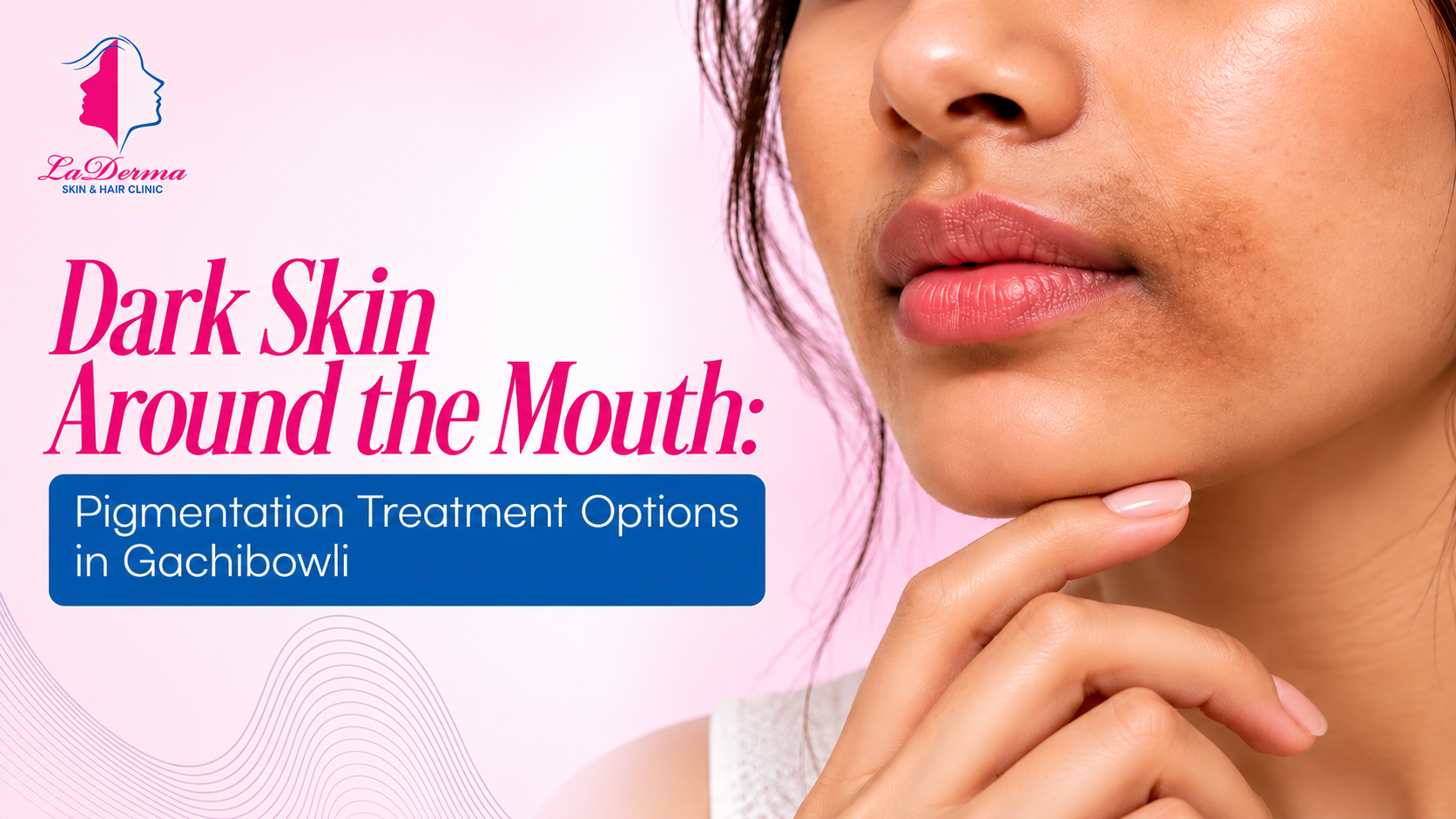
Dark Skin Around the Mouth: Pigmentation Treatment Options in Gachibowli
Dark skin around the mouth is a common skin concern that can make the complexion appear uneven. It may affect the upper lip, corners of the mouth, chin, or the surrounding skin. Although this pigmentation is often harmless, it can affect confidence and make people look for effective skin-lightening treatments.
If you are experiencing pigmentation around your mouth, understanding its underlying cause is the first step toward choosing the right treatment. With appropriate skincare and professional dermatological guidance, many types of pigmentation can gradually improve.
What Causes Dark Skin Around the Mouth?
Pigmentation develops when melanin, the natural pigment responsible for skin colour, accumulates in certain areas. Several factors can contribute to dark patches around the mouth.
1. Sun Exposure
Regular exposure to ultraviolet rays can stimulate melanin production and make existing pigmentation more noticeable. Without adequate sun protection, dark patches may become more persistent.
2. Hormonal Changes
Hormonal fluctuations, pregnancy, and certain medications can contribute to melasma, a pigmentation condition that sometimes affects the upper lip and other facial areas.
3. Skin Irritation
Frequent lip licking, harsh skincare products, shaving, waxing, and friction can irritate the delicate skin around the mouth. This inflammation may leave behind dark marks, particularly in people prone to pigmentation.
4. Acne and Previous Skin Problems
Pimples, rashes, eczema, and other inflammatory skin conditions can cause post-inflammatory hyperpigmentation. Even after the original problem heals, the dark marks may remain for several months.
5. Inappropriate Skincare Products
Using strong exfoliants, unprescribed bleaching creams, or products that irritate the skin may worsen pigmentation rather than improve it.
Pigmentation Treatment Options in Gachibowli
The right treatment depends on the cause, depth of pigmentation, skin type, and medical history. A dermatologist can examine the affected area and recommend a suitable treatment plan.
1. Medical Creams for Pigmentation
Topical treatments may help reduce excess pigmentation and gradually improve uneven skin tone. Depending on the diagnosis, a dermatologist may recommend ingredients such as azelaic acid, retinoids, or prescription-strength depigmenting medicines.
These products should be selected carefully because irritation can make pigmentation worse. Avoid using prescription creams without medical guidance, especially on the sensitive skin around the lips.
2. Chemical Peels
Chemical peels use carefully selected chemical solutions to exfoliate the outer layers of the skin. Certain superficial peels may help improve mild pigmentation and uneven skin tone.
The type and strength of the peel should be chosen according to the patient’s skin condition. Improperly performed peels can cause burns, irritation, and additional pigmentation, particularly in darker skin tones.
3. Laser Pigmentation Treatment
Selected laser or light-based procedures may help treat certain types of pigmentation. However, laser treatment is not suitable for every patient or every cause of dark skin around the mouth.
A dermatologist should assess the skin before recommending a procedure. The wrong device or settings may cause burns or worsen pigmentation, so treatment should be performed by a qualified professional.
4. Medical-Grade Skincare
A dermatologist may recommend a skincare routine containing suitable brightening ingredients, a gentle cleanser, and a moisturiser. Products containing ingredients such as azelaic acid or vitamin C may help some patients when used appropriately.
Consistency is important. Results usually develop gradually, and treatment may need to continue for several weeks or months.
5. Treatment of the Underlying Cause
If pigmentation is related to eczema, contact dermatitis, hormonal factors, or another medical condition, addressing the underlying cause is essential. Treating the dark patches alone may not provide lasting improvement if the trigger continues.
How to Care for Skin Around the Mouth at Home
Along with professional treatment, simple skincare habits can help prevent further darkening.
- Use sunscreen daily: Apply broad-spectrum sunscreen with SPF 30 or higher. Tinted sunscreen containing iron oxides may provide additional protection against visible light, which can worsen melasma.
- Choose gentle skincare: Use a mild cleanser and fragrance-free moisturiser.
- Avoid harsh home remedies: Lemon juice, abrasive scrubs, and unregulated bleaching products can irritate the skin.
- Reduce friction: Avoid repeatedly rubbing the area and stop using products that cause burning or stinging.
- Follow professional advice: Use prescribed pigmentation treatments as directed and avoid combining several strong products without guidance.
Do not expect immediate results. Pigmentation often fades slowly, and improvement depends on its cause and depth.
When Should You Consult a Dermatologist?
Consider consulting a dermatologist if the pigmentation persists, spreads, repeatedly returns, or does not improve with gentle skincare. You should also seek medical advice if the area becomes painful, itchy, scaly, or develops other unusual changes.
Sudden or unexplained darkening accompanied by symptoms elsewhere in the body may require further medical evaluation.
Choosing Pigmentation Treatment in Gachibowli
When looking for pigmentation treatment in Gachibowli,Hyderabad, choose a qualified dermatologist who can identify the cause of the dark patches and explain the available options.
During your consultation, ask about the expected treatment duration, possible side effects, suitability for your skin type, and the likelihood of pigmentation returning. A personalised treatment plan is generally more appropriate than choosing a procedure based only on its popularity.
FAQs
1. What causes dark pigmentation around the mouth?
Common causes include sun exposure, hormonal changes, melasma, acne marks, skin irritation, and reactions to skincare products.
2. Which treatment is best for pigmentation around the mouth?
The best option depends on the cause and severity. A dermatologist may recommend topical medicines, chemical peels, or selected laser treatments after examining your skin.
3. Can pigmentation around the mouth be removed permanently?
Pigmentation may improve significantly, but permanent removal cannot be guaranteed. Some conditions, such as melasma, may recur without continued maintenance and sun protection.
4. How long does it take to reduce pigmentation around the mouth?
Improvement may take several weeks to months. The duration depends on the type of pigmentation, the treatment used, and how consistently you follow the recommended skincare routine.
5. Is laser treatment safe for dark skin around the mouth?
Certain laser treatments may be suitable, but the device and settings must be selected carefully by a qualified dermatologist. Incorrect treatment can worsen pigmentation.
Find the Right Treatment for Dark Patches Around the Mouth
Dark skin around the mouth can result from sun exposure, hormonal changes, irritation, acne, or other skin conditions. Effective management begins with identifying the cause and choosing suitable treatment options, which may include topical medicines, chemical peels, selected laser procedures, and consistent sun protection.
If you are considering pigmentation treatment in Gachibowli, Hyderabad, consult a qualified dermatologist for an individual assessment and treatment plan. With appropriate care, many people can achieve a more even-looking complexion while reducing the risk of further pigmentation.
For appointments: 096031 22662
Visit: La Derma Skin & Hair Clinic