
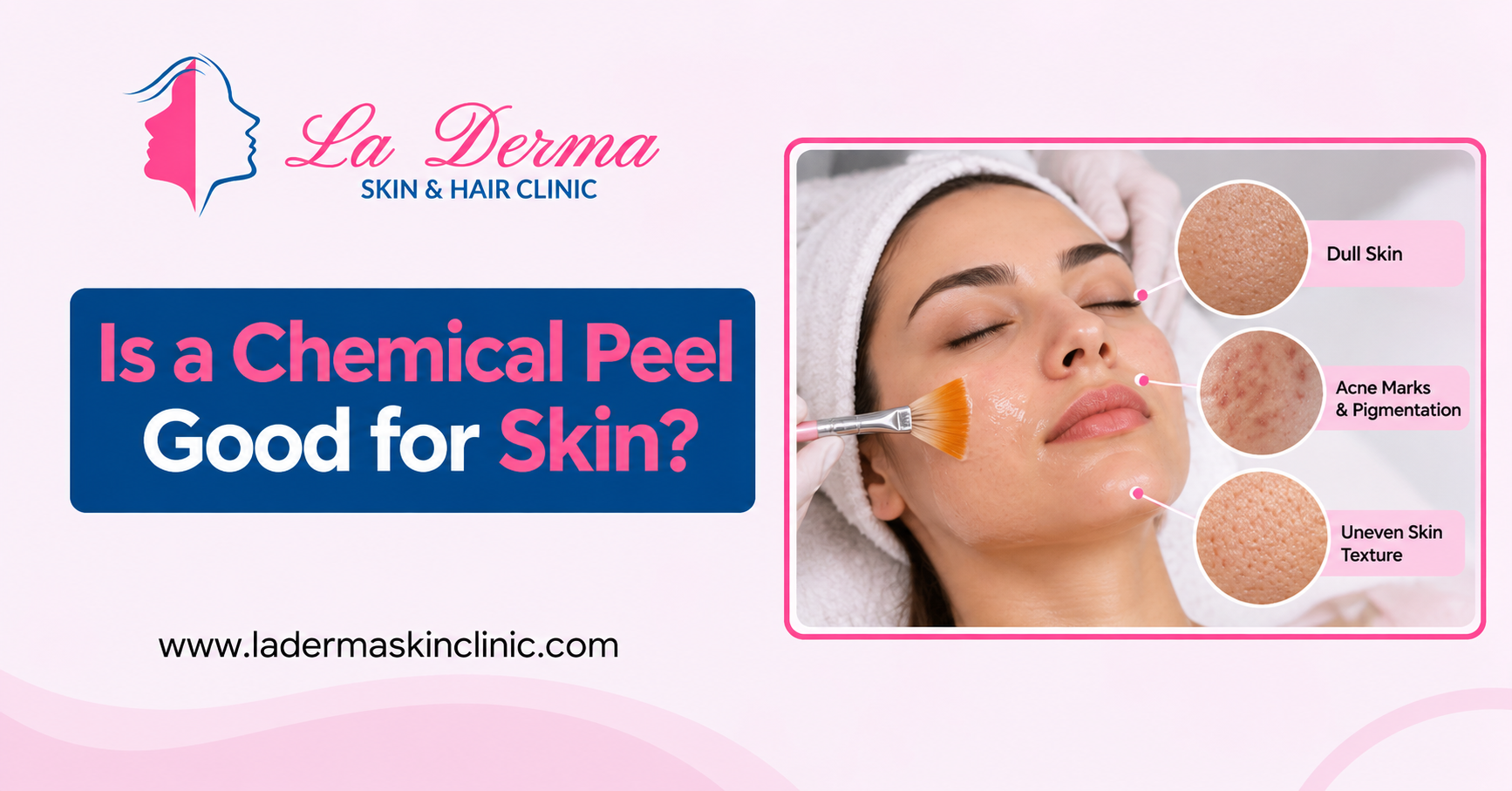
Is a Chemical Peel Good for Skin?
Yes, a chemical peel is good for skin when the right peel is used on the right skin by a trained doctor. The result depends on three things: the strength of the peel, your skin type, and the expertise of the person performing it.
What Is a Chemical Peel?
A chemical peel is a treatment in which a dermatologist applies a mild acid solution to the skin, usually on the face, neck, or hands. The solution loosens the dull, damaged outer layers, which then shed over the following days and reveal fresher, smoother skin underneath.
Peels are grouped by depth: superficial, medium, and deep. Most clinic peels are superficial and need little to no downtime. Medium and deep peels carry higher risks and are rarely suitable for Indian skin tones.
Is a Chemical Peel Good for Your Skin?
For most people, yes. Superficial peels using glycolic, salicylic, mandelic, or lactic acid are well studied for acne, pigmentation, sun damage, and rough texture.
That said, “good” depends on your skin type, your main concern, and how you look after your skin afterwards. A peel that clears oily, acne-prone skin may irritate dry or sensitive skin. This is why the consultation matters as much as the acid itself.
Key Benefits of Chemical Peels
- Clearer pores: Salicylic acid cleans out oily pores and helps with blackheads, whiteheads, and mild acne.
- Faded dark spots: Faster cell turnover softens tanning, sunspots, and post-acne marks.
- Brighter tone: Removing dead cells gives your complexion a fresher, more radiant look.
- Smoother texture: Light peels refine roughness and shallow acne scars.
- Softer fine lines: Regular sessions gently improve early signs of ageing.
- Better absorption: Serums and moisturisers work better on freshly exfoliated skin.
Can Chemical Peels Really Lighten Your Skin?
This is one of the most common questions patients ask. Many people looking for a chemical peel for skin lightening in Kolkata want to know what “lightening” really means. Peels don’t change your natural skin colour, and an honest dermatologist won’t promise that they will. What peels can do is reduce hyperpigmentation such as tanning, melasma, sun damage, and acne marks, so your skin looks brighter, clearer, and more even.
Humidity, pollution, and strong sun make pigmentation one of the most common skin complaints in eastern India. Indian skin also contains more melanin and reacts strongly to irritation. An aggressive peel can trigger post-inflammatory hyperpigmentation, leaving you with darker patches than you started with.
That’s why dermatologists usually choose gentler acids for pigmentation, such as mandelic, lactic, azelaic, or low-strength glycolic acid. A typical course is four to six sessions spaced two to four weeks apart, supported by a proper home routine and daily sunscreen. Results build gradually, so patience pays off.
Common Types of Chemical Peels
- Glycolic acid: For dullness, mild pigmentation, and uneven texture.
- Salicylic acid: For oily, acne-prone skin and clogged pores.
- Mandelic acid: A gentle choice for pigmentation, sensitive skin, and darker skin tones.
- Lactic acid: Mild and hydrating, suited to dry or reactive skin.
- TCA (trichloroacetic acid): A medium-depth peel for deeper concerns, used with caution.
Your dermatologist picks the acid and strength after examining your skin, not from a fixed menu.
Who Should Avoid Chemical Peels?
Hold off or speak to your doctor first if you:
- Are pregnant or breastfeeding
- Have cold sores, open wounds, or infected skin
- Took oral isotretinoin in the last six months
- Have eczema or active dermatitis on the treatment area
- Are prone to keloid scars
- Have a fresh sunburn or tan
Possible Side Effects
Redness, tightness, dryness, and flaking are normal for a few days after a superficial peel. Less commonly, people experience prolonged redness, irritation, infection, or changes in pigmentation. Serious complications are rare when peels are performed by qualified professionals and far more likely at unlicensed salons or with unregulated products.
What to Expect During Treatment
A session usually takes 20 to 30 minutes. Your skin is cleansed, the peel is applied for a set time, and it is then neutralised or removed. You may feel warmth or mild tingling. Light peeling follows for three to seven days, depending on the strength used. Most people return to normal activities straight away, apart from avoiding strong sun.
How to Choose the Right Doctor for Your Peel
The person applying the acid matters more than the acid itself. If you’re searching for a top rated dermatologist in Kolkata, remember that a good reputation comes from training, results, and honesty, not just advertising. At La Derma Skin & Hair Clinic, Dr. Khushbu Tantia begins every peel with a detailed skin assessment, because the right acid and strength vary from person to person.
Whichever doctor you choose, look for:
- Proper qualifications: An MD/DNB in dermatology or equivalent training, not a short beauty course.
- Experience with Indian skin: Ask how they manage pigmentation on melanin-rich skin.
- A real consultation: A good doctor asks about your medical history, medications, and routine before recommending anything.
- Realistic promises: Be wary of anyone guaranteeing instant fairness or dramatic results in one sitting.
- Detailed patient reviews: Look for reviews that describe outcomes and follow-up care, not just star ratings.
Why the Clinic Matters Too
A great clinic isn’t necessarily the one with the biggest hoardings. People often ask which is the best skin clinic in Kolkata, and the honest answer is that it’s the one that gets the basics right:
- Clean, hygienic treatment rooms
- Branded, medical-grade products
- Transparent pricing and clear treatment plans
- Doctors who explain risks as openly as benefits
- Reliable follow-up if your skin reacts unexpectedly
When a clinic like La Derma Skin & Hair Clinic follows these standards, a chemical peel becomes a predictable, safe treatment rather than a gamble.
Aftercare Tips for Better Results
- Apply broad-spectrum sunscreen (SPF 30 or higher) every day and reapply outdoors.
- Moisturise with a gentle, fragrance-free product.
- Don’t pick, scrub, or peel flaking skin.
- Avoid retinoids and strong exfoliants until your doctor says it’s safe.
- Skip waxing, threading, and harsh facials for about a week.
- Follow the schedule your dermatologist sets instead of adding sessions on your own.
Final Thoughts
So, is a chemical peel good for skin? Yes. It’s a safe and effective treatment for acne, pigmentation, dullness, and uneven texture when it’s matched to your skin and performed by an expert. Start with a proper consultation with a specialist such as Dr. Khushbu Tantia, set realistic expectations, protect your skin from the sun, and give the process time. Healthy, clear skin is built gradually, one thoughtful step at a time.
People Also Ask
Do chemical peels damage your skin?
Not when done properly. Superficial peels exfoliate controlled layers that then regenerate. Damage usually comes from overly strong peels, poor technique, or skipping sunscreen.
Are chemical peels safe for Indian skin?
Yes, when a dermatologist chooses a gentle peel and a strength suited to your skin tone. Problems usually come from strong peels applied by untrained hands.
How often can you get a chemical peel?
Most superficial peels are repeated every two to four weeks during a course, then spaced out for maintenance.
Can a chemical peel remove dark spots permanently?
Peels can fade dark spots significantly, but new ones can form if you’re exposed to the sun without protection. Daily sunscreen keeps results lasting.
Is a chemical peel painful?
Most people feel only warmth or mild stinging for a few minutes. It is generally well tolerated.
How many sessions will I need?
It depends on your concern. Pigmentation and acne marks usually need four to six sessions, while a simple glow treatment may need fewer.