
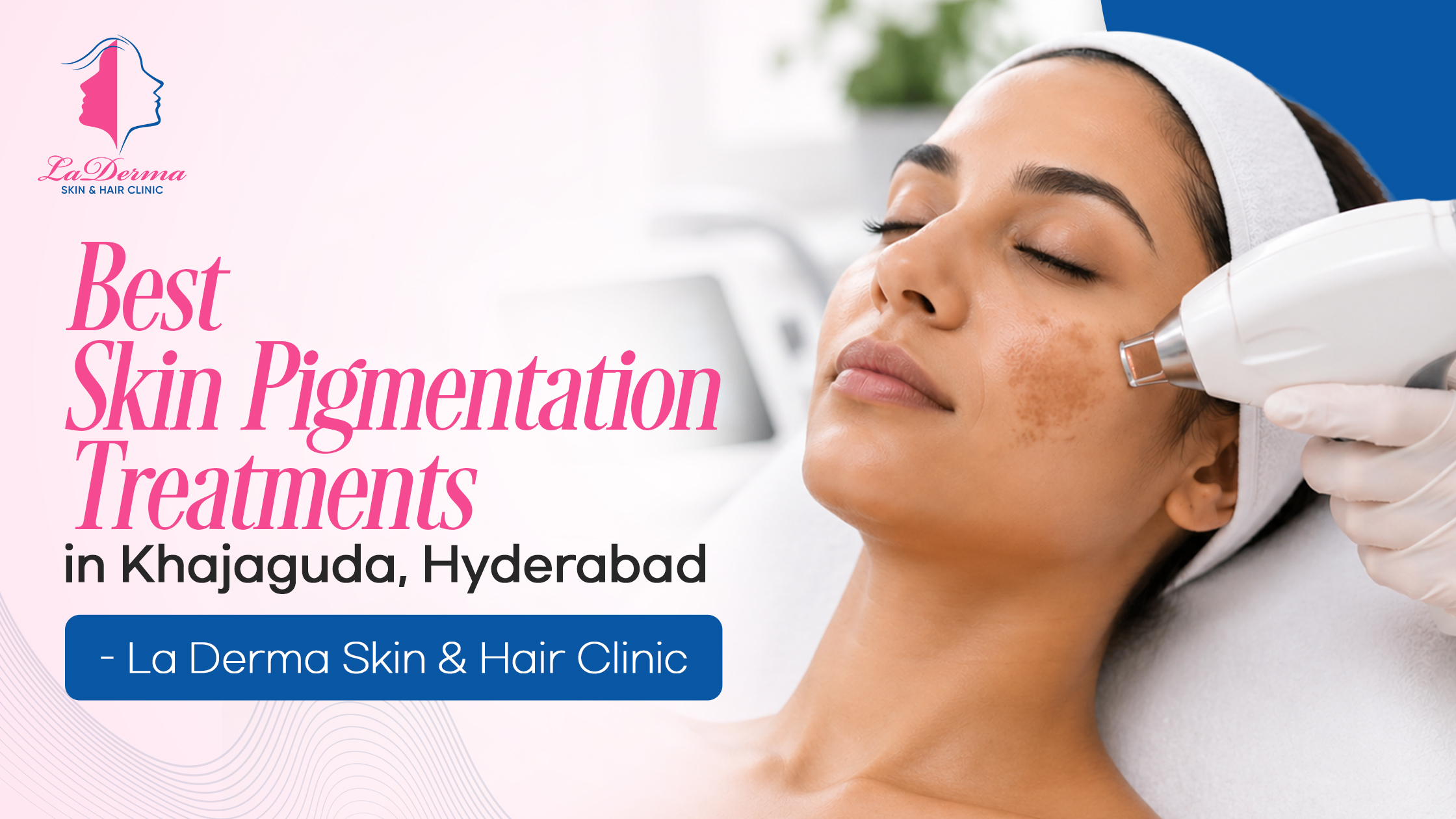
Best Skin Pigmentation Treatments in Khajaguda, Hyderabad – La Derma Skin & Hair Clinic
Changes in skin colour can develop slowly, making uneven patches or dark spots more noticeable over time. Pigmentation may appear after acne, prolonged sun exposure, hormonal changes, inflammation, or certain skin conditions. Since the reason behind pigmentation is not the same for everyone, identifying the underlying cause is an important part of deciding what type of treatment may be suitable.
At La Derma Skin & Hair Clinic, pigmentation concerns can be evaluated based on the pattern, duration, skin type, and possible triggers involved. For those looking for the best skin pigmentation treatment in Khajaguda, a dermatologist can assess the underlying cause and recommend an approach suited to the individual. Depending on the cause and severity, treatment may involve topical skincare, prescription medicines, procedures, or a combination of approaches.
What Causes Skin Pigmentation?
Pigmentation refers to changes in the colour of the skin caused by differences in melanin production or distribution. It can appear on the face, neck, hands, or other exposed areas of the body.
Some common factors associated with pigmentation include:
- Frequent or prolonged sun exposure
- Acne and post-acne inflammation
- Hormonal changes
- Skin irritation or inflammation
- Certain medications
- Previous skin injuries
- Genetic or individual skin characteristics
- Melasma and other pigmentary disorders
The appearance of pigmentation alone may not always reveal its exact cause. A dermatological examination can help determine what type of pigmentation is present and whether further evaluation is required.
Different Types of Pigmentation That May Need Treatment
Not all pigmentation looks or behaves the same way. Some concerns may appear as small dark marks, while others may form broader patches across the cheeks, forehead, upper lip, or other areas.
Post-Acne Pigmentation
Dark marks can remain after acne lesions heal. These marks may gradually become lighter, but persistent pigmentation can sometimes require targeted treatment and consistent skincare.
Melasma
Melasma commonly appears as irregular brown or darker patches, particularly on areas such as the cheeks, forehead, nose, and upper lip. Sun exposure and hormonal factors may contribute to its development.
Sun-Related Pigmentation
Repeated ultraviolet exposure can contribute to uneven skin tone and darker spots over time. Daily sun protection is therefore an important part of managing many pigmentation concerns.
Pigmentation After Inflammation
Inflammation caused by certain skin conditions, irritation, or injuries can sometimes leave darker areas after the original problem has settled. Treatment generally focuses on both controlling the original cause and improving the remaining pigmentation.
How Is Pigmentation Evaluated?
A proper assessment can help distinguish between different pigmentary concerns that may appear similar at first glance.
During a consultation, the dermatologist may consider:
- When the pigmentation first appeared
- Whether it has changed over time
- Its location and pattern
- Previous acne, irritation, or skin conditions
- Current skincare products
- Sun exposure and sun-protection habits
- Previous pigmentation treatments
- Relevant hormonal or medical factors
The skin type and history of previous treatments can also influence which options may be appropriate. This is why selecting a treatment simply because it worked for someone else may not always produce the same result.
Treatment Options for Skin Pigmentation
The appropriate approach depends on the type and cause of pigmentation. A dermatologist may recommend one treatment or combine different methods depending on the individual’s skin condition.
Topical Treatments
Certain prescription or dermatologist-recommended creams and serums may help improve uneven pigmentation. Ingredients used in pigmentation care can work through different mechanisms, including reducing excess pigment production or encouraging more even skin renewal.
These products should be selected carefully because unsuitable or excessive use may irritate the skin and potentially worsen pigmentation.
Chemical Peels
Chemical peels use specific ingredients to exfoliate controlled layers of the skin. Depending on the formulation and indication, they may be considered for some forms of pigmentation and uneven skin tone.
The type and strength of a peel should be selected according to the individual’s skin condition and treatment goals.
Laser and Light-Based Procedures
Certain laser or light-based treatments may be considered for selected pigmentation concerns. These procedures are not suitable for every type of pigmentation or every skin type, so professional assessment is important before treatment.
A dermatologist may evaluate the pigment pattern, skin characteristics, and previous treatment history before recommending a procedure.
Combination Treatment
Some pigmentation concerns may respond better to a combination of approaches rather than a single procedure. A treatment plan may include skincare, sun protection, topical medication, and procedures when clinically appropriate.
The objective is not simply to make the skin appear lighter but to address the pigmentation concern while maintaining the health and condition of the skin.
Why Sun Protection Is Important During Pigmentation Care
Sun exposure can contribute to the development and persistence of several pigmentation concerns. Even after treatment, continued exposure to ultraviolet radiation may encourage pigmentation to return or become more noticeable.
Sun protection may include:
- Applying a broad-spectrum sunscreen as recommended
- Reapplying sunscreen when required
- Using hats or other physical protection outdoors
- Limiting prolonged direct sun exposure
- Following the dermatologist’s post-treatment instructions
Consistent protection is particularly important when undergoing treatments that make the skin more sensitive.
Choosing the Right Approach for Your Skin
Several pigmentation treatment options may be available, but the most appropriate choice depends on what is causing the pigmentation. A treatment that is useful for post-acne marks may not be the same treatment recommended for melasma or another pigmentary condition.
A dermatologist can assess the concern before suggesting whether topical treatment, a procedure, or a combination approach may be appropriate. This can also help reduce the risk of unnecessary treatments or irritation caused by unsuitable products.
What Can You Expect From a Dermatology Consultation?
A consultation generally starts with understanding your primary concern and how long you have experienced it. The dermatologist may examine the affected areas and ask about previous treatments, skincare products, sun exposure, and other relevant factors.
After the assessment, the treatment plan can be discussed based on:
- Type and extent of pigmentation
- Skin type and sensitivity
- Possible underlying causes
- Previous treatment history
- Expected treatment response
- Maintenance and sun-protection requirements
Pigmentation often improves gradually rather than immediately. Following the recommended treatment and skincare routine consistently can be an important part of the process.
About La Derma Skin & Hair Clinic
La Derma Skin & Hair Clinic in Hyderabad provides dermatology, aesthetic, and hair-care services for a range of skin and hair concerns. The clinic focuses on individualised consultation so that treatment recommendations can be based on the person’s specific condition and goals.
For people looking for a skin specialist near Khajaguda, a professional consultation can provide an opportunity to understand the possible cause of pigmentation and discuss suitable treatment options before proceeding with procedures or long-term skincare.
Frequently Asked Questions
1. What is the best treatment for skin pigmentation?
There is no single treatment that is suitable for every type of pigmentation. The appropriate option depends on the cause, pattern, skin type, and severity. A dermatologist may recommend topical treatment, chemical peels, laser-based procedures, or a combination approach after evaluation.
2. Can pigmentation caused by acne be treated?
Yes, post-acne pigmentation can often be managed with appropriate skincare and dermatological treatments. The recommended approach depends on the depth and extent of pigmentation as well as whether active acne is still present.
3. Does pigmentation treatment require multiple sessions?
Some pigmentation treatments may require more than one session, while others may be managed with topical products and ongoing skincare. The number of sessions varies according to the type of pigmentation, treatment selected, and individual response.
4. Can pigmentation come back after treatment?
Pigmentation can recur in some cases, particularly when contributing factors such as sun exposure or hormonal influences continue. Following a dermatologist-recommended maintenance routine and using appropriate sun protection can help support longer-term management.
5. Should I consult a dermatologist before trying pigmentation treatments?
Yes. A consultation can help identify the type and possible cause of pigmentation before treatment begins. This is particularly useful when pigmentation is persistent, spreading, recurrent, or not improving with regular skincare.
Understanding Pigmentation Before Treating It
Pigmentation is a visible skin concern, but its underlying causes can vary considerably. Treating the colour change without understanding why it developed may not address the problem effectively. A personalised dermatology assessment can help determine what is contributing to the pigmentation and which treatment options may be appropriate.
At La Derma Skin & Hair Clinic, individuals can discuss persistent pigmentation, uneven skin tone, post-acne marks, melasma, and other concerns with a dermatologist. With appropriate evaluation, treatment can be planned around the person’s skin condition, expectations, and long-term skincare needs.
Book your appointment: 096031 22662