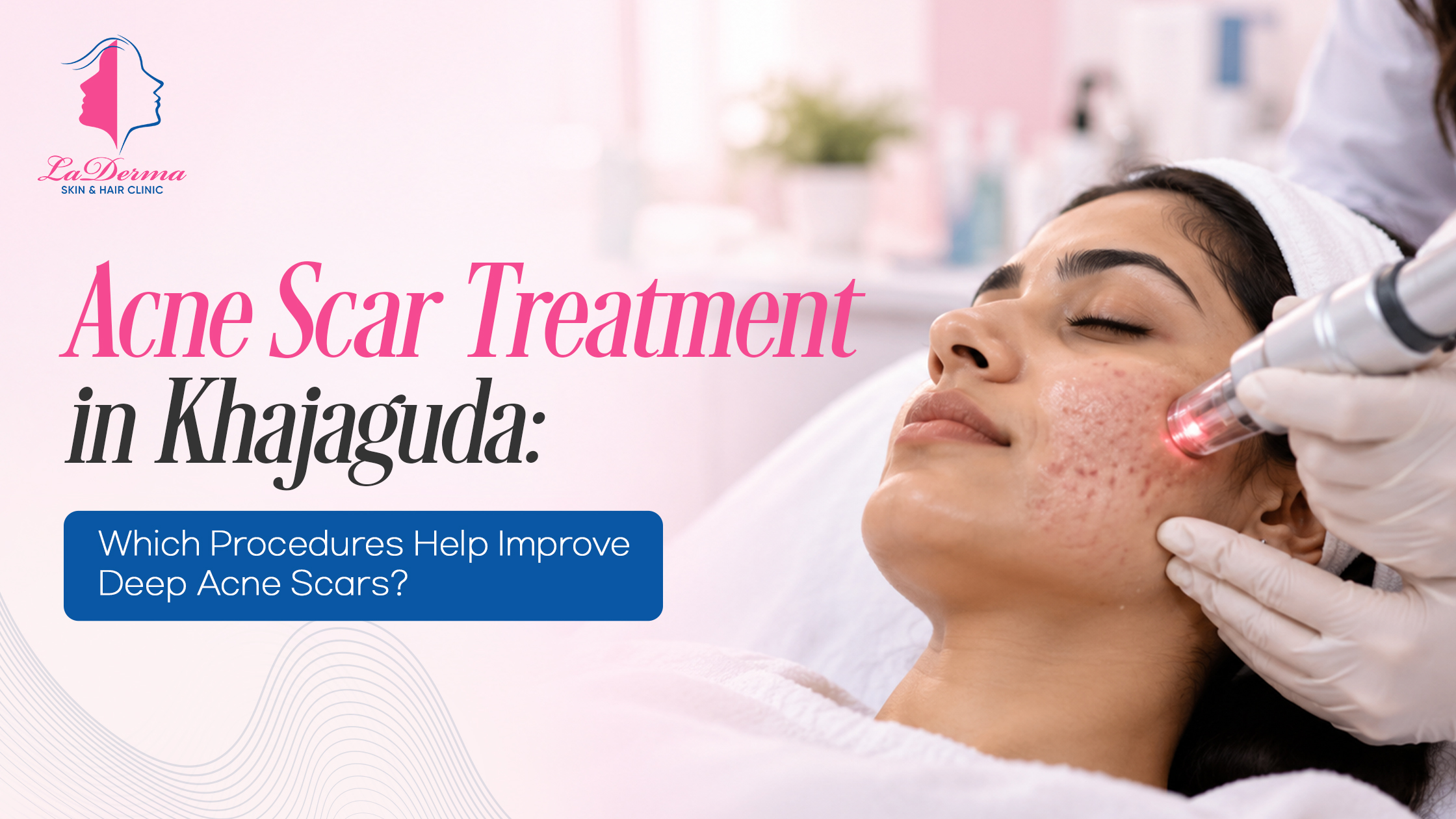
Acne Scar Treatment in Khajaguda: Which Procedures Help Improve Deep Acne Scars?
Acne may disappear over time, but the marks it leaves behind can remain long after the breakouts have stopped. Deep depressions, uneven skin texture, and raised scars can be difficult to improve with regular skincare products alone. Choosing the right procedure depends on the type of scar, its depth, and the skin’s ability to heal.
Acne scar treatment in Khajaguda focuses on improving skin texture, reducing the appearance of depressed or raised scars, and supporting gradual skin renewal. Treatment options include microneedling, fractional laser resurfacing, subcision, and TCA CROSS. The most suitable procedure depends on the type and severity of the scars. A dermatologist can assess the scars and recommend a suitable approach based on individual skin concerns and treatment goals.
What Are Deep Acne Scars?
Deep acne scars develop when inflammation from acne damages the skin’s underlying tissue. During the healing process, the body may produce insufficient or excessive collagen, resulting in changes to the skin’s surface.
Unlike temporary dark spots that may fade gradually, true acne scars involve changes in skin texture. Their appearance can vary depending on the type of scar and the extent of tissue damage.
Common types of acne scars include:
1. Ice Pick Scars
These are narrow, deep scars that extend into the skin. They often resemble tiny holes and can be challenging to treat with superficial skincare products.
2. Boxcar Scars
Boxcar scars are wider depressions with clearly defined edges. They may appear shallow or deep and commonly affect the cheeks and temples.
3. Rolling Scars
Rolling scars create an uneven, wavy appearance. They develop when fibrous bands beneath the skin pull the surface downward, producing visible depressions.
4. Hypertrophic and Keloid Scars
These scars develop when excess collagen forms during healing, creating raised areas on the skin. Keloids may extend beyond the original acne lesion.
Recognising the scar type helps determine which treatment options may be suitable.
What Causes Deep Acne Scars?
Deep acne scars usually develop following significant inflammation, particularly when acne affects the deeper layers of the skin.
Several factors may increase the likelihood of scarring:
- Severe inflammatory acne: Deep nodules and cysts can damage supporting skin tissue.
- Delayed acne treatment: Persistent inflammatory acne may increase the risk of permanent scarring.
- Picking or squeezing pimples: Repeated trauma can worsen inflammation and interfere with healing.
- Genetic factors: Some individuals are more prone to developing depressed or raised scars.
- Individual healing responses: Differences in collagen production can influence how the skin repairs itself.
Which Procedures Help Improve Deep Acne Scars?
There is no single procedure that works equally well for every acne scar. Treatment selection depends on scar depth, shape, skin type, previous treatments, and the amount of improvement expected.
1. Microneedling
Microneedling uses fine needles to create controlled micro-injuries in the skin. This stimulates the body’s wound-healing response and encourages collagen production.
As new collagen develops, some depressed acne scars may gradually become less noticeable. Microneedling is generally more suitable for selected shallow to moderately deep scars than for very deep ice pick scars.
Potential benefits:
- Helps improve uneven skin texture.
- Encourages collagen production.
- May soften the appearance of certain depressed scars.
- Usually involves less downtime than more intensive resurfacing procedures.
Multiple sessions may be needed, and improvement develops gradually. Temporary redness, swelling, and irritation can occur after treatment.
2. Fractional Laser Resurfacing
Fractional laser treatment creates controlled microscopic areas of injury in the skin while leaving surrounding tissue intact. This encourages skin renewal and collagen remodelling.
Depending on the laser used, treatment may help improve boxcar scars, rolling scars, and overall skin texture. Ablative fractional lasers generally involve more downtime and potential side effects than non-ablative options.
Potential benefits:
- Improves the appearance of selected depressed scars.
- Helps refine uneven skin texture.
- Stimulates collagen remodelling.
- May improve certain associated pigmentation concerns when appropriately selected.
Laser treatment is not suitable for everyone. Skin tone, the risk of post-inflammatory hyperpigmentation, and the type of laser used must be considered carefully.
3. Subcision
Subcision is a minor procedure used primarily for rolling acne scars that are tethered by fibrous bands beneath the skin.
A dermatologist inserts a specialised needle or instrument under the scar to release these bands. Once the downward pulling force is reduced, the depressed area may become less noticeable.
Potential benefits:
- Addresses fibrous attachments beneath selected scars.
- Can improve rolling scars that do not respond adequately to surface treatments.
- May be combined with other procedures for better overall results.
Temporary bruising, swelling, tenderness, and bleeding may occur. Subcision is generally less useful for narrow icepick scars and may not be necessary for scars without underlying tethering.
4. TCA CROSS
Trichloroacetic acid chemical reconstruction of skin scars, commonly called TCA CROSS, is a targeted technique used particularly for narrow, deep ice pick scars and selected small boxcar scars.
A dermatologist applies a high-concentration chemical solution directly to individual scars. The controlled injury stimulates a healing response and may gradually improve the depth and appearance of the treated areas.
Potential benefits:
- Targets individual deep scars.
- May improve selected ice pick scars.
- Can be performed as part of a customised treatment plan.
Several sessions may be required. Improper application can cause burns, pigmentation changes, or additional scarring, so this procedure should only be performed by a suitably trained professional.
5. Dermal Fillers
Certain dermal fillers may be considered for selected depressed acne scars, particularly when volume loss contributes to their appearance.
The filler is injected beneath specific areas to elevate the depression and create a smoother-looking surface. Depending on the product, results may be temporary, and maintenance treatments may be necessary.
Fillers do not address every type of scar and are not generally the first choice for narrow, deep ice pick scars. They also carry risks, including bruising, infection, and rare but serious vascular complications.
How Do You Choose the Right Acne Scar Treatment?
Treatment selection depends on scar depth, shape, skin type, and whether the scars are tethered beneath the skin. Some patients may benefit from a combination of procedures.
| Scar type | Procedures that may help |
| Ice pick scars | TCA CROSS; selected punch techniques |
| Boxcar scars | Fractional laser, microneedling, or punch techniques depending on depth |
| Rolling scars | Subcision, fractional laser, or microneedling |
| Raised scars | Scar-specific treatments such as corticosteroid injections or other specialist procedures |
| Mixed acne scars | A customised combination of procedures |
The options listed are general examples, not a treatment recommendation for every patient. Deep or sharply defined scars may require targeted techniques, while broader texture changes may respond better to resurfacing.
Active acne should also be controlled before many scar procedures are started. This helps reduce the risk of new scars forming during treatment.
What Happens During an Acne Scar Treatment Session?
Treatment generally begins with a consultation and a detailed examination of the skin.
Skin assessment: The dermatologist identifies the scar types, their depth, skin tone, and any ongoing acne or pigmentation.
Treatment planning: The appropriate procedure is selected based on the skin assessment, medical history, expected recovery time, and treatment goals.
Preparation: Depending on the procedure, the skin may be cleansed and a topical anaesthetic applied. Some treatments require additional preparation.
Procedure: The selected technique is performed using suitable equipment and safety precautions.
Aftercare: The dermatologist provides instructions for cleansing, moisturising, sun protection, and avoiding irritating skincare products during recovery.
Follow-up appointments help assess progress and determine whether additional sessions or a different procedure may be beneficial.
How Many Sessions Are Needed to Improve Deep Acne Scars?
The number of sessions varies according to the procedure, the severity of scarring, and the individual’s healing response.
Some treatments require several sessions spaced weeks apart. Deeper scars may need a staged approach, with one procedure performed before another is considered. Collagen remodelling also takes time, so improvement may continue for several months after treatment.
Complete scar removal cannot be guaranteed. The aim is usually to reduce the depth and visibility of scars and improve overall skin texture.
Acne Scar Treatment Cost in Khajaguda
The cost of treatment depends on the procedure selected and the extent of scarring. Since some patients need a single targeted technique while others benefit from multiple treatments, prices can vary considerably.
Factors that influence the total cost include:
- The type and severity of acne scars.
- The procedure recommended by the dermatologist.
- The number of sessions required.
- The size of the treatment area.
- Whether combination treatments are needed.
- Consultation and follow-up charges.
A skin assessment is the best way to understand which procedures are appropriate and obtain an accurate cost estimate before beginning treatment.
Aftercare Tips for Better Skin Recovery
Following the recommended aftercare routine can help protect the skin and reduce the risk of complications.
- Use sunscreen: Apply broad-spectrum SPF 30 or higher sunscreen and follow your dermatologist’s advice about sun exposure.
- Keep the skin moisturised: Use a gentle moisturiser suitable for your skin type.
- Avoid harsh products: Pause exfoliating acids, retinoids, and other irritating products until your dermatologist advises that they can be resumed.
- Do not pick the skin: Avoid scratching peeling areas or disturbing healing skin.
- Follow treatment instructions: Use prescribed products and attend follow-up appointments as advised.
- Report unusual symptoms: Seek medical advice for increasing pain, spreading redness, pus, or other signs of possible complications.
Proper aftercare is particularly important for individuals prone to pigmentation changes after inflammation.
Why Consult a Dermatologist for Deep Acne Scars?
Treatments for surface pigmentation may not improve deep depressions because acne scars involve structural changes in the skin. Choosing an appropriate procedure helps address the specific type of scarring while reducing avoidable treatment risks.
A qualified dermatologist can distinguish between different scar types, assess the skin’s suitability for treatment, and explain the potential benefits and limitations of each option. They can also determine whether active acne needs to be managed first.
Consulting the best dermatologist in Khajaguda can help you understand which procedures may be appropriate for your skin and whether a combination approach is likely to offer better improvement.
Frequently Asked Questions
1. Can deep acne scars be removed completely?
Deep acne scars usually cannot be removed completely, but appropriate procedures may reduce their depth and visibility. The outcome depends on the scar type, severity, treatment method, and individual healing response.
2. Which procedure is best for deep acne scars?
There is no single best procedure for every scar. TCA CROSS may help selected ice pick scars, subcision may benefit tethered rolling scars, and fractional lasers may improve certain depressed scars and uneven texture.
3. Is microneedling effective for deep acne scars?
Microneedling can improve selected depressed acne scars by stimulating collagen production. However, very deep or narrow scars may require targeted procedures or a combination of treatments.
4. How long does it take to see results from acne scar treatment?
Results depend on the procedure and the severity of scarring. Improvement often develops gradually over several weeks or months as the skin heals and collagen remodels. Multiple sessions may be required.
5. Can acne scars return after treatment?
Treated scars do not typically return to their original state simply because treatment has ended, although results vary and some improvement may diminish over time. New acne breakouts can create additional scars, so controlling active acne remains important.
Improve Skin Texture with a Personalised Treatment Plan
Deep acne scars can be challenging, but the right treatment approach may help improve skin texture and reduce the visibility of depressions. Understanding the difference between ice pick, boxcar, rolling, and raised scars is an important first steps towards choosing an appropriate procedure.
If you are considering professional care for acne scars, arrange a dermatological consultation to have your skin assessed and discuss suitable treatment options. A personalised plan can help set realistic expectations, address active acne where necessary, and support gradual improvement.
Book your appointment: La Derma Skin & Hair Clinic
Call: 96031 22662