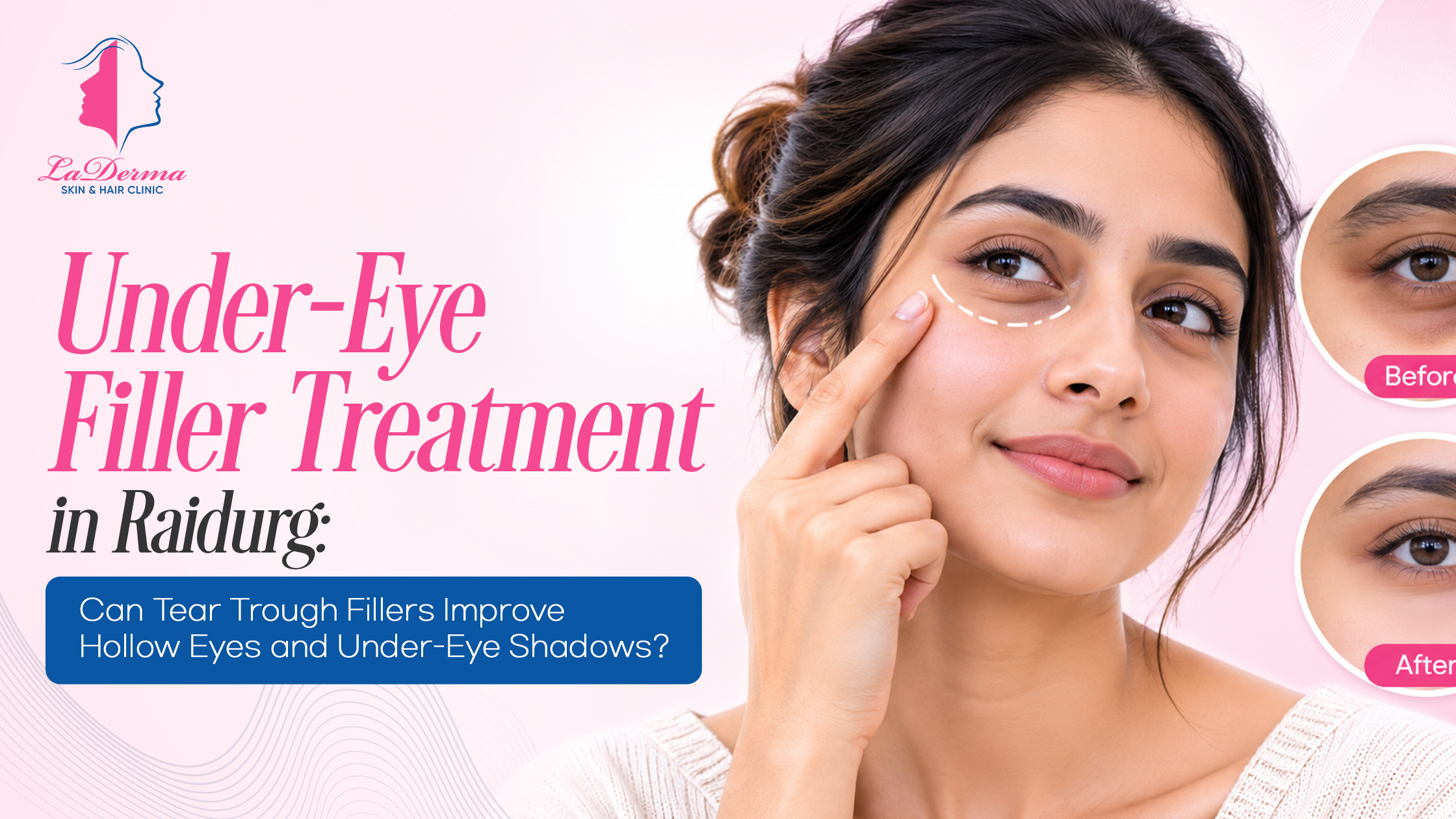
Under-Eye Filler Treatment in Raidurg: Can Tear Trough Fillers Improve Hollow Eyes and Under-Eye Shadows?
You get enough sleep, follow a regular skincare routine, and drink plenty of water. Yet, every time you look in the mirror, your eyes appear tired, and the shadows beneath them seem more noticeable. Even applying concealer may not completely hide the sunken appearance.
Under-eye hollowness can develop due to ageing, genetics, facial structure, or a gradual loss of volume beneath the eyes. Unlike pigmentation-related dark circles, these shadows may occur because of changes in the contours of the under-eye area.
For individuals considering Under-Eye Filler Treatment in Raidurg, understanding how tear trough fillers work, their potential benefits, and who may be suitable for the procedure can help them make informed treatment decisions.
What Are Tear Trough Fillers?
Tear trough fillers are injectable aesthetic treatments designed to improve volume loss and hollowness in the area between the lower eyelid and upper cheek.
The tear trough is a natural groove that extends from the inner corner of the eye towards the cheek. When this groove becomes deeper, it can create shadows that make the face appear tired or aged.
Hyaluronic acid-based fillers are commonly used for this treatment. Hyaluronic acid is a naturally occurring substance in the body that helps retain moisture and support tissue volume.
When appropriately administered, fillers can soften the appearance of the hollow area and create a smoother transition between the lower eyelid and cheek.
However, not every type of dark circle or under-eye concern can be corrected with fillers.
What Causes Hollow Eyes and Under-Eye Shadows?
Several factors can contribute to a sunken or tired appearance beneath the eyes.
1. Age-Related Volume Loss
As the face ages, changes in facial fat, collagen, and supporting structures can make the tear trough more prominent.
2. Genetic Factors
Some individuals naturally have deeper tear troughs or prominent under-eye hollows, even at a younger age.
3. Changes in Facial Fat Distribution
Changes in the fat compartments around the eyes and cheeks may reduce structural support and contribute to visible depressions.
4. Thin Under-Eye Skin
The skin beneath the eyes is naturally delicate. Thin skin can make underlying structures and blood vessels more visible.
5. Significant Weight Loss
A reduction in facial fat following considerable weight loss may contribute to a hollow appearance beneath the eyes.
6. Pigmentation and Lifestyle Factors
Sun exposure, lack of sleep, allergies, and certain lifestyle factors may contribute to the appearance of dark circles. However, these concerns may require treatments other than fillers.
Identifying the primary cause is important before selecting an aesthetic procedure.
How Does Under-Eye Filler Treatment in Raidurg Help Improve Hollow Eyes?
Tear trough fillers work by restoring volume in carefully selected areas beneath the eyes.
When a depression exists between the lower eyelid and cheek, light can create a shadow within that groove. Adding an appropriate amount of filler may reduce the depth of the hollow and soften the resulting shadow.
Potential improvements include:
- Reduced appearance of under-eye hollowness.
- Softer shadows caused by volume loss.
- A smoother transition between the lower eyelids and cheeks.
- A less tired-looking facial appearance.
- Improved balance in the under-eye contours.
The aim is to achieve a subtle, natural-looking improvement rather than completely eliminate every visible line or shadow.
Treatment outcomes depend on facial anatomy, skin quality, the underlying cause, and the suitability of the selected filler.
Can Tear Trough Fillers Treat All Types of Dark Circles?
Dark circles can develop for different reasons. While fillers may help with structural hollowness, they are not a universal treatment for under-eye darkness.
| Under-Eye Concern | Can Fillers Help? |
| Tear trough hollowness | May improve volume loss |
| Shadows caused by deep grooves | May reduce their appearance |
| Pigmentation-related dark circles | Generally not effective |
| Visible blood vessels | Limited benefit |
| Prominent under-eye bags | May not be suitable |
| Loose or excessively wrinkled skin | Limited improvement |
Some individuals may have a combination of pigmentation, hollowness, and skin laxity. In such cases, a combination of treatments may be considered following a detailed assessment.
Who Is a Suitable Candidate for Tear Trough Fillers?
A detailed facial assessment is necessary to determine whether fillers are appropriate for an individual’s under-eye concerns.
Suitable candidates may include individuals who have:
- Mild to moderate under-eye hollowness.
- Visible depressions beneath the lower eyelids.
- Shadows caused by facial volume loss.
- Good skin elasticity around the eyes.
- Realistic expectations regarding treatment results.
Individuals with prominent eye bags, excessive skin laxity, persistent under-eye swelling, or active skin infections may not be suitable candidates.
Treatment is generally postponed during pregnancy and breastfeeding. Existing medical conditions, allergies, and previous aesthetic procedures should also be discussed during the consultation.
Consult a dermatologist to determine the cause of under-eye hollowness and assess your suitability for tear trough fillers.
How Is the Tear Trough Filler Procedure Performed?
The procedure involves several steps to ensure treatment is planned according to individual facial anatomy.
Step 1: Initial Consultation
The dermatologist examines the under-eye area, evaluates facial volume loss, and determines whether fillers can address the patient’s concerns.
Step 2: Treatment Planning
The appropriate filler, treatment areas, and required volume are determined based on facial structure and the degree of hollowness.
Step 3: Preparing the Treatment Area
The skin is cleaned, and a topical numbing agent may be applied to minimise discomfort.
Step 4: Filler Administration
The selected filler is carefully administered using a fine needle or cannula by a qualified medical professional.
Step 5: Post-Treatment Assessment
The treated area is examined, and personalised aftercare instructions are provided.
The procedure typically takes around 20–45 minutes, although the duration may vary depending on individual treatment requirements.
How Long Does It Take to See Results?
Some improvement in under-eye hollowness may be noticeable immediately after treatment. However, temporary swelling or bruising can affect the initial appearance.
The results generally become easier to assess once the swelling settles, often within one to two weeks.
Tear trough fillers are not permanent. Results may last approximately 6–18 months or sometimes longer, depending on:
- The type of filler used.
- Individual facial anatomy.
- The amount of filler administered.
- Individual metabolism.
- Previous aesthetic treatments.
Follow-up assessments can help determine whether additional treatment is necessary. Not everyone requires regular touch-ups at the same intervals.
Are There Any Side Effects of Under-Eye Fillers?
The under-eye area is delicate and contains important blood vessels and surrounding structures. Therefore, careful patient selection and professional expertise are particularly important.
Common temporary side effects include:
- Mild swelling.
- Bruising.
- Redness.
- Tenderness around the injection site.
Other possible complications include persistent puffiness, uneven contours, lumps, infection, and bluish discolouration known as the Tyndall effect.
Rare but serious complications include blood vessel blockage, tissue damage, stroke, and permanent vision loss.
Severe pain, unusual skin discolouration, or sudden visual disturbances following treatment require immediate emergency medical attention.
What Precautions Should You Follow After Tear Trough Filler Treatment?
Following appropriate aftercare instructions may help support recovery and minimise discomfort.
General recommendations include:
- Avoiding rubbing or massaging the treated area unless instructed.
- Avoiding strenuous physical activity for the first 24 hours.
- Limiting exposure to excessive heat and steam.
- Avoiding unnecessary pressure beneath the eyes.
- Following the dermatologist’s skincare recommendations.
- Attending scheduled follow-up appointments.
Patients experiencing persistent swelling, increasing discomfort, or unexpected changes should contact their treating medical professional.
What Are the Alternatives to Tear Trough Fillers?
Fillers may not be the most appropriate option for every individual experiencing under-eye concerns.
Depending on the underlying cause, alternative treatments may include:
- Topical skincare treatments: For certain pigmentation-related concerns.
- Chemical peels: For selected cases of superficial pigmentation.
- Laser treatments: For specific pigmentation or skin texture concerns.
- Cheek fillers: When mid-face volume loss contributes to under-eye hollowness.
- Lower eyelid surgery (blepharoplasty): For individuals with prominent eye bags or excess skin.
A personalised assessment helps determine which approach is most appropriate for the individual’s skin condition and facial anatomy.
Frequently Asked Questions (FAQs)
1. Can tear trough fillers completely remove dark circles?
Fillers may reduce shadows caused by under-eye hollowness. However, dark circles resulting from pigmentation, visible blood vessels, or other factors may require alternative treatments.
2. Is tear trough filler treatment painful?
Most individuals experience mild discomfort during the procedure. A topical numbing agent may be used to improve comfort, depending on the treatment approach.
3. How many sessions are required for under-eye fillers?
Some individuals may achieve satisfactory improvement after one session, while others may require a follow-up assessment or additional correction.
4. Can under-eye fillers make eye bags worse?
Yes. Individuals with prominent eye bags or existing fluid retention may experience increased puffiness following filler treatment. A proper assessment is essential before proceeding.
5. Can hyaluronic acid-based tear trough fillers be dissolved?
Yes. Hyaluronic acid-based fillers can generally be dissolved using an enzyme called hyaluronidase when medically appropriate. However, the procedure carries its own risks and does not guarantee reversal of every complication.
Get an Expert Consultation for Hollow Eyes and Under-Eye Shadows in Raidurg
Under-eye hollowness and persistent shadows can affect facial appearance and make the eyes look tired. While tear trough fillers may help restore lost volume and soften structural shadows, identifying the underlying cause is essential for selecting an appropriate treatment.
If you are concerned about hollow eyes, deep tear troughs, or persistent under-eye shadows, schedule a consultation to discuss suitable treatment options based on your facial anatomy and individual needs.
Book your consultation at La Derma Skin & Hair Clinic or call 096031 22662 to discuss suitable treatment options for your under-eye concerns.