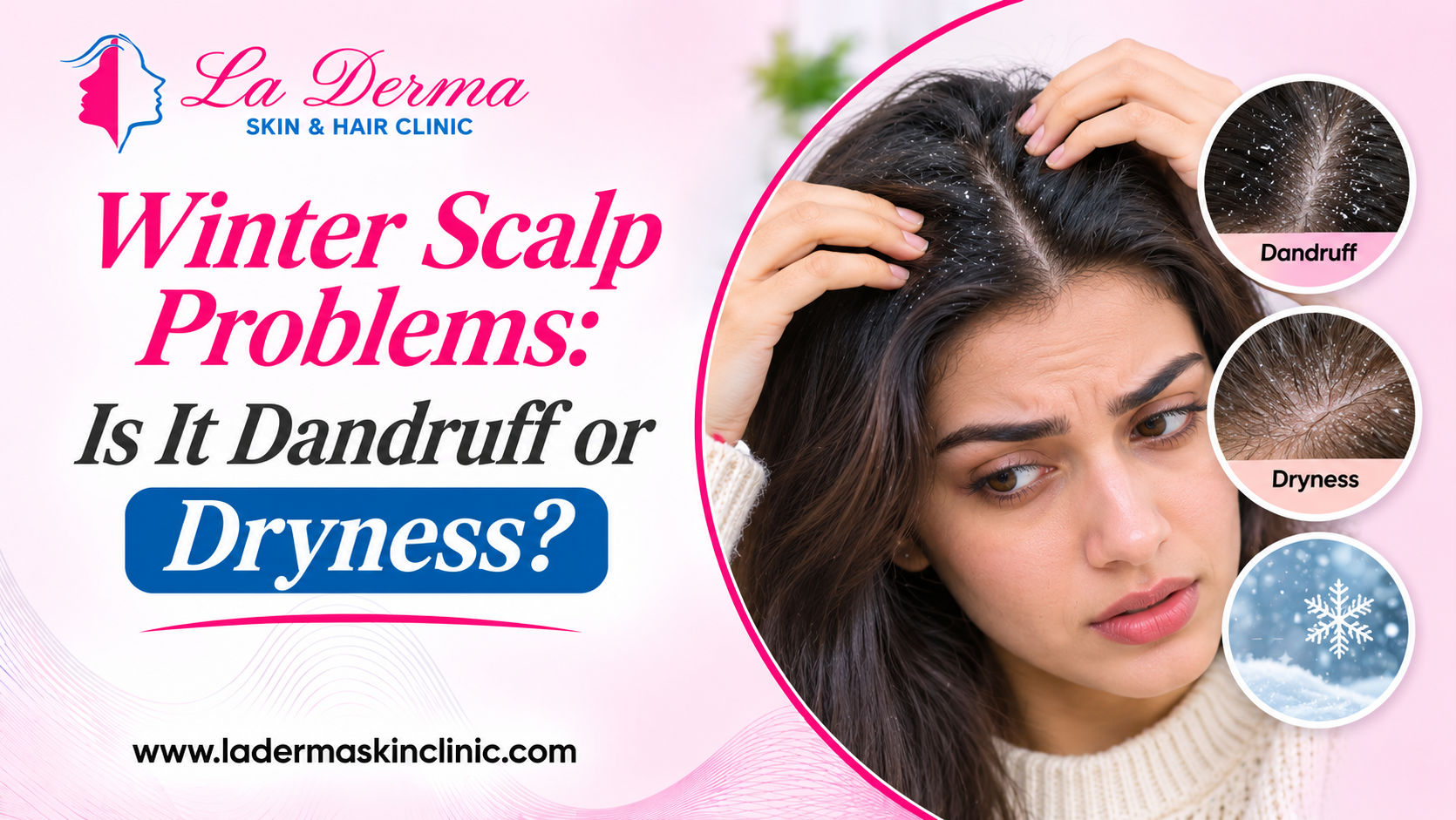
Winter Scalp Problems: Is It Dandruff or Dryness?
Every winter, the same winter scalp problems repeat. You take off a dark sweater and find white flakes scattered across the shoulders. Your scalp feels tight and itchy, and you start wondering whether it’s dandruff, simple dryness, or something else.
Kolkata winters may be mild, but the fall in humidity, hot showers, and woollen caps are enough to upset your scalp. Dandruff and dry scalp look almost the same, yet they need very different care. Let’s work out which one you have.
Why does the scalp act up in winter?
Cold air holds less moisture. Add long, steamy showers and harsh shampoos, and your scalp’s natural oil barrier takes a beating. That barrier keeps water in and irritants out. When it weakens, the skin turns tight, dry, and flaky.
Caps and scarves make it worse. They rub the scalp and trap sweat, which can irritate the skin or let yeast multiply. So winter sets the stage for both dryness and dandruff, often together.
What is the difference between dandruff and dry scalp?
In short: a dry scalp lacks moisture, while dandruff is an inflammatory condition linked to a yeast called Malassezia and an oily, irritated scalp.
A dry scalp usually shows:
- Small, fine, powdery flakes that fall off easily
- A tight feeling, especially after washing
- Dry skin on your arms, legs or face too
- No obvious oiliness or redness
Dandruff usually shows:
- Larger, yellowish or whitish flakes that look greasy and cling to the hair
- An oily, itchy scalp, sometimes with mild redness
- Flakes around the eyebrows, sides of the nose, or behind the ears
- Flare-ups with stress, sweat, or hormonal changes
- Flakes that return soon after you stop treatment
A simple home check
Skip a wash for a day, then look at your scalp in good light. Tiny, powdery flakes on dry-looking skin point to dryness. A shiny scalp, greasy roots, and big, clumpy flakes point to dandruff. This isn’t a diagnosis, since many people have a bit of both, but it’s a useful starting point.
Why does dandruff get worse in winter?
Most people expect dandruff in summer, when sweat and oil are higher. Yet winter flare-ups are common, for a few reasons:
- Fewer washes. We skip hair washes when it’s cold, so oil, dead skin and yeast build up.
- Hot water. It strips the scalp, which then produces extra oil to compensate.
- Less sunlight. Some people notice more flaking when they get less sun.
- Stress and late nights. Busy festive schedules can trigger flares.
- Covered scalp. Caps trap heat and moisture.
Can a dry or flaky scalp cause hair fall?
Dryness alone doesn’t kill hair roots. But an itchy, irritated scalp makes you scratch, and scratching damages the skin and weakens hair at the base. Long-term inflammation from untreated dandruff can also increase shedding.
This is why many people walk into a hair fall clinic in Kolkata after months of blaming their shampoo or water, only to learn the real problem was the scalp. Healthy hair grows from a healthy scalp, so if you see flakes, itching, and extra hair on your pillow together, it’s worth getting checked.
Losing 50 to 100 strands a day is normal. Clumps in the comb, a widening parting, or visible thinning are not.
When could it be something more than dandruff?
Some conditions mimic dandruff:
- Seborrheic dermatitis: a more stubborn, inflamed form with red, greasy, scaly patches
- Scalp psoriasis: thick, silvery plaques that may creep past the hairline
- Fungal infection (tinea capitis): patchy hair loss with scaling
- Contact dermatitis: a reaction to shampoo, hair dye or styling products
See a doctor if you notice thick crusts, oozing or painful areas, bald patches, burning, or flakes that haven’t improved after three to four weeks of sensible home care.
Winter scalp care tips that actually help
If your scalp is dry:
- Wash with lukewarm water, not hot
- Choose a gentle, sulphate-free shampoo
- Apply a light scalp serum or a little oil before washing
- Drink enough water and include healthy fats in your diet
If it’s dandruff:
- Use a medicated shampoo with ketoconazole, zinc pyrithione or selenium sulphide
- Leave it on for a few minutes before rinsing
- Wash caps, scarves and pillowcases regularly
- Avoid scratching, which can cause infection and breakage
For both:
- Don’t layer heavy oils over a flaky, inflamed scalp, because they can feed the yeast
- Pat your hair dry gently instead of rubbing
- Sleep well and keep stress in check
What to expect from professional care
If store-bought shampoos haven’t worked, a specialist can save you months of guesswork. When people search for dandruff treatment in Kolkata, what they really need is a clear diagnosis first. A good dermatologist like Dr. Khushbu Tantia will examine your scalp, ask about your routine, diet, stress, and medical history, and decide whether it’s dandruff, dryness, or an underlying condition.
Treatment then usually includes the right medicated shampoo or lotion, changes to your wash routine, and checks for related issues like hair thinning, nutritional gaps, or hormonal imbalance. The goal isn’t just to clear flakes for a week but to keep your scalp balanced long-term. A good specialist focuses on finding the cause behind your symptoms, which matters because two scalps can look alike and still need completely different care.
Final thoughts
Winter flakes don’t have to stay a mystery. Fine, powdery flakes with a tight scalp usually mean dryness, while greasy, clumpy flakes with itching and redness suggest dandruff. Many people have both, which is why guessing can drag on for months.
If your scalp isn’t improving, or hair fall has started alongside the flaking, stop experimenting and get a proper diagnosis. When you’re looking for the Best Dermatologist in Kolkata, Dr. Khushbu Tantia is a name worth considering, as she examines your scalp carefully before prescribing anything. At La Derma Skin & Hair Clinic, you can get a personalised plan for a calmer scalp and stronger hair this winter and beyond.
Frequently asked questions
Is dandruff contagious?
No. It doesn’t spread through combs, towels, or contact. The yeast involved is already present on most people’s scalps.
Can one shampoo treat both dandruff and dryness?
Not always. Medicated shampoos can dry out an already dry scalp, while moisturising products may not control true dandruff.
How often should I wash my hair in winter?
Most people do well with two to three washes a week, or more if the scalp is oily or flaky.
Does diet affect dandruff?
It can. Low zinc, B vitamins, and healthy fats may worsen scalp problems, so a balanced diet helps.
How long does it take to see improvement?
With the right treatment, many people notice a difference in two to four weeks. Stubborn cases may take longer.