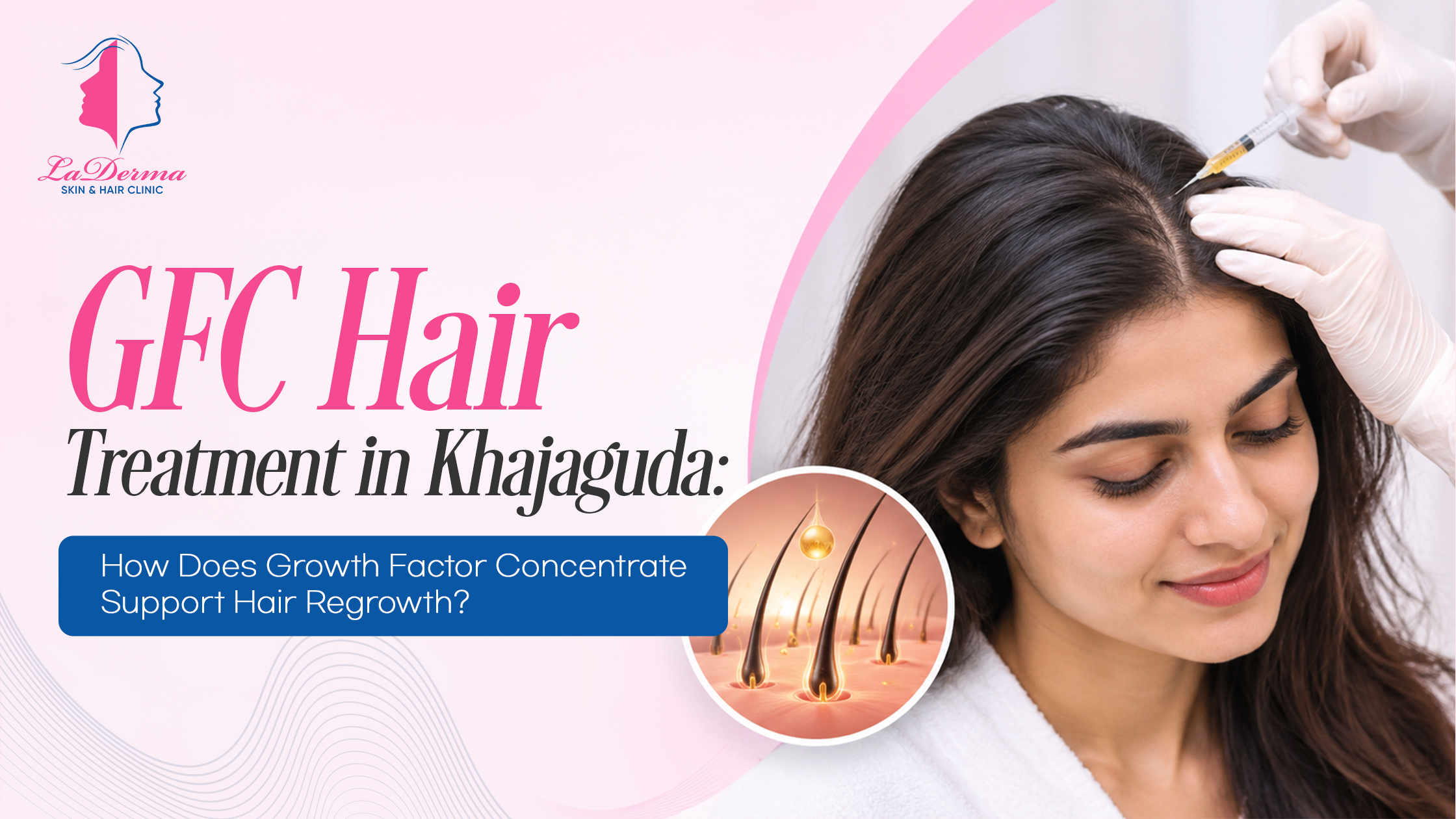
GFC Hair Treatment in Khajaguda: How Does Growth Factor Concentrate Support Hair Regrowth?
Hair growth depends on several factors, including the health of hair follicles, genetics, hormones, nutrition, and the natural hair growth cycle. When this cycle is disrupted, hair may become thinner, weaker, or less dense over time. Understanding the underlying cause of these changes is important before choosing a treatment.
Growth Factor Concentrate (GFC) therapy is an emerging treatment approach that uses growth factors obtained from a person’s own blood to support hair follicle activity. It is commonly explored as a non-surgical option for certain types of hair thinning, particularly androgenetic alopecia.
For individuals considering GFC Hair Treatment in Khajaguda, understanding how the procedure works, its potential benefits, and its limitations can help set realistic expectations. A dermatologist can assess scalp health and determine whether GFC therapy may be suitable for individual hair concerns.
What Is GFC Hair Treatment?
Growth Factor Concentrate (GFC) is a treatment that uses concentrated growth factors derived from a patient’s blood platelets. These growth factors are proteins involved in cellular communication, tissue repair, and other biological processes.
The procedure involves collecting a small blood sample, processing it using a specialised system, and preparing a growth factor-rich solution for injection into selected areas of the scalp.
Growth factors involved in hair-related biological processes include:
- Platelet-Derived Growth Factor (PDGF): Participates in cellular signalling and tissue repair processes.
- Vascular Endothelial Growth Factor (VEGF): Supports the formation and maintenance of blood vessels.
- Epidermal Growth Factor (EGF): Contributes to cellular growth and tissue maintenance.
- Fibroblast Growth Factor (FGF): Supports cell growth and signalling processes involved in hair follicle development and maintenance.
These growth factors may influence the environment surrounding hair follicles. However, clinical evidence for GFC therapy remains limited, and improvements in hair growth are not guaranteed.
How Does Growth Factor Concentrate Support Hair Regrowth?
Hair follicles naturally move through growth, transition, resting, and shedding phases. GFC therapy aims to influence biological processes associated with follicle activity and scalp health.
1. May Support Hair Follicle Activity
Hair follicles contain specialised cells responsible for producing hair strands. When follicle activity decreases, hair may become progressively finer and less noticeable.
Growth factors are involved in cellular signalling pathways that regulate follicle development and maintenance.
By delivering concentrated growth factors into the scalp, GFC therapy aims to support the activity of existing hair follicles. It cannot reliably restore follicles that have been permanently destroyed by scarring.
2. May Influence the Hair Growth Cycle
The natural hair growth cycle includes three main stages:
- Anagen phase: The active growth stage during which hair strands develop.
- Catagen phase: A short transitional stage when follicle activity decreases.
- Telogen phase: The resting stage, followed by shedding and the beginning of another growth cycle.
Certain growth factors may influence signalling pathways involved in maintaining the anagen phase.
GFC therapy is being studied for its potential to support these processes, although more high-quality clinical research is needed to establish its effectiveness.
3. May Support Scalp Microcirculation
Healthy hair follicles depend on an adequate supply of oxygen and nutrients through surrounding blood vessels.
Growth factors such as VEGF participate in processes associated with blood vessel development and maintenance.
GFC therapy may influence these processes around hair follicles. However, improved scalp circulation and resulting hair regrowth have not been conclusively demonstrated in large clinical studies.
4. May Help Improve Hair Density
People experiencing androgenetic alopecia often notice that individual hair strands gradually become thinner.
GFC therapy may help improve hair density or thickness in some patients by supporting existing follicles.
The degree of improvement depends on factors such as the type of hair loss, follicle condition, treatment protocol, and individual response.
5. May Support Existing Hair Follicles
One important limitation of GFC therapy is that it depends on the presence of functioning hair follicles.
The treatment may be more useful when follicles are still active than in areas where permanent follicular damage has occurred.
Early assessment can help identify whether a patient may benefit from growth factor-based treatment or requires another approach.
Who May Be Suitable for GFC Hair Treatment?
GFC therapy may be considered for selected individuals experiencing non-scarring hair loss.
Potential candidates include:
- Men with androgenetic alopecia: Individuals experiencing gradual thinning around the crown or frontal scalp.
- Women with pattern hair loss: Those noticing widening of the hair part or reduced overall density.
- People with early-stage hair thinning: Individuals whose hair follicles remain active.
- Patients seeking non-surgical options: Those interested in discussing injectable treatments alongside established therapies.
Not every type of hair loss responds to growth factor-based procedures.
For example, hair shedding caused by thyroid disorders, iron deficiency, certain medications, or recent illness may require treatment of the underlying condition.
A dermatologist should evaluate the cause before recommending GFC therapy.
How Is the GFC Hair Treatment Procedure Performed?
GFC treatment is generally performed as an outpatient procedure and involves several steps.
Step 1: Scalp and Hair Assessment
A dermatologist examines the scalp, hair density, and pattern of hair loss.
Medical history, current medications, and possible contributing factors may also be reviewed. Blood tests may be recommended when an underlying medical condition is suspected.
Step 2: Blood Sample Collection
A small amount of blood is collected from the patient’s arm using a sterile collection system.
Because the preparation is derived from the patient’s own blood, the procedure does not involve donor-derived growth factors.
Step 3: Growth Factor Preparation
The blood sample is processed using a specialised GFC preparation system.
The system is designed to separate and concentrate growth factors released from platelets.
Preparation methods may vary depending on the system used.
Step 4: Scalp Injections
The prepared solution is injected into selected areas of the scalp where hair thinning is present.
Multiple small injections may be required to cover the treatment area.
Patients may experience mild discomfort during the procedure.
Step 5: Aftercare and Follow-Up
After treatment, the dermatologist provides instructions about scalp care, washing, exercise, and the use of hair products.
Follow-up appointments help assess changes in hair shedding, density, and overall treatment response.
What Are the Potential Benefits of GFC Hair Treatment?
GFC therapy has several characteristics that make it an option worth discussing for selected patients.
Non-surgical procedure: The treatment does not require surgical incisions or hair follicle transplantation.
Uses the patient’s own blood: The growth factor preparation is derived from an autologous blood sample.
Minimal recovery time: Many patients can resume routine activities relatively soon, depending on scalp sensitivity and the dermatologist’s advice.
May support hair density: Some early studies and clinical observations suggest possible improvements in selected patients, although evidence remains limited.
Can be part of a broader treatment plan: A dermatologist may consider GFC alongside established treatments when clinically appropriate.
These potential benefits should be balanced against the cost, need for repeat sessions, limited long-term evidence, and variability in treatment outcomes.
GFC vs PRP Hair Treatment: What Is the Difference?
GFC and Platelet-Rich Plasma (PRP) are both blood-derived procedures used in hair loss management, but their preparation methods differ.
| Feature | GFC Treatment | PRP Treatment |
| Preparation | Concentrates growth factors released from platelets | Concentrates platelets within plasma |
| Injected material | Growth factor-rich preparation | Platelet-rich plasma |
| Treatment type | Non-surgical injections | Non-surgical injections |
| Main purpose | Support existing hair follicle activity | Support existing hair follicle activity |
| Research evidence | Limited clinical evidence | More extensively studied, though results vary |
| Sessions | Depends on the treatment plan | Depends on the treatment plan |
Neither treatment guarantees complete hair regrowth.
PRP currently has a broader clinical research base for certain types of hair loss. More comparative studies are needed to determine whether GFC offers meaningful advantages over PRP.
How Many GFC Sessions Are Needed for Hair Regrowth?
The number of sessions depends on the severity of hair thinning, the treatment protocol, and individual response.
Some clinics recommend an initial series of approximately three to four sessions, spaced several weeks apart. However, there is no universally established GFC treatment schedule.
Hair growth is a gradual biological process, so visible changes, if they occur, may take several months.
A dermatologist may use scalp photographs or hair density assessments to monitor progress.
Maintenance sessions may be discussed, but their ideal frequency and long-term effectiveness have not been firmly established.
Are There Any Side Effects of GFC Hair Treatment?
GFC therapy involves scalp injections and may cause temporary side effects.
Common reactions include:
- Mild pain or tenderness at injection sites.
- Temporary redness or swelling.
- Small bruises around treated areas.
- Scalp sensitivity for a short period.
Less common complications may include infection, bleeding, or other injection-related reactions.
Patients with certain blood disorders, active scalp infections, or other relevant medical conditions may not be suitable candidates.
A medical assessment is important before undergoing the procedure.
How Can You Maintain Hair Health After GFC Treatment?
Maintaining scalp health and addressing the underlying cause of hair loss are important parts of long-term management.
A dermatologist may recommend:
- Following prescribed hair loss medications when appropriate.
- Maintaining adequate protein, iron, and other essential nutrient intake.
- Avoiding excessive heat styling and tight hairstyles.
- Managing scalp conditions such as dandruff or inflammation.
- Attending follow-up appointments to monitor hair density.
- Avoiding unproven hair growth products without professional advice.
GFC therapy should not replace evidence-based treatment for conditions that require medical management.
When Should You Consult a Dermatologist for Hair Thinning?
Consider a dermatological evaluation if you notice progressive hair thinning, increased shedding, widening of the hair part, or visible scalp areas.
Sudden hair loss, patchy bald spots, scalp inflammation, or hair loss accompanied by other symptoms may require more urgent assessment.
A dermatologist can evaluate the condition, identify possible contributing factors, and recommend suitable treatment options.
Frequently Asked Questions
1. Is GFC hair treatment effective for hair regrowth?
GFC therapy may improve hair density or thickness in some individuals with non-scarring hair loss. However, research is still limited, and results vary depending on the underlying condition and individual response.
2. How long does GFC hair treatment take to show results?
Hair growth takes time. Some patients may notice changes over several months, but there is no guaranteed timeline. Follow-up assessments can help determine whether the treatment is providing measurable benefits.
3. Is GFC hair treatment painful?
The procedure involves multiple small scalp injections, which may cause temporary discomfort. The dermatologist may use appropriate measures to reduce discomfort during treatment.
4. Can GFC treatment regrow hair on a completely bald scalp?
GFC treatment is unlikely to restore hair in areas where follicles have been permanently destroyed. It may be considered when viable hair follicles remain, depending on the diagnosis.
5. Is GFC better than PRP for hair loss?
There is currently insufficient high-quality comparative evidence to conclude that GFC is consistently better than PRP. The appropriate treatment depends on the type of hair loss, available evidence, and individual medical assessment.
Get Personalised Guidance for Hair Regrowth
Hair thinning can develop for different reasons, and choosing an appropriate treatment begins with identifying the underlying cause. GFC therapy may be an option for selected patients, but its suitability and expected benefits require professional assessment.
At La Derma Skin & Hair Clinic, patients can discuss their hair concerns and explore suitable medical and non-surgical treatment options based on individual needs.
Book an Appointment at La Derma Skin & Hair Clinic
Call: 96031 22662