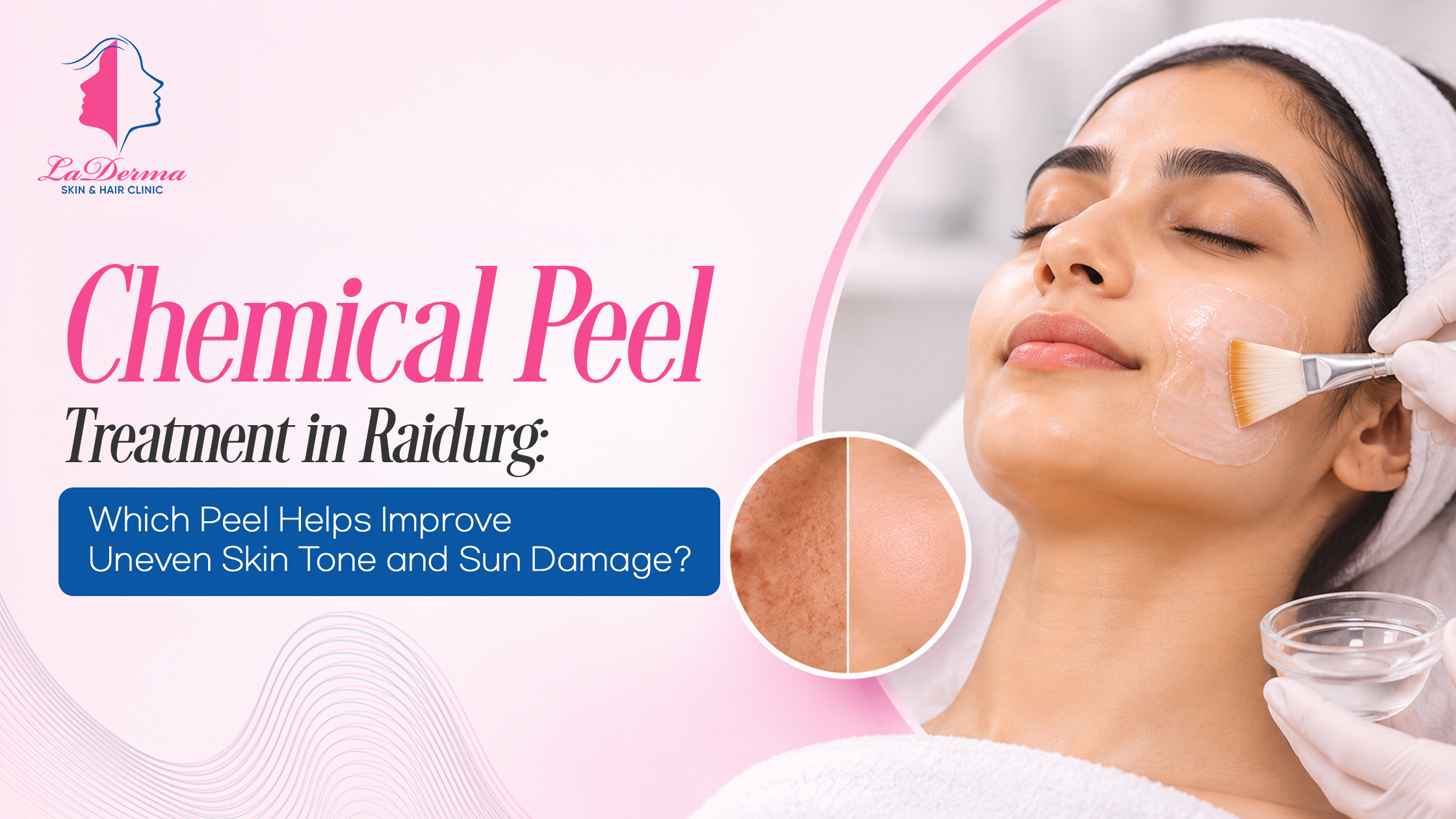
Chemical Peel Treatment in Raidurg: Which Peel Helps Improve Uneven Skin Tone and Sun Damage?
Uneven skin tone, tanning, dark spots, and sun damage are common skin concerns, especially in areas exposed to strong sunlight and environmental pollution. Over time, UV exposure can contribute to pigmentation, dullness, dark patches, and an uneven complexion.
If you are looking for an effective way to improve these concerns, chemical peel treatment in Raidurg can be a suitable option. Chemical peels help exfoliate damaged skin cells, improve skin texture, and promote the growth of healthier-looking skin.
But with different types of chemical peels available, which one is best for uneven skin tone and sun damage? Let’s explore the options and understand how to choose the right treatment for your skin.
What Is a Chemical Peel Treatment?
A chemical peel is a professional skin treatment that uses specially formulated chemical solutions to exfoliate the outer layers of the skin. This process encourages skin renewal and helps improve concerns such as:
- Uneven skin tone and pigmentation.
- Sun damage and tanning.
- Dark spots and post-acne marks.
- Dull and tired-looking skin.
- Rough skin texture.
- Mild fine lines.
Depending on the ingredients and concentration, chemical peels can work at different depths. The appropriate peel is selected based on your skin type, pigmentation concerns, and treatment goals.
Which Chemical Peel Is Best for Uneven Skin Tone and Sun Damage?
Not every chemical peel works the same way. Some focus on surface exfoliation, while others are selected to address pigmentation and sun-related skin damage.
Here are some commonly used chemical peels.
1. Glycolic Acid Peel – For Dullness, Tanning, and Uneven Skin Tone
Glycolic acid is an alpha hydroxy acid (AHA) derived from sugarcane. It helps remove dead skin cells from the skin’s surface and supports skin renewal.
Benefits:
- Improves dull and uneven-looking skin.
- Helps reduce superficial pigmentation.
- Improves skin texture.
- Promotes a brighter-looking complexion.
- Helps address mild sun-related discoloration.
Glycolic acid peels may be suitable for people experiencing mild tanning, dullness, and superficial pigmentation.
2. Lactic Acid Peel – For Dry and Sensitive Skin
Lactic acid is another AHA known for its exfoliating and hydrating properties. It is often considered when someone wants gentle exfoliation.
Benefits:
- Helps improve mild uneven skin tone.
- Gently exfoliates dead skin cells.
- Supports skin hydration.
- Improves skin softness and texture.
- Helps enhance overall skin radiance.
It may be an option for individuals with dry or sensitive skin, depending on their skin condition and professional assessment.
3. Mandelic Acid Peel – For Sensitive and Pigmentation-Prone Skin
Mandelic acid is an AHA with a larger molecular structure, allowing it to penetrate the skin more slowly than some other AHAs.
Benefits:
- Helps improve uneven skin tone.
- Supports the reduction of superficial pigmentation.
- Improves dullness and rough texture.
- May help with post-acne marks.
- Can be considered for some sensitive or pigmentation-prone skin types.
It is often considered when a gentler exfoliation approach is preferred.
4. Salicylic Acid Peel – For Oily and Acne-Prone Skin
Salicylic acid is a beta hydroxy acid (BHA) that penetrates oil-filled pores and helps remove excess sebum and dead skin cells.
Benefits:
- Helps unclog pores.
- Reduces excess oil.
- Improves acne-related congestion.
- Helps address post-acne marks.
- Supports smoother skin texture.
Although salicylic acid is primarily used for oily and acne-prone skin, it may also help improve certain types of post-inflammatory discoloration.
5. TCA Peel – For More Noticeable Sun Damage and Pigmentation
Trichloroacetic acid (TCA) peels are professional treatments that can penetrate deeper than superficial peels, depending on the concentration and application technique.
Benefits:
- Helps improve certain types of pigmentation.
- Addresses sun-damaged skin.
- Improves selected forms of uneven skin texture.
- May soften the appearance of fine lines.
TCA peels require careful assessment and professional supervision, particularly for darker Indian skin tones, because of the risk of post-inflammatory hyperpigmentation.
Which Peel Should You Choose for Your Skin Concern?
The best chemical peel depends on the specific concern rather than simply choosing the strongest peel.
| Skin concern | Commonly considered peel |
|---|---|
| Dullness and mild tanning | Glycolic acid |
| Dryness and mild uneven tone | Lactic acid |
| Pigmentation-prone skin | Mandelic acid |
| Oily and acne-prone skin | Salicylic acid |
| Selected deeper pigmentation and sun damage | TCA peel |
Important: This is a general guide, not a prescription. A dermatologist should evaluate your skin before recommending a peel. Some pigmentation conditions, including melasma, may require a combination of treatments rather than chemical peels alone.
How Does Chemical Peel Treatment Improve Sun Damage?
Prolonged exposure to ultraviolet (UV) rays can increase melanin production and contribute to visible signs of photoaging.
Chemical peels help by:
- Removing damaged surface cells: Exfoliation helps clear accumulated dead skin cells.
- Supporting skin renewal: The treatment encourages the formation of newer skin cells.
- Improving pigmentation: Selected peels can help reduce the appearance of superficial dark spots.
- Enhancing skin texture: Regularly spaced, professionally supervised treatments may improve roughness and dullness.
- Promoting a brighter appearance: Removing surface buildup can make the complexion appear more even and refreshed.
However, chemical peels cannot completely reverse all forms of sun damage. Deep pigmentation and significant photoaging may need additional dermatological treatments.
What Happens During a Chemical Peel Treatment in Raidurg?
If you are considering a chemical peel in Raidurg, understanding the procedure can help you feel more comfortable.
Step 1: Skin Consultation
A dermatologist evaluates your skin type, pigmentation, sensitivity, medical history, and treatment expectations.
Step 2: Skin Preparation
The skin is cleansed to remove makeup, oil, and impurities. Depending on the treatment, specific preparation may be recommended.
Step 3: Application of the Chemical Peel
The selected chemical solution is carefully applied to the skin for a controlled period.
Step 4: Neutralisation or Removal
Depending on the peel formulation, the solution may be neutralised or removed according to the product protocol.
Step 5: Post-Treatment Care
A soothing moisturiser and sunscreen are applied, and the dermatologist provides aftercare instructions.
The duration and intensity of the treatment depend on the type of peel selected.
How Many Chemical Peel Sessions Are Needed?
The number of sessions varies depending on the severity of pigmentation, skin type, peel formulation, and individual response.
- Mild dullness may improve after a few sessions.
- Superficial pigmentation may require a series of treatments.
- Persistent pigmentation or sun damage may need a longer-term treatment plan.
Chemical peels are generally scheduled at appropriate intervals to allow the skin to recover between sessions. Visible improvements are gradual, and results vary from person to person.
Aftercare Tips for Better Chemical Peel Results
Post-treatment care is essential for maintaining healthy skin and reducing the risk of irritation or pigmentation.
Follow these important recommendations:
- Apply broad-spectrum SPF 30–50 sunscreen every day.
- Reapply sunscreen every two hours when outdoors.
- Avoid direct sun exposure, especially during the initial healing period.
- Use a gentle cleanser and moisturiser.
- Avoid scrubbing, exfoliating products, and active ingredients until your dermatologist says they are safe.
- Do not peel, scratch, or pick at flaking skin.
- Follow your dermatologist’s recommended skincare routine.
Sun protection is especially important in sunny climates like Hyderabad, as repeated UV exposure can contribute to pigmentation returning.
Are Chemical Peels Safe for Indian Skin Types?
Chemical peels can be performed on Indian skin, but selecting the right formulation and concentration is particularly important.
Indian skin tones may be more prone to post-inflammatory hyperpigmentation following irritation or aggressive exfoliation.
To reduce potential risks:
- Choose a qualified dermatologist.
- Get a proper skin assessment before treatment.
- Avoid aggressive peels without professional advice.
- Follow the recommended treatment schedule.
- Maintain consistent sun protection.
Possible side effects include temporary redness, dryness, peeling, irritation, and, in some cases, increased pigmentation or scarring.
Why Consider Professional Chemical Peel Treatment in Raidurg?
Choosing professional treatment allows your skin concerns to be evaluated before selecting a suitable peel.
A dermatologist-led approach can help ensure:
- Personalised peel selection based on your skin type.
- Appropriate treatment strength and application.
- Professional monitoring during the procedure.
- Guidance on pigmentation management.
- A customised post-treatment skincare routine.
Rather than selecting a peel based only on popularity, focus on finding a treatment that addresses your specific skin concerns safely.
Frequently Asked Questions
1. Which chemical peel is best for sun-damaged skin?
Glycolic acid peels may help with mild sun-related dullness and superficial pigmentation. Mandelic acid or other professional peel formulations may be considered depending on skin sensitivity and pigmentation severity. More significant sun damage requires individual assessment.
2. Can chemical peels remove tanning permanently?
Chemical peels can help improve superficial tanning and uneven pigmentation, but they cannot prevent new tanning. Consistent sunscreen use and sun protection are necessary to maintain results.
3. Are chemical peels suitable for sensitive skin?
Some gentle formulations, such as lactic or mandelic acid peels, may be considered for sensitive skin. However, a dermatologist must first assess skin sensitivity and identify any underlying irritation.
4. Does a chemical peel hurt?
Most superficial chemical peels cause mild tingling, warmth, or temporary stinging. The sensation varies depending on the peel formulation and individual sensitivity.
5. Can I go outside after a chemical peel?
You may be able to resume normal activities depending on the peel depth, but freshly treated skin needs careful sun protection. Follow your dermatologist’s instructions regarding outdoor exposure.
6. How long does it take to see results?
Some people notice improved brightness within a few days after recovery from a superficial peel. Pigmentation and texture concerns may take multiple sessions and several weeks to improve.
Get Brighter, More Even-Toned Skin with Chemical Peel Treatment in Raidurg
Uneven skin tone, tanning, and sun damage can affect the overall appearance and texture of your skin. A professionally selected chemical peel can help improve these concerns by exfoliating damaged surface cells and supporting skin renewal.
Whether glycolic acid, lactic acid, mandelic acid, salicylic acid, or TCA is appropriate depends on your skin type and the nature of your pigmentation.
If you are exploring chemical peel treatment in Raidurg, consult a qualified dermatologist for a personalised skin assessment. Choosing the right peel, following proper aftercare, and maintaining daily sun protection can help you achieve healthier-looking, smoother, and more even-toned skin.
Give your skin the professional care it deserves and take the first step towards a brighter, more even-looking complexion.
For appointments: 096031 22662
Visit: La Derma Skin & Hair Clinic